
Northern Wheatear Identification Guide
A small, upright, ground-loving chat famous for a bold black-and-white tail pattern and an epic transcontinental migration between Arctic breeding grounds and African wintering areas.
Read the full Northern Wheatear encyclopedia entry →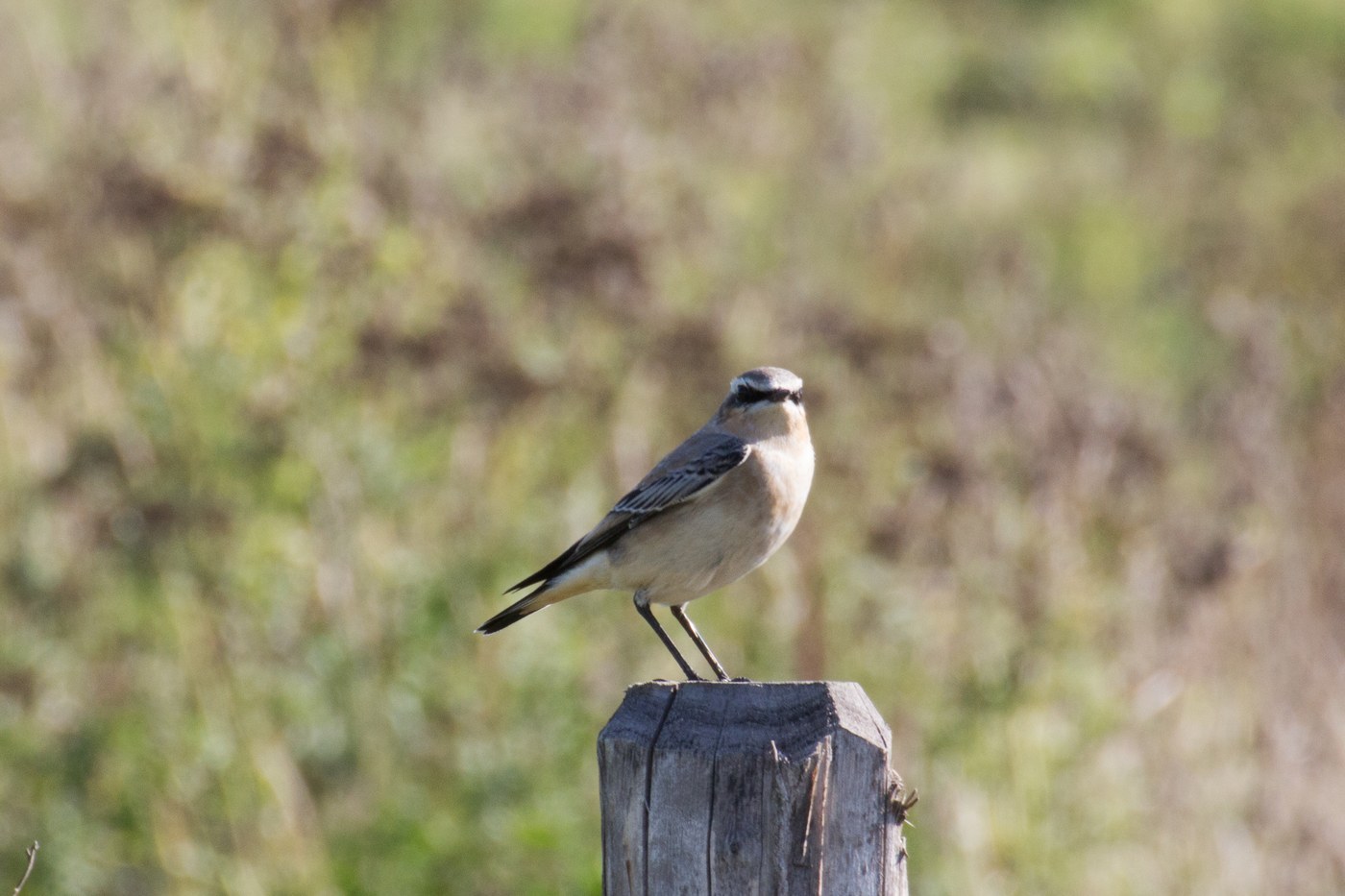
Key Field Marks
- Size & shape: Small but chunky, upright-postured songbird (about 14–15 cm / 5.5 in) with fairly long legs and an alert, robin-like stance, often perched on rocks or the ground.
- Tail pattern — the key mark: White rump and base of the tail with a bold black terminal band forming an inverted "T" shape, conspicuous when the bird flies or flicks its tail; visible in all plumages.
- Breeding male: Blue-gray back and crown, black mask through the eye, black wings, and warm buffy-orange wash on the throat and breast.
- Female & nonbreeding/juvenile: Much plainer sandy-brown to grayish-brown overall, lacking the black mask, but always retaining the diagnostic black-and-white tail pattern.
Separating It From Similar Species
- Other wheatears (e.g., in Alaska, vagrant Pied Wheatear): Extremely rare in North America outside Northern Wheatear's normal Arctic breeding range; separation from other wheatear species relies on more subtle back, throat, and tail-band shape differences best confirmed with photos and expert review.
- American Pipit or juvenile bluebirds: Superficially similar open-country ground birds, but neither shows the wheatear's distinctive black-and-white tail pattern or upright perched stance on rocks.
- No other regularly occurring North American songbird combines the white rump/tail base with a black terminal tail band — this pattern alone confirms the genus.
Behavior Clues
- Forages on the ground in short hops and runs, frequently pausing upright, then flicking or bobbing its tail and giving a slight bow.
- Perches conspicuously on rocks, tundra hummocks, or fence posts, unlike many small songbirds that stay hidden in cover.
Where & When to Look
- Habitat: Open tundra, rocky slopes, and barren ground, both in Arctic breeding areas and on stony ground during migration stopovers.
- Range: Breeds in Arctic and alpine Alaska and northern Canada (plus Greenland); undertakes one of the longest songbird migrations known, crossing Asia or the Atlantic to winter in sub-Saharan Africa.
- Season: Present on North American breeding grounds from late spring through summer; a rare but regular migrant vagrant farther south in fall along both coasts.
Voice
- Call is a hard, harsh "chack-chack," sometimes doubled, often the first clue to its presence on open ground.
- Song is a scratchy, warbling series mixing harsh and musical notes, delivered from a perch or in a brief display flight.
Frequently asked questions
What is the most reliable field mark for Northern Wheatear?
Its tail pattern: a white rump and tail base with a bold black terminal band forming an inverted 'T' shape, visible in flight or when the tail is flicked, present in both sexes and all plumages.
Where does the Northern Wheatear breed in North America?
It breeds in Arctic and alpine tundra habitats in Alaska, northern Canada, and Greenland.
Why is the Northern Wheatear's migration so remarkable?
Breeding birds from Alaska and Canada migrate all the way to sub-Saharan Africa for the winter, one of the longest migratory journeys of any songbird relative to body size.
How do female and nonbreeding Northern Wheatears differ from breeding males?
They lack the black face mask and blue-gray back, appearing plainer sandy or grayish-brown overall, but they always retain the diagnostic black-and-white tail pattern.