
Northern Lapwing Identification Guide
A striking, iridescent Eurasian plover with a long wispy head crest and broad, rounded wings, a rare but regular vagrant to North America's Atlantic coast.
Read the full Northern Lapwing encyclopedia entry →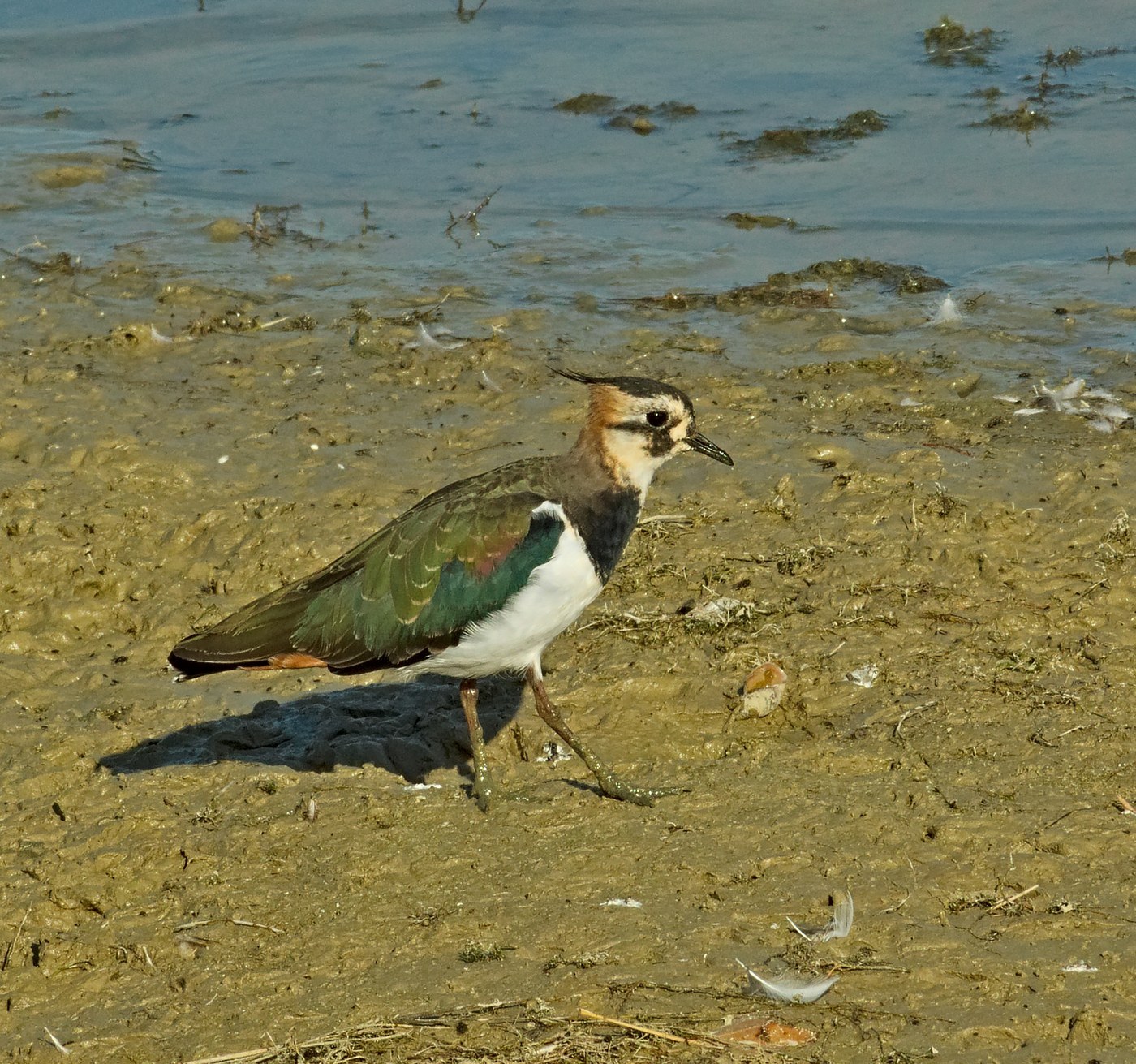
Overview
The Northern Lapwing (Vanellus vanellus) is a large, unmistakable plover native to farmland, grassland, and wetlands across Europe and Asia. In North America it is a rare vagrant, most often recorded on the northeastern Atlantic coast (particularly Newfoundland) after strong winter storms carry birds across the Atlantic.
Key Field Marks
- Size & shape: A large plover, about 11–12 inches long, with broad, rounded wings, a short bill, and a distinctive thin, wispy crest of feathers projecting up and back from the crown.
- Plumage: Glossy dark green-black upperparts with iridescent purple and bronze sheen, a black breast band, and clean white underparts; the face shows a black-and-white pattern.
- Undertail/flank: Rich chestnut-orange undertail coverts contrast with the white belly, visible especially in flight or when the bird tips forward while feeding.
- Wing shape in flight: Extremely broad, rounded, black-and-white wings with a slow, flapping, almost butterfly-like flight — very different from the pointed wings of most North American shorebirds.
- Behavior: Forages in typical plover fashion — run, stop, peck — on open fields and mudflats, often in flocks; performs tumbling, acrobatic display flights on the breeding grounds.
Similar Species
- No North American shorebird closely resembles the Northern Lapwing; its combination of a wispy crest, iridescent black-green upperparts, and broad rounded black-and-white wings is unique among vagrants likely to be encountered.
- Black-bellied Plover (a common North American species) is superficially similar in general plover shape but lacks the crest, iridescence, and broad rounded wing shape, and shows black axillaries ("wingpits") in flight that the lapwing lacks.
Where & When to Find One
Northern Lapwings breed across temperate Europe and Asia in farmland and wet grassland, and winter in milder parts of their breeding range and into North Africa and the Middle East. In North America, they are rare vagrants recorded mainly in late fall and winter, typically after fast-moving Atlantic storm systems, with Newfoundland and, less frequently, the northeastern U.S. coast being the most likely places for a sighting; historic large influxes have occurred in exceptional storm years. Any sighting should be reported promptly to regional rare bird alerts.
Voice
Gives a distinctive, wheezy, nasal "pee-wit" or "peer-weet" call, the source of one of its common European nicknames ("peewit"), typically heard overhead during flight or display.
Frequently asked questions
Is the Northern Lapwing native to North America?
No, it is a Eurasian species that occurs in North America only as a rare vagrant, most often in Newfoundland and the northeastern Atlantic coast after major fall or winter storms.
What is the most distinctive feature of a Northern Lapwing?
Its long, thin, wispy head crest combined with iridescent black-green upperparts and broad, rounded black-and-white wings makes it unmistakable and unlike any regular North American shorebird.
What does a Northern Lapwing's flight look like?
Slow, floppy, and almost butterfly-like on broad rounded wings, quite different from the fast, pointed-wing flight typical of most shorebirds seen in North America.
When is a Northern Lapwing most likely to appear in North America?
Late fall and winter, usually following powerful Atlantic storm systems that displace birds from Europe westward across the ocean.
What does a Northern Lapwing sound like?
It gives a wheezy, nasal 'pee-wit' call, which is the origin of its common nickname 'peewit' in Europe.