
New Zealand Fantail Identification Guide
A tiny, endlessly active native bird instantly recognizable by its constantly fanned, wide black-and-white tail as it flits after insects around walkers on forest trails.
Read the full New Zealand Fantail encyclopedia entry →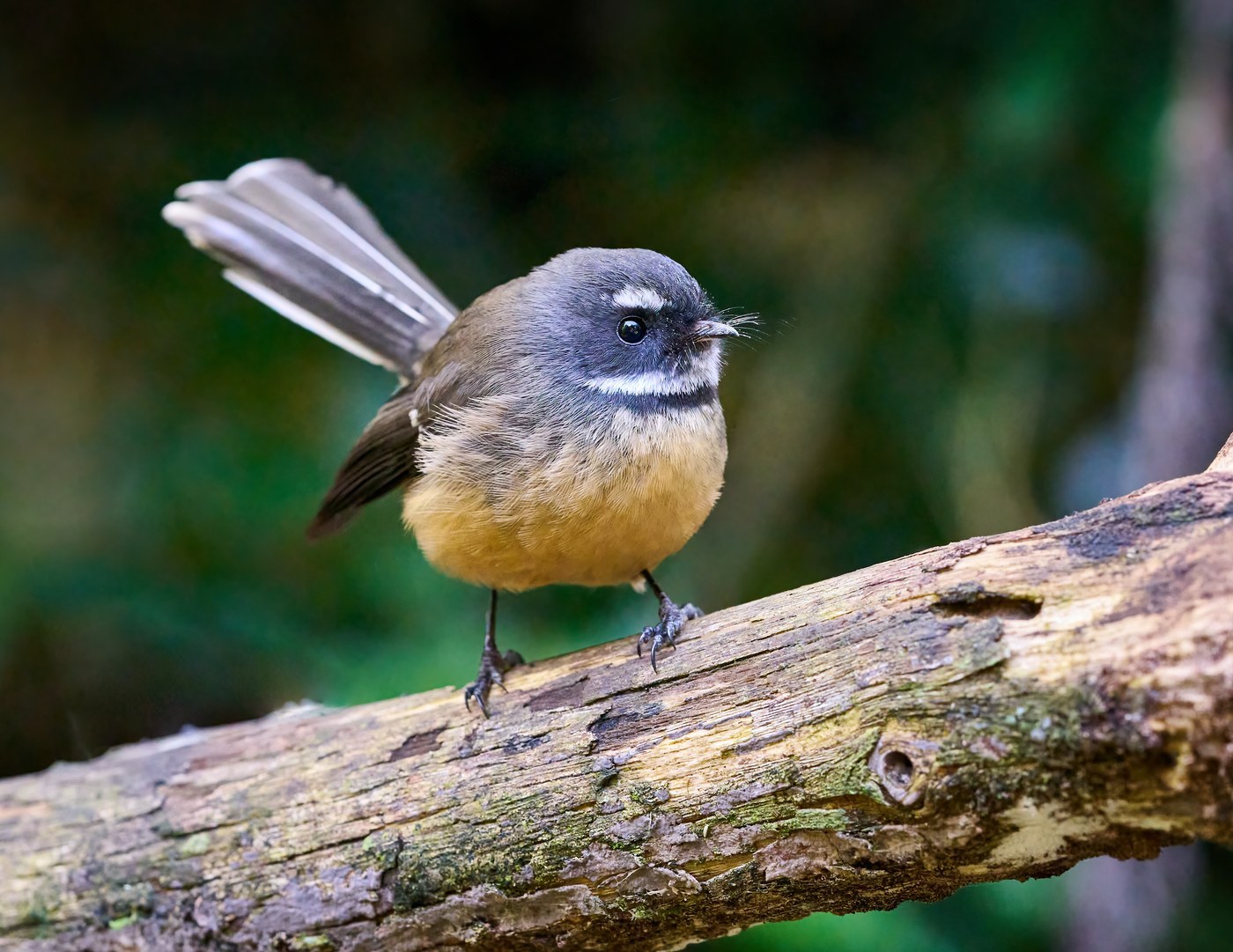
Overview
The New Zealand Fantail, or piwakawaka (Rhipidura fuliginosa), is one of New Zealand's most familiar and approachable native birds, well known for boldly following hikers through the bush to catch insects disturbed by their footsteps.
Key Field Marks
- Size & shape: Tiny bird, about 16 cm including its long, distinctive tail, which makes up nearly half its total length.
- Tail: Broad, fan-shaped tail, black-and-white in pattern, almost constantly spread and flicked open — the single most diagnostic feature.
- Plumage morphs: Two color forms occur. The common "pied" form has a grey-brown back, black-and-white face pattern with a white eyebrow stripe, buff-orange underparts, and a black band across the upper breast. A rarer "black" morph, more frequent in the South Island, is almost entirely sooty black with only a faint pale spot behind the eye.
- Behavior: Extremely active, constantly flitting, twisting, and fanning its tail while sallying out to catch flying insects.
- Flight: Fluttery, erratic, batlike flight as it chases insects in short sallies.
Similar Species
No other New Zealand native bird shares its combination of a broad fanned black-and-white tail with buff underparts and constant erratic flitting flight; it is essentially unmistakable within its range. The black morph could momentarily suggest a small dark bird at a distance, but the fanned tail and characteristic hyperactive foraging behavior confirm identification.
Habitat & Range
Endemic to New Zealand and found throughout the North and South Islands, Stewart Island, and outlying islands. Common in native forest, scrub, forest edges, plantations, and well-vegetated gardens and parks; often the first native bird encountered on a bush walk because it actively approaches people.
Season
Resident and non-migratory year-round; pairs typically hold territories throughout the year and can raise multiple broods per season, particularly in warmer months.
Behavior
Forages by sallying from a low perch to snatch flying insects, and famously follows people and larger animals (historically moa, now hikers, dogs, and livestock) to catch insects stirred up from the ground or vegetation. Extremely tame and will approach within a few feet of quiet observers. Builds a distinctive cup nest with a long "tail" of trailing nest material hanging below it.
Voice
A thin, high-pitched, squeaky "cheet" or "chit-chit-chit" call given almost continuously while foraging; also produces a more complex twittering song, though the sharp contact calls are what most walkers notice first.
Frequently asked questions
Why does the New Zealand Fantail follow people on forest trails?
It is opportunistically catching insects disturbed by footsteps, a foraging behavior it historically used around large ground-dwelling animals like the extinct moa.
What is the black form of the fantail?
It is a melanistic color morph, entirely sooty black with a faint pale spot behind the eye, more common in South Island populations, especially in wetter forest such as Fiordland.
How is the fantail's tail used for identification?
Its broad, black-and-white tail is almost always held fanned open and flicked from side to side, making it the quickest and most reliable way to identify the species even at a glance.
Is the New Zealand Fantail easy to see?
Yes, it is one of the tamest and most conspicuous native birds in New Zealand, commonly approaching walkers in forests, scrub, and even suburban gardens.