
Nashville Warbler Identification Guide
A small gray-headed warbler with a bold white eye-ring and yellow underparts, common in scrubby second growth across North America.
Read the full Nashville Warbler encyclopedia entry →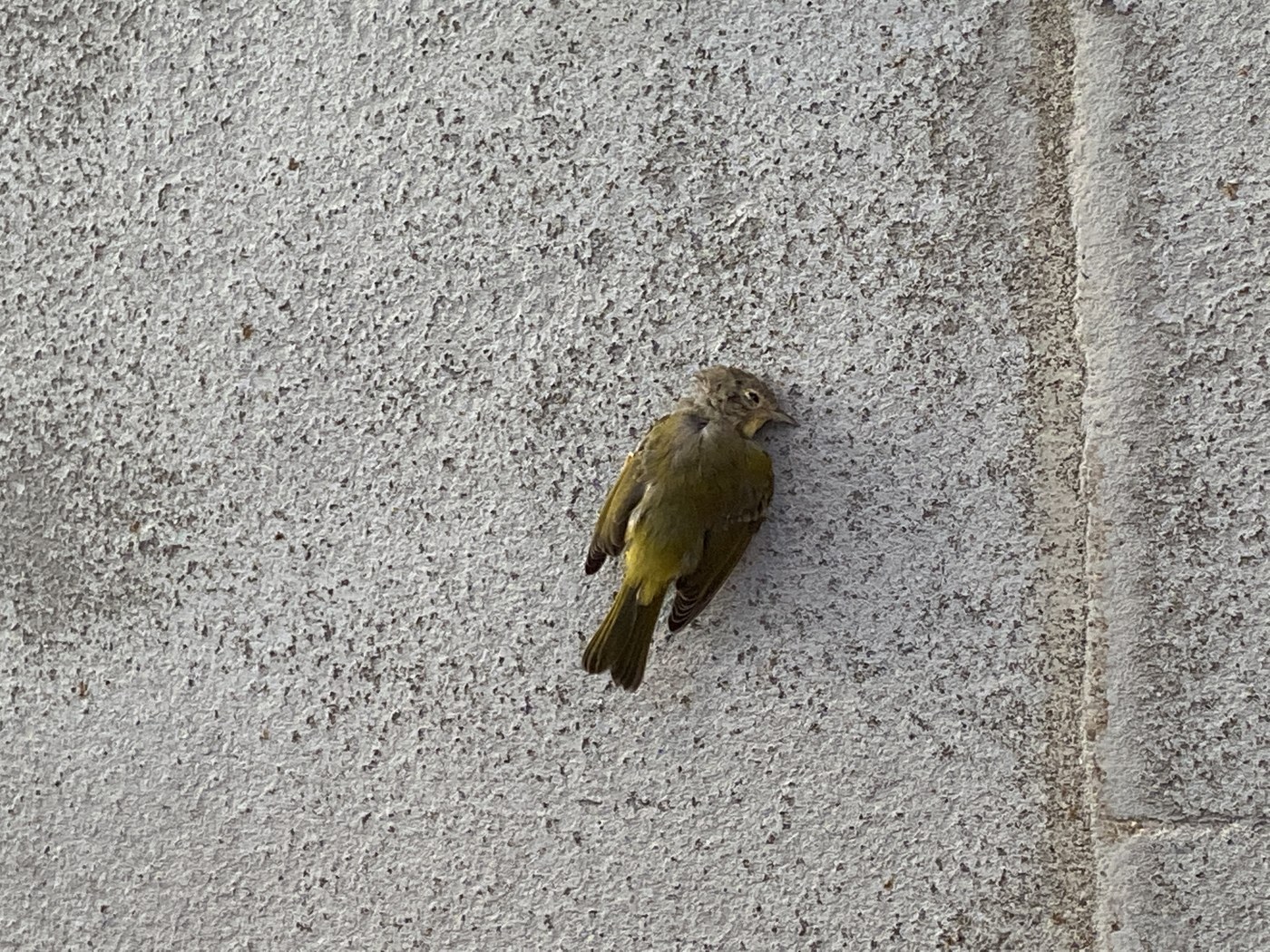
Key Field Marks
- Size & shape: A small, compact warbler with a short tail and thin bill, often flicking its tail while foraging actively in low to mid-level vegetation.
- Head: Clean gray head contrasting with a bold, complete white eye-ring — this combination is the best starting point for identification.
- Underparts: Bright yellow throat and breast, sometimes with a faint chestnut crown patch that is usually concealed and hard to see in the field.
- Upperparts: Olive-green back, unmarked wings with no wing bars.
- Belly: Often shows a whitish patch on the lower belly, breaking up the otherwise yellow underparts.
Separating It From Similar Species
- Connecticut Warbler: Noticeably larger and chunkier, with a longer undertail and a complete, very bold white eye-ring; also walks along branches and the ground rather than hopping, and is far more skulking.
- MacGillivray's and Mourning Warblers: Both show a gray hood extending onto the throat/breast rather than the clean white throat-yellow contrast of Nashville, and lack the bold complete eye-ring in the same clean way.
- Virginia's Warbler: Grayer overall with yellow restricted mainly to the rump and a small breast patch, rather than a bright yellow throat and breast; found in the arid Southwest.
Where and When to See It
Nashville Warblers breed in two disjunct populations: an eastern group across the boreal and northern hardwood forests of the northeastern US and southern Canada, favoring bogs, regenerating clearings, and mixed woodland edges; and a western group in montane chaparral, oak woodland, and coniferous forest edge of the Rocky Mountains and Pacific states. They winter mainly in Mexico and Central America. During migration they pass through much of the US, often foraging actively and low in shrubby vegetation, sometimes joining mixed-species flocks.
Voice
The song is a two-part phrase: a series of high, sharp "seebit seebit seebit" notes followed by a faster, lower trill, "ti-ti-ti-ti-ti." The call note is a sharp "tsip."
Frequently asked questions
What is the key mark for identifying a Nashville Warbler?
A gray head with a bold, complete white eye-ring paired with a bright yellow throat and breast and no wing bars.
How is Nashville Warbler different from Connecticut Warbler?
Nashville is smaller and more active with a shorter undertail, while Connecticut Warbler is larger, walks rather than hops, and is a much more skulking ground forager.
Are there different populations of Nashville Warbler?
Yes, an eastern population breeds in boreal and northern hardwood forest, and a separate western population breeds in montane chaparral and coniferous forest edge in the Rockies and Pacific states.
What does a Nashville Warbler's song sound like?
A two-part song: a series of high 'seebit' notes followed by a faster, lower trill.