
Muscovy Duck Identification Guide
A large, heavy-bodied duck with bare red facial skin, recognized in both glossy black wild form and pied feral/domestic plumages.
Read the full Muscovy Duck encyclopedia entry →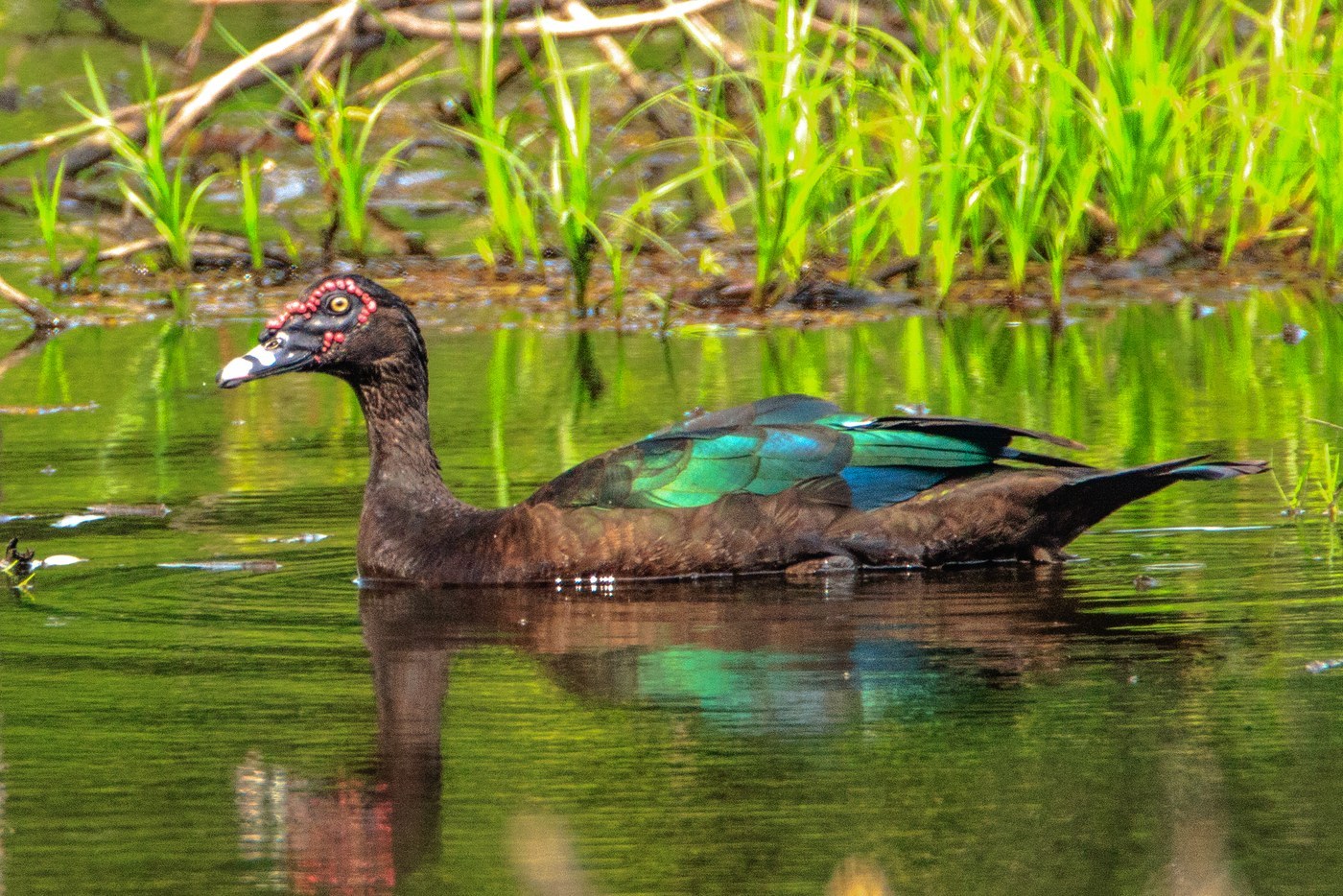
Key Field Marks
- Size & shape: A large, heavy-bodied duck with a long neck, broad wings, and a notably long tail; males are substantially bigger than females.
- Face: Bare, warty, reddish-black caruncled skin around the eyes and bill base, more extensive and fleshy on adult males, which also show a small knob at the base of the bill.
- Wild-type plumage: Glossy black overall with a green-purple sheen and a bold white patch on the upperwing coverts, visible at rest and especially in flight.
- Feral/domestic plumage: Highly variable — often pied black-and-white, all-white, or buffy, since most North American Muscovy Ducks descend from domesticated stock.
- Legs: Sturdy, with strong claws that allow the species to perch and roost in trees, unusual among ducks.
Separating It From Similar Species
- Domestic/feral hybrids vs. wild Muscovy: True wild-type birds are uniformly glossy black with a clean white wing patch and less bulky facial caruncles; feral park birds are usually blotchy pied and heavier-bodied with more exaggerated red facial skin from selective breeding.
- Black-bellied Whistling-Duck: Smaller and more slender with a bright pink bill and legs and a black belly, lacking the bare red facial skin.
- American Black Duck: Much smaller, brownish overall, with a yellow-green bill and no facial caruncles.
Where and When to See It
The native range of the Muscovy Duck is tropical lowlands from Mexico through Central America into South America, where wild birds inhabit wooded swamps, rivers, and lagoons and roost or nest in tree cavities. In the United States, free-ranging feral populations — descended from domesticated birds — are common and resident year-round in parks, ponds, and urban waterways, especially in Florida, Texas, and California. Unlike most ducks, Muscovy Ducks often perch on branches, fences, and rooftops.
Voice
Muscovy Ducks are mostly silent. Males give a low, breathy hiss and quiet huffing sounds, especially during display, while females produce weak, low quacking or cooing notes. Wingbeats can produce a soft whistling sound in flight.
Frequently asked questions
Why do Muscovy Ducks in US parks look so different from field guide pictures?
Most US park and backyard Muscovy Ducks descend from domesticated stock and show variable pied, white, or buffy plumage, while truly wild birds in their native tropical American range are uniformly glossy black with a white wing patch.
What is the bare red skin on a Muscovy Duck's face?
It is caruncled (warty) bare skin, most developed in adult males, which also typically show a small knob at the base of the bill.
Can Muscovy Ducks perch in trees?
Yes, unlike most ducks they have strong claws suited to gripping branches, and wild birds roost and nest in tree cavities.
Are Muscovy Ducks native to the United States?
No, their native range is Mexico south through Central and South America; US populations are feral, descended from domesticated birds.