
Mountain Bluebird Identification Guide
A sky-blue songbird of open western North American country, distinguished from other bluebirds by its lack of any rusty breast patch and its habit of hovering while hunting insects.
Read the full Mountain Bluebird encyclopedia entry →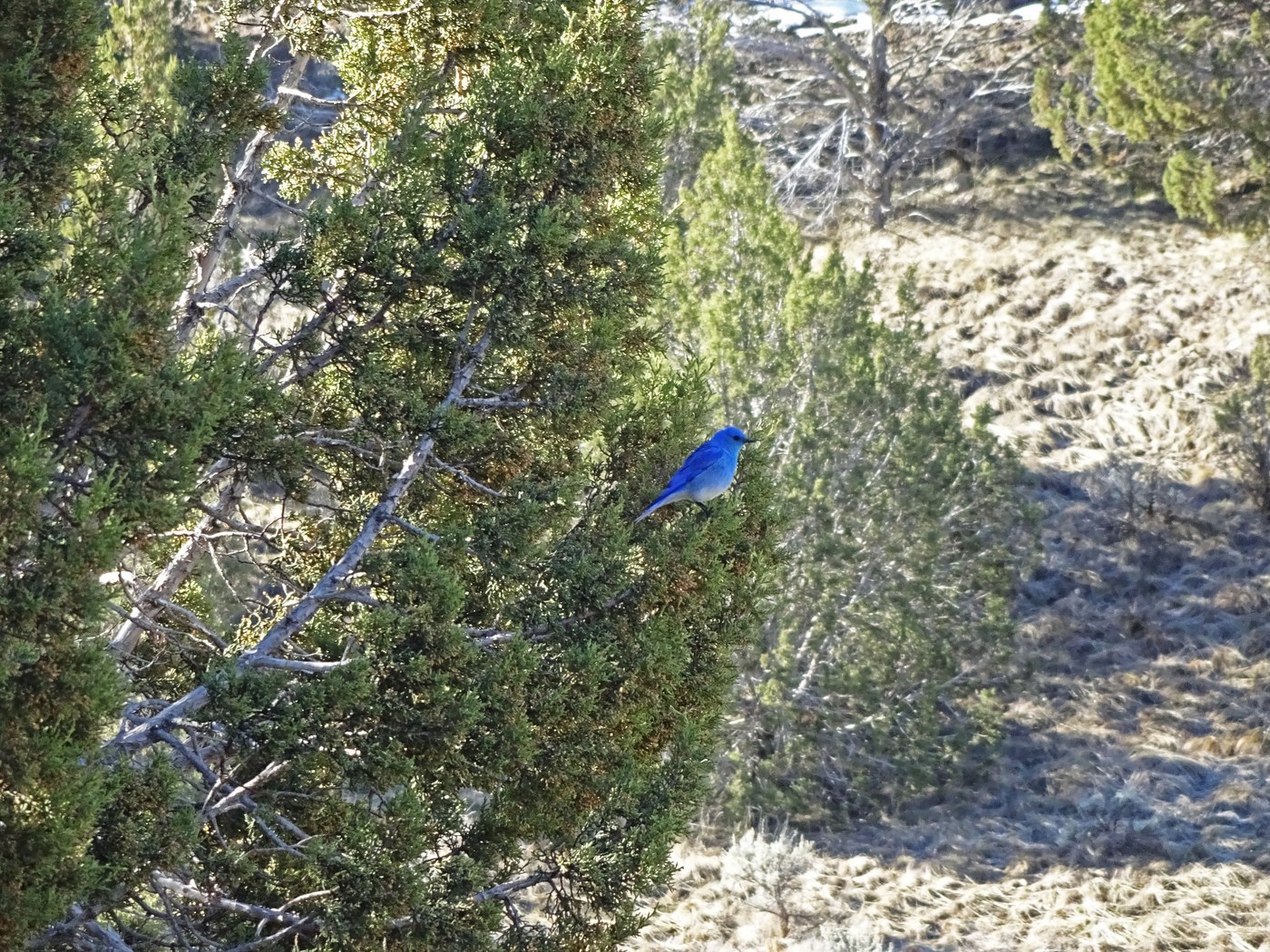
Key Field Marks
- Small thrush, about 18 cm (7 in).
- Male: brilliant sky-blue overall, brighter and more turquoise on the wings and tail, paler blue on the throat and breast fading to a whitish belly — with no rusty or orange breast patch, the key mark separating it from other North American bluebirds.
- Female: gray-brown overall with a pale blue wash on the wings, tail, and rump; a whitish eye-ring is often visible, and the breast may show a faint buffy tone but never a distinct orange patch.
Separating It From Similar Species
Western Bluebird
- Male shows a rusty-orange breast and back patch contrasting with the blue head, wings, and tail; female is duller but usually shows at least a hint of orange on the breast — both differ from the "all-blue" male and plain gray female Mountain Bluebird.
Eastern Bluebird
- Has a rusty-orange throat and breast with a white belly, and occupies mostly non-overlapping range in the east; readily separated by the orange throat alone.
Behavior & Voice
- Frequently hovers in place while hunting insects over open ground, a kestrel-like behavior more pronounced in this species than in other bluebirds.
- Perches conspicuously on fence posts, wires, and low shrubs in open habitat while foraging.
- Forms loose flocks outside the breeding season, sometimes gathering in open fields and grasslands in winter.
- Voice is a soft, low warbling song and a simple "chur" call, both quieter than many other thrushes.
Habitat, Range & Season
- Breeds in open country at higher elevations across western North America — mountain meadows, sagebrush steppe, high grasslands, and burned or logged forest openings — from Alaska and Yukon south through the Rockies and Great Basin to New Mexico and Arizona.
- A secondary cavity nester, using natural cavities, old woodpecker holes, and nest boxes.
- Winters in open lowland habitat, grassland, and farmland across the southwestern United States and Mexico, often in flocks.
Frequently asked questions
What is the easiest way to tell a male Mountain Bluebird from a Western Bluebird?
Male Mountain Bluebird is entirely blue with no rusty patch anywhere, while male Western Bluebird has a rusty-orange breast and back contrasting with its blue head, wings, and tail.
Why does the Mountain Bluebird hover?
It regularly hovers in place over open ground while scanning for insects, a foraging technique used more frequently than in other bluebird species.
Where does the Mountain Bluebird breed?
In open, high-elevation habitats across western North America, including mountain meadows, sagebrush steppe, and grasslands, from Alaska south to New Mexico and Arizona.
Does the Mountain Bluebird use nest boxes?
Yes, as a secondary cavity nester it readily uses nest boxes in addition to natural cavities and old woodpecker holes.