
Montagu's Harrier Identification Guide
A slim, buoyant harrier of open farmland and steppe, told from other harriers by its narrower wings, black wing bars in the male, and long-distance migration to sub-Saharan Africa.
Read the full Montagu's Harrier encyclopedia entry →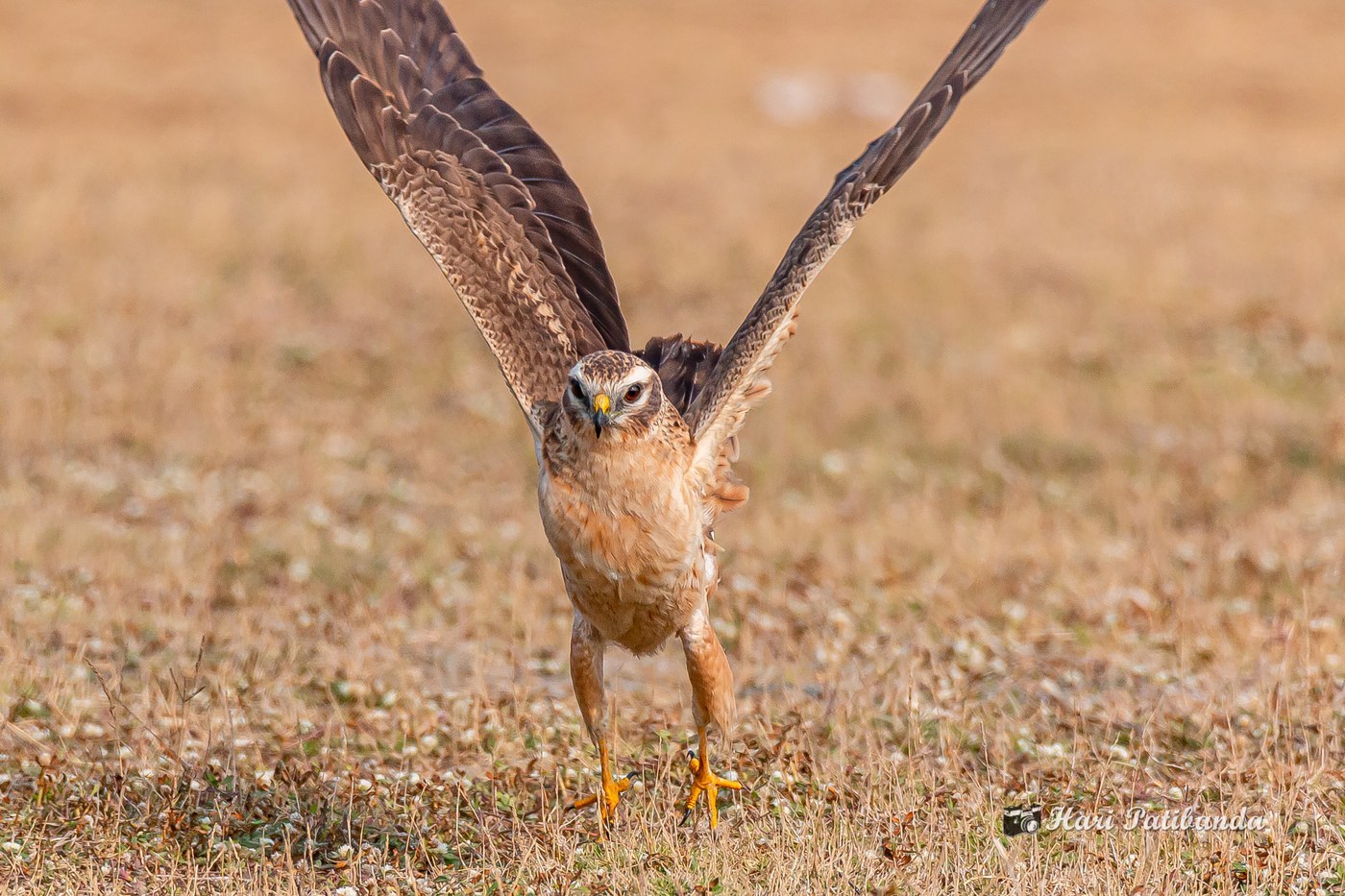
Key Field Marks
- Slim, lightly built harrier with narrow, pointed wings and a graceful, almost falcon-like flight compared to the broader-winged Hen/Northern Harrier.
- Male: pale gray overall with black wingtips, plus a diagnostic single black bar across the upperwing secondaries and a black bar on the underwing — a pattern not shown by male Hen Harrier or Pallid Harrier. Chestnut streaking is visible on the flanks and underwing coverts at close range.
- Female: brown above, streaked below, with a banded tail; wings are narrower and more pointed than female Hen Harrier, and the white rump patch is smaller and less contrasting. Shows a pale face with a dark eye patch giving a subtle "boa" collar effect.
- Juvenile: rich, plain rufous-orange underparts (unstreaked) with a dark hood and collar, distinct from the streaked juveniles of other harriers.
Separating It From Similar Species
Hen Harrier / Northern Harrier
- Bulkier, broader-winged, with a larger, more contrasting white rump. Male Hen Harrier is plain pale gray with black wingtips only, lacking Montagu's black wing bars.
Pallid Harrier
- Male is even paler gray with just a narrow black wedge at the wingtip and no black secondary bar. Female Pallid Harrier is very similar to female Montagu's but shows a narrower dark trailing edge to the wing; careful comparison of wing shape and underwing pattern is needed.
Behavior & Voice
- Hunts with low, buoyant, tilting flight over open ground, wings often held in a shallow V, searching for small mammals, birds, and insects.
- Nests on the ground, often within cereal crops and grassland in agricultural landscapes, making nests vulnerable to farm machinery — a key conservation concern in parts of its range.
- Largely silent away from the breeding grounds; near the nest gives a sharp, yelping "kek-kek-kek" alarm call.
Habitat, Range & Season
- Breeds in open farmland, steppe, grassland, and marshes across much of Europe and western and central Asia.
- A true long-distance migrant, wintering in sub-Saharan Africa; present in breeding areas roughly from April to September.
- Often forms loose communal winter roosts on the African wintering grounds.
Frequently asked questions
How do I tell a male Montagu's Harrier from a male Hen Harrier?
Look for the black bar across the upperwing secondaries and a black bar on the underwing in Montagu's Harrier; male Hen Harrier is plain pale gray with black wingtips only and no such bars.
What is the easiest way to separate female Montagu's from female Hen Harrier?
Montagu's Harrier has narrower, more pointed wings and a smaller, less contrasting white rump patch than the bulkier Hen Harrier.
Where does Montagu's Harrier spend the winter?
It migrates long distances to winter in sub-Saharan Africa, returning to Europe and western Asia to breed in spring.
What habitat does Montagu's Harrier nest in?
It typically nests on the ground in open farmland, cereal crops, grassland, or marshland, which makes nests susceptible to disturbance from agricultural activity.