
Moluccan Cockatoo Identification Guide
A large, pale pink-and-white cockatoo endemic to Seram and nearby Indonesian islands, instantly recognizable by its huge salmon-colored crest.
Read the full Moluccan Cockatoo encyclopedia entry →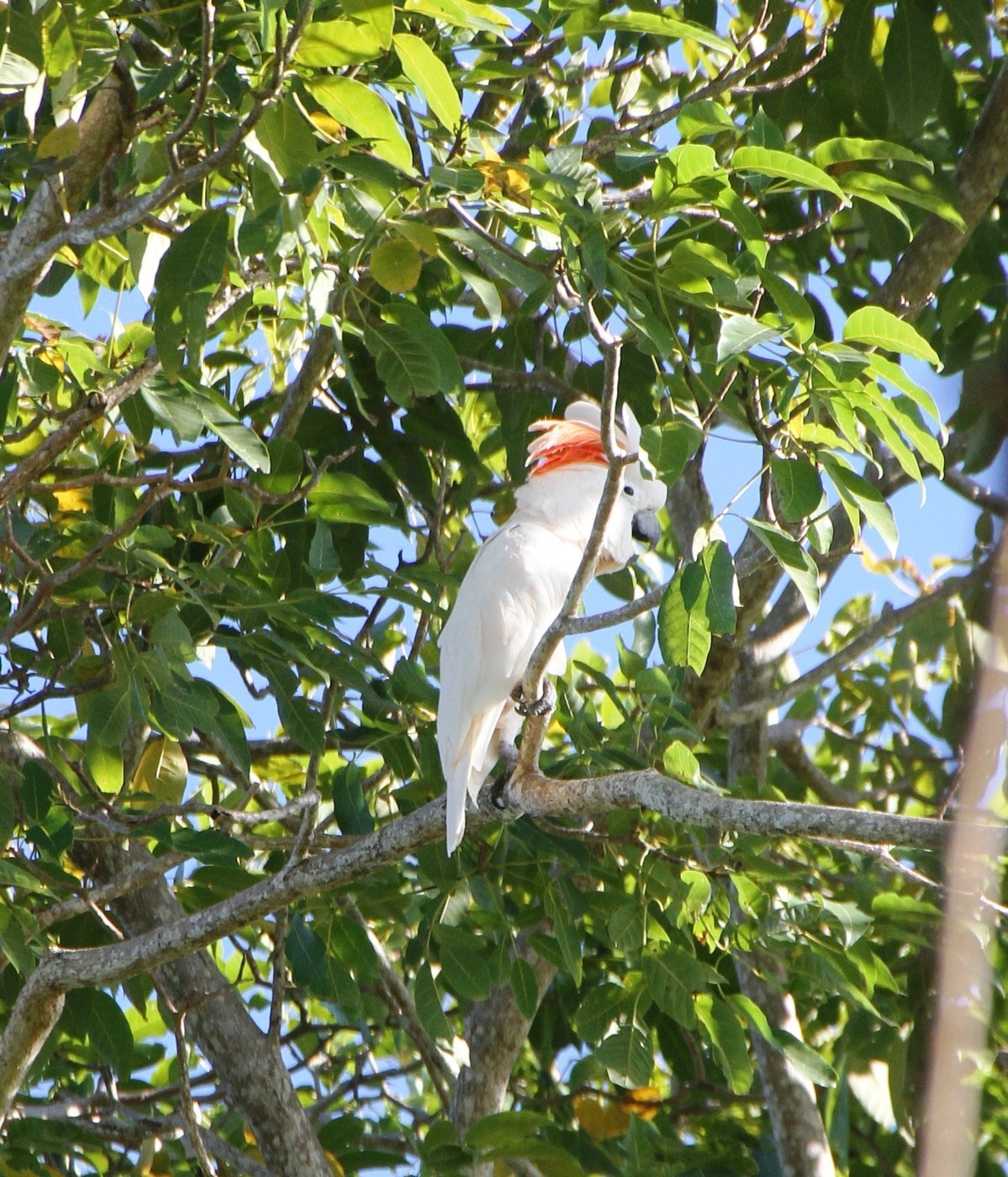
Key Field Marks
- Large cockatoo, about 50 cm (20 in), among the biggest of the white cockatoo species.
- Plumage appears mostly white to pale pink at rest, with a warm salmon-peach wash most visible on the crest, cheeks, and underwing/undertail when the bird stretches or flies.
- Huge, recurved crest, usually held flat along the head but raised into a dramatic wide fan of salmon-pink feathers when excited or alarmed.
- Dark grayish-black bill and blackish legs and feet; pale bluish-white bare eye-ring.
Separating It From Similar Species
Umbrella Cockatoo
- Pure white overall with only minimal yellow tinge under the wings and tail, and a rounder white crest — lacks the strong salmon-pink color of Moluccan Cockatoo.
Sulphur-crested Cockatoo
- White body with a bright yellow (not pink) crest and yellow wash under wings and tail, and is smaller overall.
Citron-crested and Yellow-crested Cockatoos
- Both are considerably smaller, with orange or yellow crests rather than the large salmon-pink crest of the Moluccan Cockatoo.
Behavior & Voice
- Highly social, typically seen in pairs within larger foraging flocks that feed on seeds, nuts, and fruit in the forest canopy.
- Extremely loud, raucous screeching calls that carry long distances through the forest, used to maintain contact between flock members.
- Forms strong, long-term pair bonds; both parents assist in raising young in tree cavities.
Habitat, Range & Season
- Endemic to Seram and a few neighboring islands in the Moluccas (Maluku), Indonesia, inhabiting lowland and hill tropical forest.
- Resident year-round within its restricted island range; does not migrate.
- Classified as Vulnerable/Endangered due to historical trapping pressure for the pet trade and ongoing habitat loss, making wild sightings increasingly localized to remaining forest tracts.
Frequently asked questions
What makes the Moluccan Cockatoo's crest distinctive?
It is unusually large and salmon-pink in color, forming a dramatic wide fan when raised — larger and more colorful than the crests of most other white cockatoo species.
Where in the wild does the Moluccan Cockatoo live?
It is endemic to Seram and a few neighboring islands in the Moluccas of Indonesia, found in lowland and hill forest.
How is it different from the Umbrella Cockatoo?
Moluccan Cockatoo shows a distinct salmon-pink wash on its crest and underparts, while the Umbrella Cockatoo is essentially pure white with only a slight yellow tinge.
Is the Moluccan Cockatoo endangered in the wild?
Yes, it is considered threatened due to past trapping for the pet trade and continued loss of its forest habitat on Seram.