
Meadow Pipit Identification Guide
A small, streaky brown ground bird of open moorland, grassland, and coastal habitats across Europe and northern Asia, best known for its thin, high call and parachuting song-flight display.
Read the full Meadow Pipit encyclopedia entry →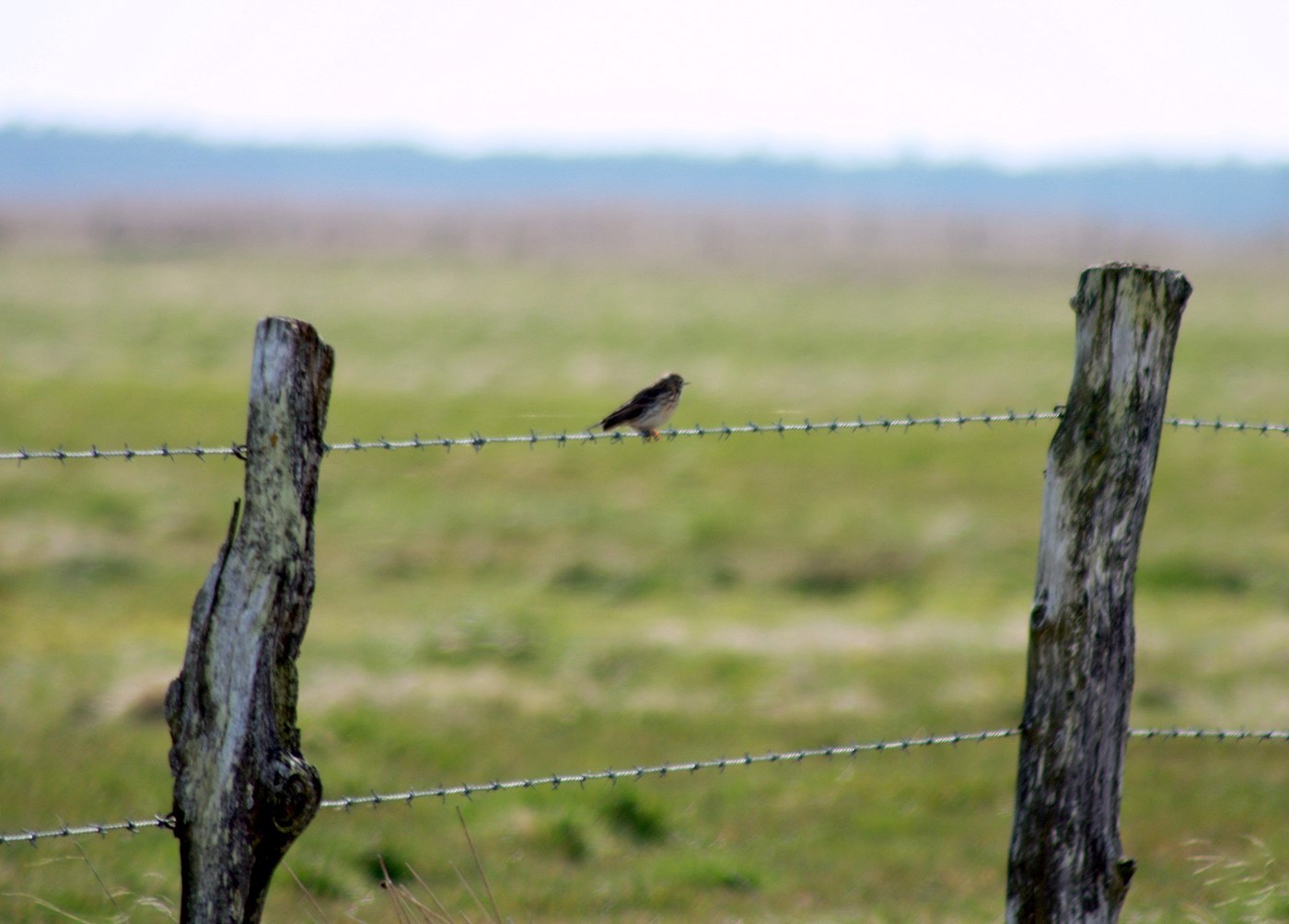
Key Field Marks
- Size & shape: A slim, small pipit about 14.5–15 cm (5.5–6 in) long, with a slender build, moderately long tail with white outer tail feathers, and a thin, pointed bill.
- Plumage: Overall streaky olive-brown to buffy-brown above, with dark streaking on the crown, back, and mantle; underparts are pale buff to whitish with dense dark streaking across the breast and flanks.
- Legs: Pale pinkish-brown legs with a notably long, straight hind claw, an adaptation for a ground-dwelling lifestyle typical of pipits.
- Face: Fairly plain face with a thin pale supercilium (eyebrow) and pale eye-ring; lacks strong facial contrast.
- Behavior: Walks (rather than hops) on the ground with a characteristic bobbing gait, often pumping its tail; flushes with a jerky, undulating flight while calling.
Similar Species
- Tree Pipit (Anthus trivialis): Very similar in plumage but has a shorter hind claw, a bolder facial pattern, buzzier "spEEZ" call (versus Meadow Pipit's thin "ist" call), and typically favors open woodland edge rather than open moorland.
- Rock Pipit (Anthus petrosus) / Water Pipit (Anthus spinoletta): Larger, darker-legged, and less crisply streaked below, typically found on rocky coasts (Rock Pipit) or near water in winter (Water Pipit), rather than open grass/moor.
- Red-throated Pipit (Anthus cervinus, non-breeding): Shows heavier black streaking on the back forming near-solid lines and, in breeding plumage, a reddish throat; call is a distinctive high, thin "pseeeh."
Where & When to See It
- Range: Breeds widely across Europe, Iceland, and into northern Asia; one of the most abundant breeding birds on British and Irish moorland and upland grassland.
- Habitat: Open, treeless country — moorland, rough grassland, heath, coastal machair, saltmarsh, and tundra edge for breeding; more varied open habitats including farmland and coastal areas in winter.
- Season: Northern and upland breeders largely migrate south for winter, with many British/Continental birds wintering around the Mediterranean and North Africa; some lowland and coastal populations are resident or short-distance migrants, so the species can be seen year-round in milder parts of its range.
Voice
- Flight/contact call is a thin, high, repeated "ist ist ist" or "sip-sip," often the first clue to a pipit overhead.
- Song is delivered in a distinctive parachuting display flight: the bird rises steeply on quivering wings, then descends in a slow, fluttering glide with the wings held up, singing a thin accelerating trill that slows toward the end.
Frequently asked questions
What is the easiest way to identify a Meadow Pipit in flight?
Listen for its thin, repeated 'ist-ist-ist' call and look for white outer tail feathers flashing during its jerky, undulating flight over open ground.
How do I separate Meadow Pipit from Tree Pipit?
Meadow Pipit has a longer hind claw, a plainer face, a thinner 'ist' call, and favors open moorland/grassland, while Tree Pipit has a shorter hind claw, a buzzier 'spEEZ' call, and prefers open woodland edge with scattered trees for song perches.
What does the Meadow Pipit's song-flight look like?
The male rises steeply into the air on fluttering wings, then parachutes back down slowly with wings raised, singing an accelerating then slowing trill throughout the descent.
Is Meadow Pipit migratory?
Many northern and upland-breeding populations migrate south to winter around the Mediterranean and North Africa, while some coastal and lowland populations are resident or only short-distance migrants.