
Marsh Wren Identification Guide
A small, boldly marked North American wren of cattail marshes, known for its bold white eyebrow, streaked back, and nonstop gurgling song.
Read the full Marsh Wren encyclopedia entry →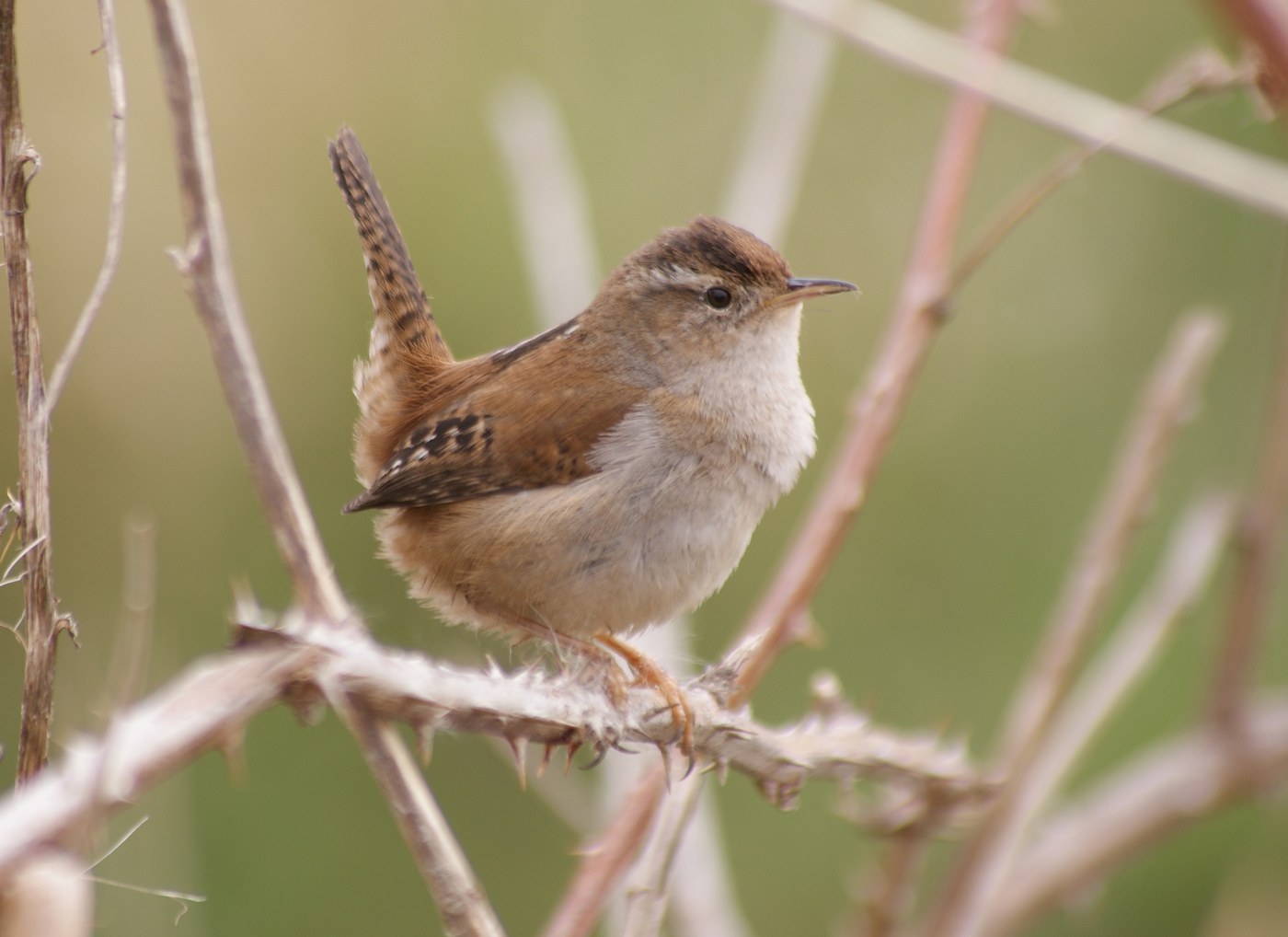
Key Field Marks
- Size & shape: A small wren, 11-14 cm, with the typical cocked-tail wren posture and a fine, slightly downcurved dark bill.
- Plumage: Warm brown overall with a bold white eyebrow stripe (supercilium), a black patch on the upper back boldly streaked with white, and rufous-brown wings and flanks.
- Behavior: Skulking but highly vocal, clambering through dense marsh vegetation and often perching briefly on a reed stem to sing.
Separating It From Similar Species
- Sedge Wren is paler and buffier overall, with fine streaking that extends onto the crown (Marsh Wren's crown is unstreaked) and a thinner, less prominent white eyebrow; Sedge Wren also favors drier sedge meadows and wet grasslands rather than deep cattail marsh.
- House Wren lacks a bold white eyebrow and has a plainer, unstreaked grayish-brown back, and prefers scrub, gardens, and woodland edges rather than marshes.
- The combination of a bold white eyebrow, black-and-white streaked back patch, and dense marsh habitat is diagnostic for Marsh Wren.
Where & When to See One
- Habitat: Freshwater and brackish marshes with tall stands of cattails, bulrushes, or reeds.
- Range: Breeds widely across North America, from southern Canada through much of the US; northern and interior populations migrate to winter in the southern US and Mexico, while some western and coastal populations are largely resident.
- Behavior: Males build multiple 'dummy' nests woven into the reeds in addition to the one actually used, likely to confuse predators or attract mates.
Voice
- A loud, gurgling, mechanical-sounding rattling song, often delivered in rapid bursts throughout the day and sometimes even at night; the call is a harsh, low tsuck.
Frequently asked questions
How do you tell Marsh Wren from Sedge Wren?
Marsh Wren has an unstreaked crown and a bolder white eyebrow, and it favors deep cattail/bulrush marsh, while Sedge Wren shows fine streaking extending onto the crown, a less bold eyebrow, and prefers drier sedge meadows.
Why does the Marsh Wren build so many nests?
Males build several unused 'dummy' nests within their territory in addition to the real nest, which may help confuse predators or impress prospective mates.
What habitat should I search for Marsh Wrens?
Dense freshwater or brackish marshes with tall cattails, bulrushes, or reeds — they rarely stray from this thick emergent vegetation.
Does the Marsh Wren sing at night?
Yes, males frequently sing their gurgling, rattling song not only during the day but also at night, especially during the breeding season.