
Marsh Tit Identification Guide
A small, glossy-capped European woodland tit that is nearly identical to Willow Tit and is best told apart by its calls.
Read the full Marsh Tit encyclopedia entry →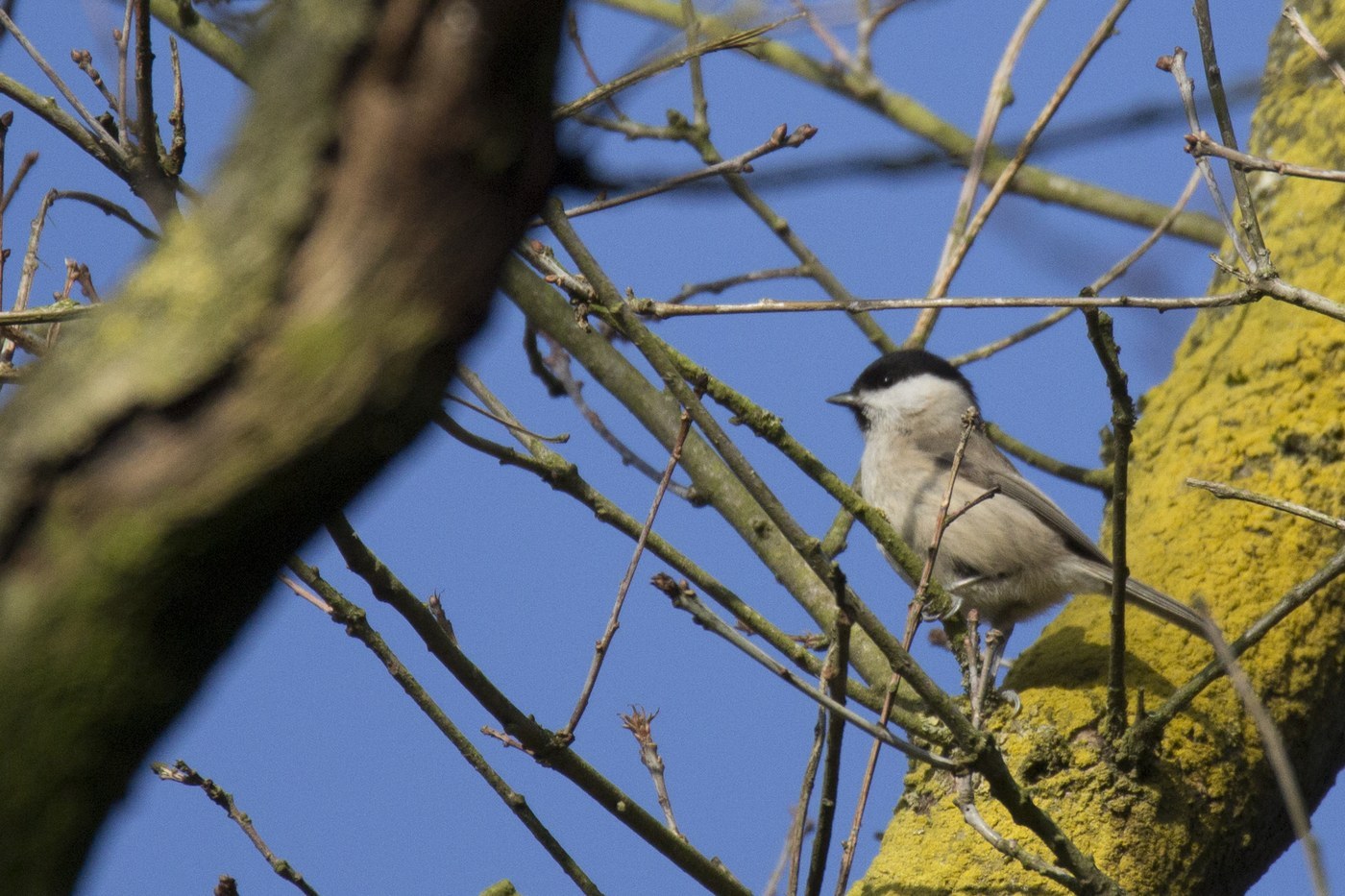
Key Field Marks
- Size & shape: A small, compact tit, 11-12 cm, with a stubby dark bill and no crest.
- Head: Glossy black cap extending onto the nape, with a small, neat black bib on the throat.
- Body: Warm buffy-brown back, pale buffish-white underparts, and plain wings without a pale wing bar or panel.
Separating It From Similar Species
- Willow Tit is the classic confusion species and looks extremely similar. Key differences:
- Marsh Tit's black cap is glossy; Willow Tit's cap is duller, more matte/sooty black.
- Marsh Tit's throat bib is smaller and neater; Willow Tit's bib tends to look slightly larger and less crisp.
- Willow Tit often shows a pale panel on the folded secondaries (from paler feather edges); Marsh Tit's wing is plainer.
- Marsh Tit has a proportionately thinner bill than Willow Tit.
- Voice is the most reliable feature: Marsh Tit gives an explosive, sneeze-like pitchou call, while Willow Tit gives a nasal, buzzing dzzzt-dzzzt call and a distinctive slow, sad zi-zi-tchay-tchay-tchay song.
Where & When to See One
- Habitat: Mature deciduous and mixed broadleaf woodland, especially with a well-developed shrubby understory, plus hedgerows and wooded gardens.
- Range: Widespread across much of Europe (absent from the far north) and into temperate parts of Asia.
- Season: Resident and non-migratory; pairs hold territory year-round and do not typically wander far from their breeding wood.
Voice
- The most distinctive and reliable field mark: a loud, explosive, sneezing pitchou or repeated pitchu-pitchu-pitchu call; song is a simple repeated schip-schip-schip.
Frequently asked questions
What is the best way to tell Marsh Tit from Willow Tit?
Voice is the most reliable clue — Marsh Tit gives a sharp, sneeze-like 'pitchou' call, while Willow Tit gives a nasal, buzzing call and a slow, sad song. Visually, Marsh Tit has a glossier black cap, a smaller neater bib, and a thinner bill.
Does Marsh Tit have a wing bar?
No. Marsh Tit has plain wings, whereas Willow Tit often shows a paler panel on the folded secondaries that can look like a faint wing patch.
Is the Marsh Tit found near marshes?
Despite the name, Marsh Tit is a woodland bird associated with mature deciduous forest, not wetlands — the name is a historical misnomer.
Does the Marsh Tit migrate?
No, it is a resident, non-migratory species that typically stays on or near its breeding territory throughout the year.