
Marbled Murrelet Identification Guide
A small, cryptically plumaged Pacific alcid that nests high in old-growth conifers and is best located near shore at dawn by its sharp calls.
Read the full Marbled Murrelet encyclopedia entry →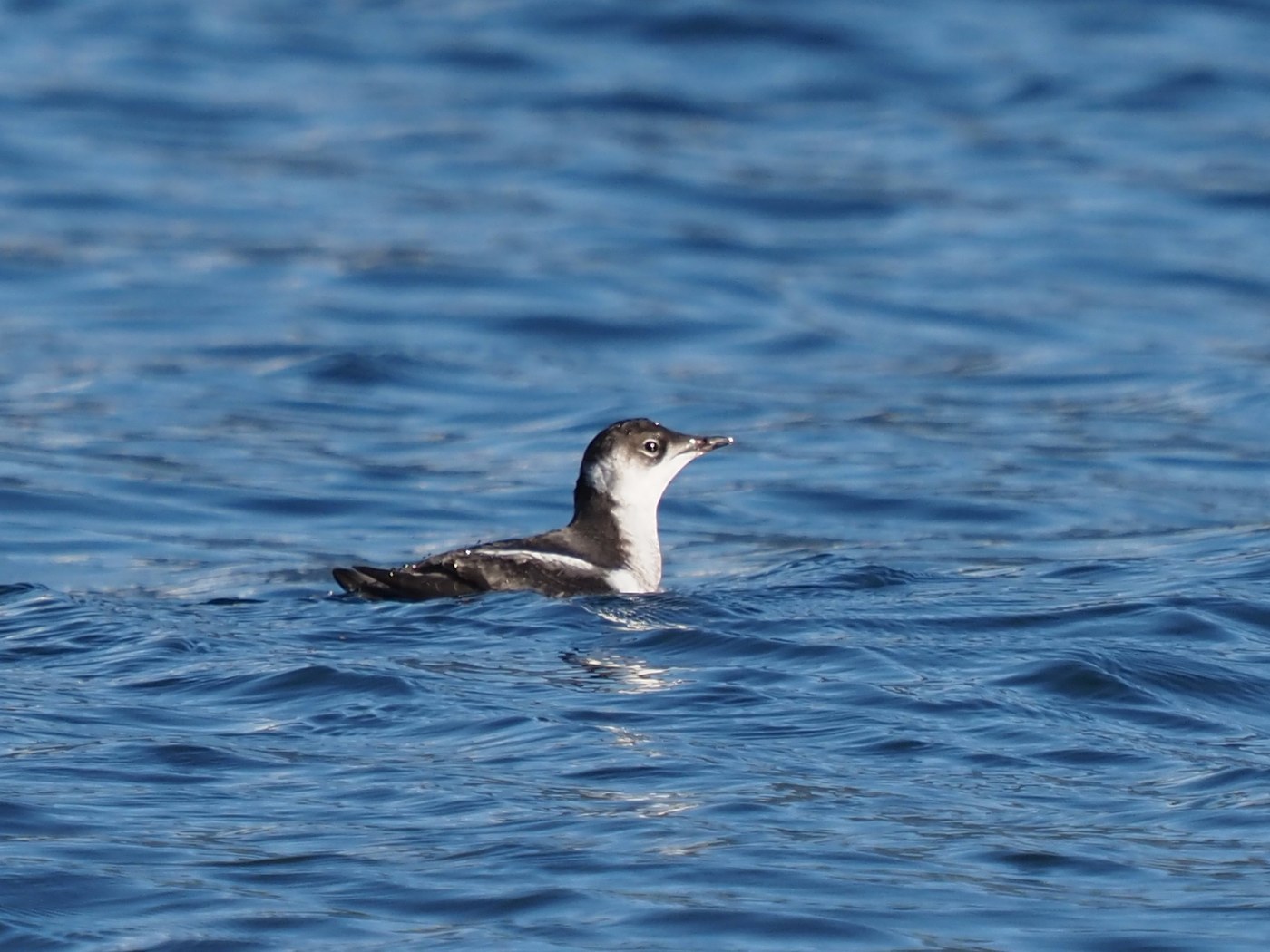
Key Field Marks
- Size & shape: A small, chunky, short-necked alcid, about 24-25 cm, with a thin, dark, pointed bill.
- Breeding plumage (spring-summer): Dark sooty-brown overall with fine buff and rufous mottled edging that gives an overall 'marbled' texture — excellent camouflage for a bird that nests on exposed tree limbs.
- Nonbreeding plumage (fall-winter): Much crisper — blackish upperparts, white underparts, a white scapular stripe along the shoulder, and a dark partial collar across the sides of the neck.
- Behavior: Usually seen singly or in pairs, riding low on the water close to shore; dives frequently to feed on small fish.
Separating It From Similar Species
- Ancient Murrelet has a grayer back, a sharply defined black throat and cap, and often a pale/pinkish bill, differing from the Marbled Murrelet's dark bill and less sharply demarcated head pattern.
- Kittlitz's Murrelet, found farther north, is paler and grayer overall with a shorter bill and more extensively white face in winter plumage, and breeds near glaciers rather than in forests.
- The combination of small size, dark mottled or crisp black-and-white plumage depending on season, and a habit of staying close inshore helps confirm Marbled Murrelet within its range.
Where & When to See One
- Habitat: Nearshore marine waters, bays, and protected coastal waters for foraging; uniquely among alcids, it nests far inland on wide, moss-covered limbs of old-growth conifers, sometimes many miles from the coast.
- Range: Pacific coast of North America, from the Aleutian Islands and southern Alaska south through British Columbia, Washington, Oregon, and central California.
- Season: Present year-round within its range; breeding activity (flights between sea and forest nest sites) is most detectable at dawn and dusk from spring through summer.
- Conservation note: Listed as threatened in parts of its US range due to loss of old-growth nesting forest.
Voice
- A distinctive sharp, repeated keer-keer or high mew call, most often given in flight around dawn near breeding forests as birds commute between the ocean and inland nest trees.
Frequently asked questions
Where does the Marbled Murrelet nest?
Unusually for an alcid, it nests high on wide, moss-covered branches of old-growth conifer trees, often several miles inland from the coast, rather than on cliffs or in burrows.
How can you tell breeding and nonbreeding Marbled Murrelets apart?
Breeding birds are dark sooty-brown with fine mottled buff/rufous edging for camouflage on the nest, while nonbreeding birds show crisp blackish upperparts, white underparts, and a white scapular stripe.
What is the best time to detect Marbled Murrelets near a breeding forest?
Dawn, when birds make distinctive keer-keer flight calls while commuting between the ocean and their inland nest trees.
Why is the Marbled Murrelet considered threatened?
Its dependence on old-growth conifer forest for nesting makes it vulnerable to habitat loss from logging, and much of its historic old-growth nesting habitat along the Pacific coast has been reduced.