
Marabou Stork Identification Guide
A massive African scavenging stork instantly recognizable by its bald pink head, huge pale bill, and dangling inflatable throat pouch.
Read the full Marabou Stork encyclopedia entry →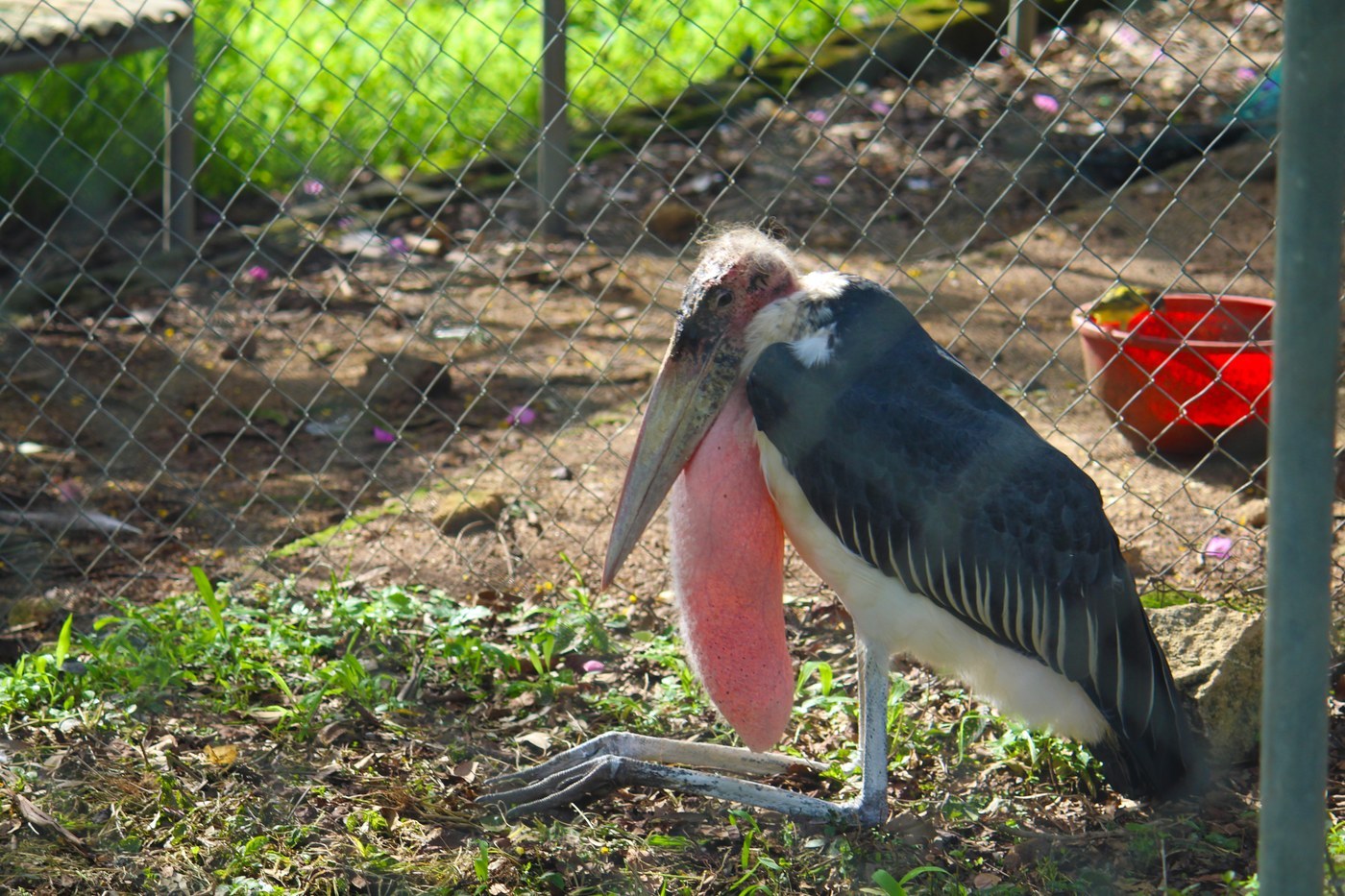
Key Field Marks
- Size: One of the largest storks in the world, standing 120-152 cm tall with a wingspan that can exceed 2.5-3.2 m.
- Head & neck: Bald, blotchy pink-and-grey skin covers the head and neck, giving it a vulture-like, unfeathered look; a long, pale pink inflatable throat pouch hangs from the front of the neck.
- Bill: Enormous, heavy, and straight, pale horn-colored — one of the largest bills of any bird.
- Body: Blackish-grey back and wings contrast with white underparts; birds often stand hunched with the bill resting against the chest.
- Flight: Unlike most storks, which fly with the neck extended, Marabou Storks fly with the neck pulled back and retracted, more like a heron.
Separating It From Similar Species
- Vultures can look similar at rest due to the bald head, but storks fly with legs trailing straight and the neck retracted, and lack a hooked raptor bill — the Marabou's bill is long, straight, and dagger-like rather than hooked.
- Lesser and Greater Adjutant storks of Asia are close relatives with a similar bald-headed, scavenging look, but they do not overlap geographically with Marabou Stork (which is African) and differ subtly in pouch shape and proportions.
- No other African bird combines this huge size, bald pink head, massive pale bill, and dangling throat pouch.
Where & When to See One
- Habitat: Savanna, open wetlands, floodplains, and increasingly rubbish dumps and urban areas near towns and cities, wherever a reliable food supply exists.
- Range: Widespread across sub-Saharan Africa.
- Behavior: An opportunistic scavenger, often seen alongside vultures at carcasses, but also wades in shallow water to catch fish, frogs, and insects, and will take eggs and nestlings of other birds.
- Season: Resident, though some local and seasonal movements occur in response to food and water availability.
Voice
- Largely silent; the main sounds are non-vocal bill-clattering displays given at the nest, along with occasional low croaks or grunts.
Frequently asked questions
Why does the Marabou Stork have a bald head?
Like vultures, its bald head and neck are an adaptation for scavenging — feathers there would quickly become soiled with blood and carrion while feeding on carcasses.
What is the pink pouch on a Marabou Stork's neck for?
It is an inflatable throat sac used in social and courtship displays; its exact function isn't fully understood, but it appears to be used to signal to other Marabou Storks.
How can you tell a Marabou Stork from a vulture in flight?
Marabou Storks fly with their neck retracted rather than extended, and have a straight, dagger-like bill, whereas vultures have a hooked bill adapted for tearing flesh.
Where in the world do Marabou Storks live?
They are found only in sub-Saharan Africa, ranging across savanna, wetlands, and increasingly around towns and rubbish dumps.