
Manx Shearwater Identification Guide
A crisply black-and-white North Atlantic seabird known for its stiff-winged, wave-skimming flight and nocturnal visits to burrow colonies.
Read the full Manx Shearwater encyclopedia entry →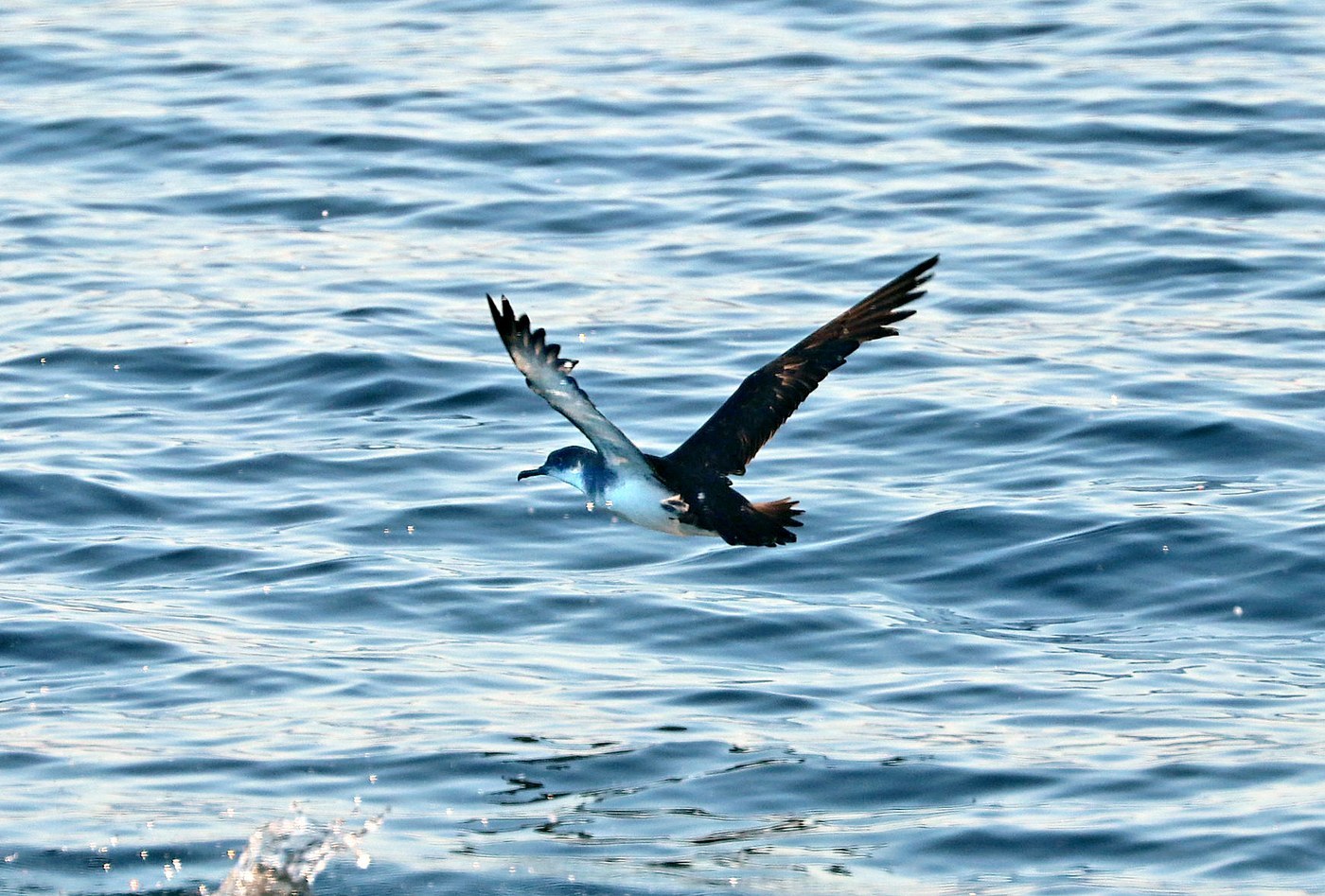
Key Field Marks
- Size & shape: A medium-sized shearwater, 30-38 cm, with slender, stiffly held wings, a long slim dark bill hooked at the tip, and pink legs and feet.
- Plumage: Sharply two-toned — blackish-brown upperparts contrast crisply with clean white underparts, including a white patch that curls up onto the flanks behind the wing and white undertail coverts.
- Flight: The classic 'shearing' flight — long glides low over the water on stiff, bowed wings, banking side to side so the black upperside and white underside flash alternately, wingtips sometimes nearly brushing the wave tops.
Separating It From Similar Species
- Balearic Shearwater is browner and dingier overall, especially on the underparts and underwing, lacking the Manx's crisp black-and-white contrast; it also has a stockier build and different flight action.
- Yelkouan Shearwater (Mediterranean) shows a less clean-cut white belly and a browner cap blending into the upperparts, without the sharp demarcation of Manx.
- Audubon's Shearwater (found in warmer Atlantic waters) is smaller, has a proportionately longer tail, and uses a more fluttery, less stiff-winged flight style.
- Look for the combination of crisp contrast, stiff-winged shearing flight, and pink legs to confirm Manx Shearwater.
Where & When to See One
- Habitat: Entirely pelagic outside the breeding season; nests colonially in burrows on grassy or peaty offshore islands, only visiting colonies after dark to avoid predatory gulls and skuas.
- Range: Breeds in the North Atlantic, with major colonies in Wales (Skomer and Skokholm islands), other parts of the UK and Ireland, Iceland, the Faroes, and northwestern France.
- Season: Present at colonies from March to September; after breeding, the population undertakes a huge transatlantic migration to winter off the coasts of Argentina and Brazil, making it visible on North American pelagic trips during migration.
Voice
- Silent at sea, but colonies at night erupt with eerie, cackling calls — a rhythmic, cackling 'ka-ka-ka-kak-kak-kaaa' used by birds returning to and calling from their nesting burrows.
Frequently asked questions
How do you tell Manx Shearwater from Balearic Shearwater?
Manx Shearwater shows crisp, high-contrast black upperparts and clean white underparts, while Balearic Shearwater looks browner and dingier overall, especially on the belly and underwing, with less defined contrast.
Why is the Manx Shearwater rarely seen on land during the day?
It only visits its breeding burrows after dark to avoid predatory gulls and skuas, so daytime views are almost always at sea rather than at the colony.
Where does the Manx Shearwater spend the winter?
After breeding in the North Atlantic, it migrates across the equator to winter in the South Atlantic off the coasts of Argentina and Brazil.
What does 'shearing' flight mean?
It describes the species' characteristic low, banking glide on stiff wings just above the water's surface, alternately flashing its dark upperside and white underside as it tilts from side to side.