Mallard Identification Guide
The familiar, widespread dabbling duck, with the male's glossy green head and yellow bill instantly recognizable on almost any body of water.
Read the full Mallard encyclopedia entry →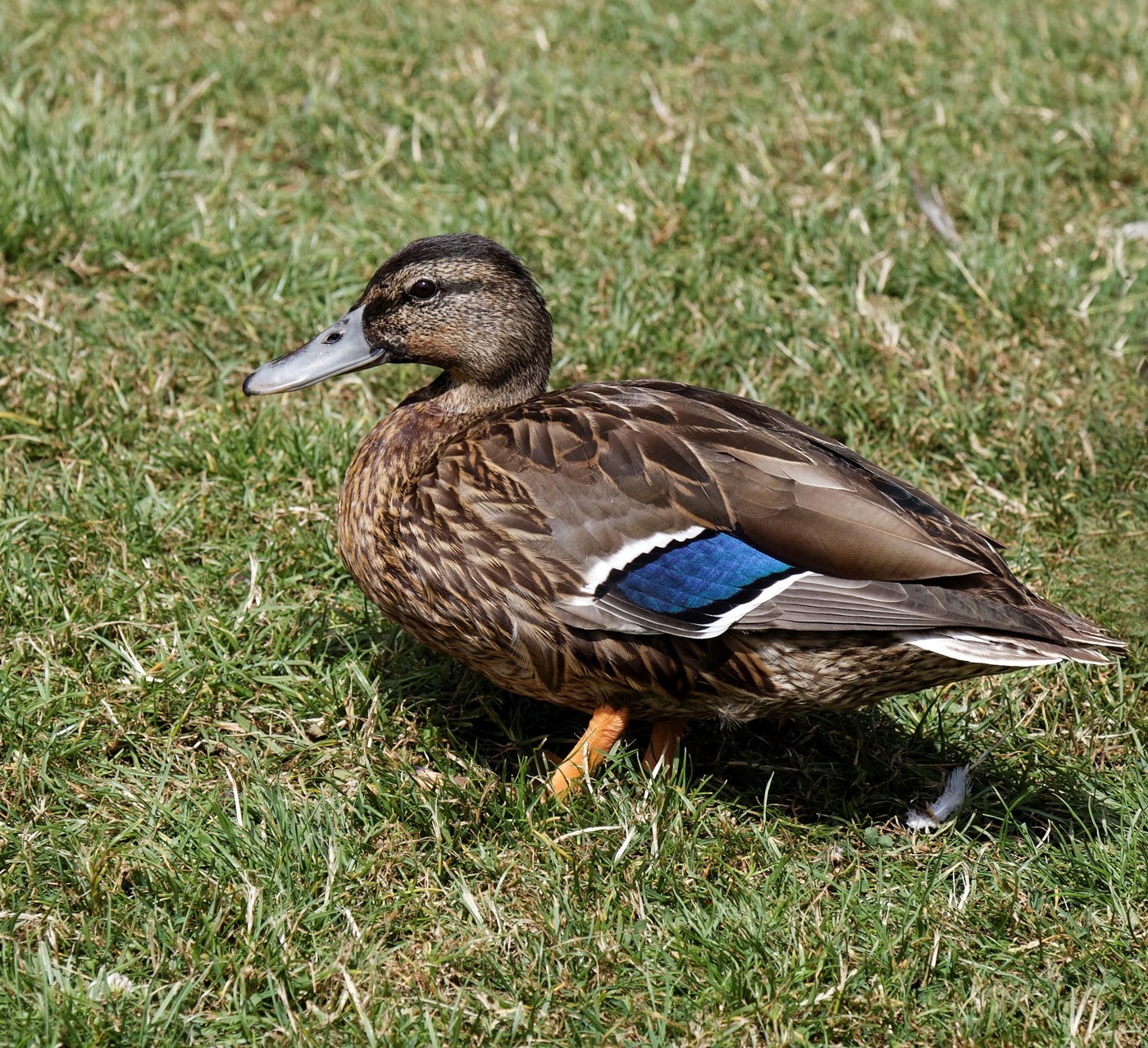
Key Field Marks
- Size & shape: A large dabbling duck (around 50–65 cm) with a fairly heavy body, a bill longer than the head is deep, and the classic "tip-up" feeding posture in shallow water.
- Breeding male (drake): Glossy iridescent green head, bright yellow bill, a white neck ring separating the green head from a chestnut-brown breast, grayish body, and black, upward-curled central tail feathers (the "drake curl").
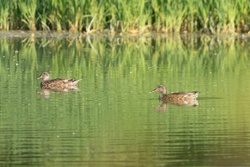
- Female (hen): Mottled brown overall with a dark eye-stripe, an orange-and-black mottled bill, and a plain brownish tail without curled feathers.
- Both sexes: Show a bright blue speculum (wing patch) bordered front and back by white bars, visible at rest and conspicuous in flight.
- Eclipse male: After breeding, males molt into a female-like brown eclipse plumage but usually retain the bright yellow (rather than orange-black) bill, a useful clue.
Behavior
A classic dabbling duck, feeding by tipping forward to graze on submerged vegetation, seeds, and invertebrates in shallow water rather than diving. Highly adaptable, found on almost any wetland from wild marshes to city park ponds, and often quite tame around people, readily accepting handouts. Forms pair bonds in fall and winter, with pairs frequently seen together well before the spring breeding season.
Separating It From Similar Species
- American Black Duck (overlaps in eastern North America): Overall much darker brown body with a paler head, lacking the male Mallard's green head and gray body; the two species also hybridize, producing intermediate-looking birds.
- Mottled Duck (Gulf Coast/Florida resident): Similar to a female Mallard but darker and more uniformly colored, without strong contrast, and lacks the white-bordered blue speculum's rear white bar in some populations.
- Domestic/hybrid Mallards: Common on park ponds, showing odd plumage combinations (all-white, black-and-white patches) resulting from domestic duck ancestry; true wild-type Mallards show the clean patterns described above.
- Gadwall (female): Female Mallards can be confused with female Gadwall, but Gadwall shows a white speculum patch (not blue) and a thinner, more delicately marked bill.
Where & When to See It
One of the most widespread ducks in the world, breeding across most of North America, Europe, and Asia, and introduced elsewhere. Found year-round in much of its range on lakes, ponds, rivers, marshes, and urban waterways; northern populations migrate south in winter to escape freezing water, while southern and temperate populations are largely resident. Comfortable in both wild wetlands and heavily urbanized settings.
Voice
The classic "quack" call, given primarily by females in a loud, descending series; males give quieter, softer rasping or grunting notes, along with a distinctive whistled note during courtship displays.
Frequently asked questions
How do you tell a male and female Mallard apart?
Males have a glossy green head, yellow bill, and gray body with a chestnut breast, while females are mottled brown overall with an orange-and-black bill; both sexes share a blue, white-bordered wing patch.
What does a Mallard in eclipse plumage look like?
Males molt into a female-like dull brown plumage after breeding but usually keep a bright yellow (not orange-black) bill, which helps distinguish them from true females.
How can I tell a wild Mallard from a park pond hybrid?
Wild-type Mallards show the clean green-head/yellow-bill (male) or mottled-brown (female) pattern described above; oddly patched all-white, black, or unusually colored birds on park ponds are typically domestic-Mallard hybrids.
What is the difference between Mallard and American Black Duck?
American Black Duck is uniformly dark blackish-brown with a paler head and lacks the male Mallard's green head and gray body; the two species also interbreed, producing intermediate hybrids.
Do Mallards migrate?
Northern populations migrate south in winter when water freezes, while Mallards in milder climates, including many urban populations, are largely resident year-round.
Mallard identified by the community
Recent Mallard sightings identified with Bird Identifier.