
Malachite Sunbird Identification Guide
A large African sunbird whose breeding male glitters metallic green with long tail streamers, favoring highland flowers like Protea and aloe.
Read the full Malachite Sunbird encyclopedia entry →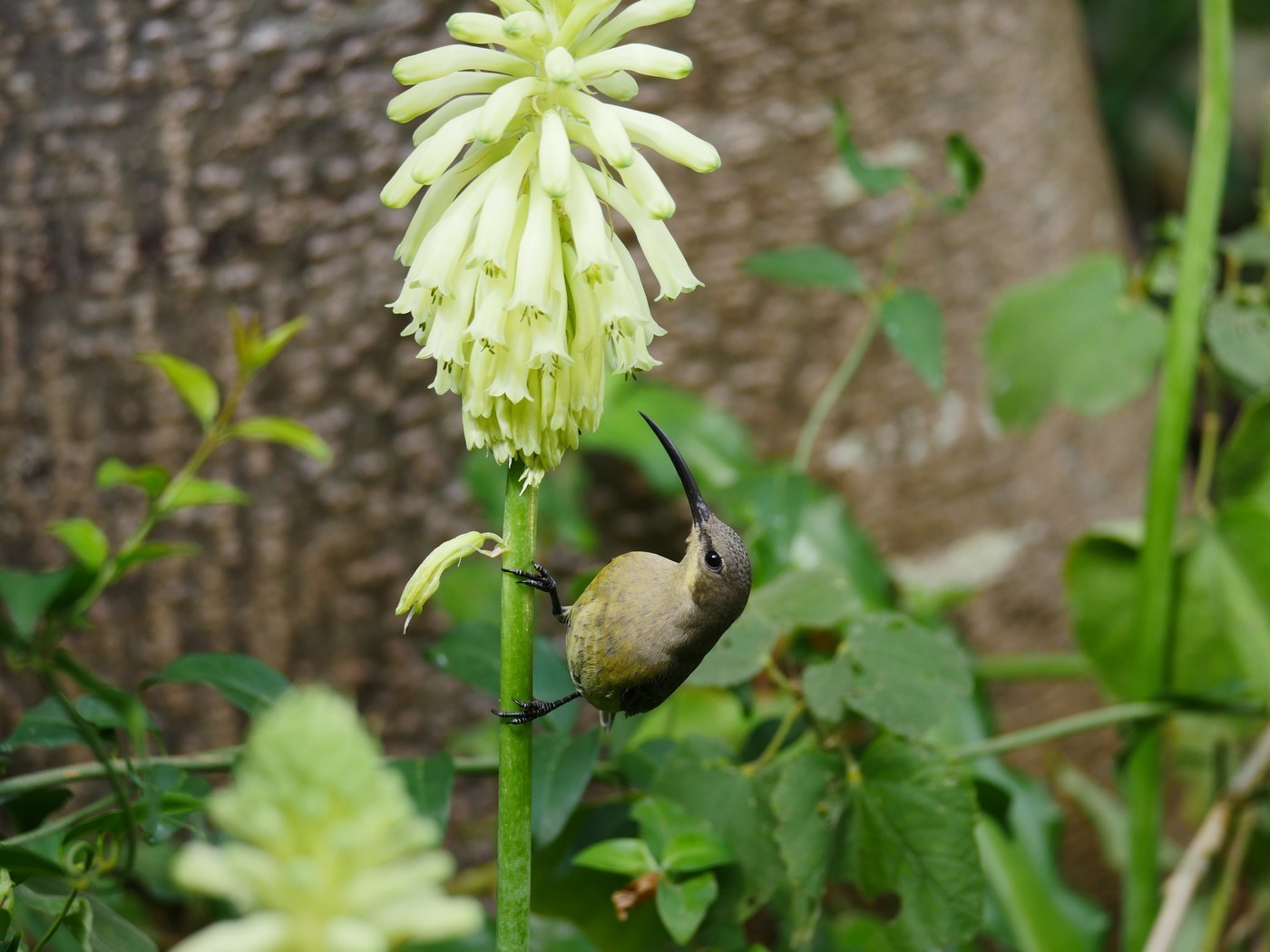
Key Field Marks
- Size & shape: One of the larger sunbirds, and breeding males appear especially long due to elongated central tail feathers that can add several extra centimeters to overall length.
- Breeding male: Overall iridescent metallic green, shifting to gold, bronze, or blue-green depending on the light, with blackish flight feathers and small bright yellow pectoral (side-breast) tufts that are often only visible during display.
- Female/nonbreeding male: Much duller — grayish-olive to olive-brown above, paler and finely mottled or streaked below, with a decurved bill and much shorter tail lacking the male's streamers, easily mistaken for a nondescript small bird if the male is not nearby.
- Bill: Long, thin, strongly decurved bill typical of sunbirds, adapted for probing tubular flowers.
- Eclipse plumage: Non-breeding males molt out of the glittering green into a female-like plumage but often retain some scattered green feathering.
Behavior
Feeds primarily on nectar from a variety of tubular flowers, especially Protea, aloe, and other flowering shrubs and trees in highland and montane habitats, and also takes insects, particularly when feeding young. Males perform display flights and sing from prominent exposed perches to defend nectar-rich territories, chasing off other sunbirds and competitors.
Separating It From Similar Species
- Bronze Sunbird (overlapping range in East Africa): Very similar iridescent male plumage, but Bronze Sunbird shows a more coppery-bronze rather than pure green sheen and a proportionally longer, more slender tail; best separated by range/habitat and careful light conditions.
- Scarlet-chested Sunbird: Male has a contrasting black body with an iridescent green crown/throat and a bright red chest patch, very different from the all-green Malachite Sunbird male.
- Amethyst Sunbird: Male appears blackish overall with violet/purple iridescence on crown and throat rather than the extensively green body of Malachite Sunbird.
Where & When to See It
Resident across the highlands and mountains of eastern and southern Africa, including the Ethiopian highlands, East African mountain ranges (Kenya, Tanzania, Uganda), and much of South Africa's fynbos, grassland, and montane habitats, especially where Protea and aloe species grow. A common and conspicuous bird at higher elevations year-round, with some local altitudinal movements following flowering seasons.
Voice
Song is a bright, high-pitched, twittering warble delivered from an exposed perch; calls include sharp, metallic "chip" or "tsip" notes given in flight and while foraging or defending territory.
Frequently asked questions
What does a breeding male Malachite Sunbird look like?
Iridescent metallic green overall (shifting to gold or blue-green in different light), with elongated central tail streamers and small yellow pectoral tufts visible during display.
How do female Malachite Sunbirds differ from males?
Females are much duller — grayish-olive above and paler, mottled below — with a shorter tail lacking the male's elongated streamers, making them far less conspicuous.
What flowers do Malachite Sunbirds feed on?
Mainly nectar from tubular flowers such as Protea and aloe species, common in the highland and fynbos habitats where the species lives, supplemented with insects.
Where is the Malachite Sunbird found?
Highlands and mountains of eastern and southern Africa, including the Ethiopian highlands, East African mountains, and South Africa's fynbos and grassland regions.
How is Malachite Sunbird different from Bronze Sunbird?
Malachite Sunbird shows a purer green iridescence while Bronze Sunbird has a more coppery-bronze sheen and a proportionally longer, slimmer tail; range and careful comparison in good light help confirm identification.