
Major Mitchell's Cockatoo Identification Guide
A pale pink cockatoo of arid inland Australia, instantly recognizable by its spectacular red-and-yellow-banded crest.
Read the full Major Mitchell's Cockatoo encyclopedia entry →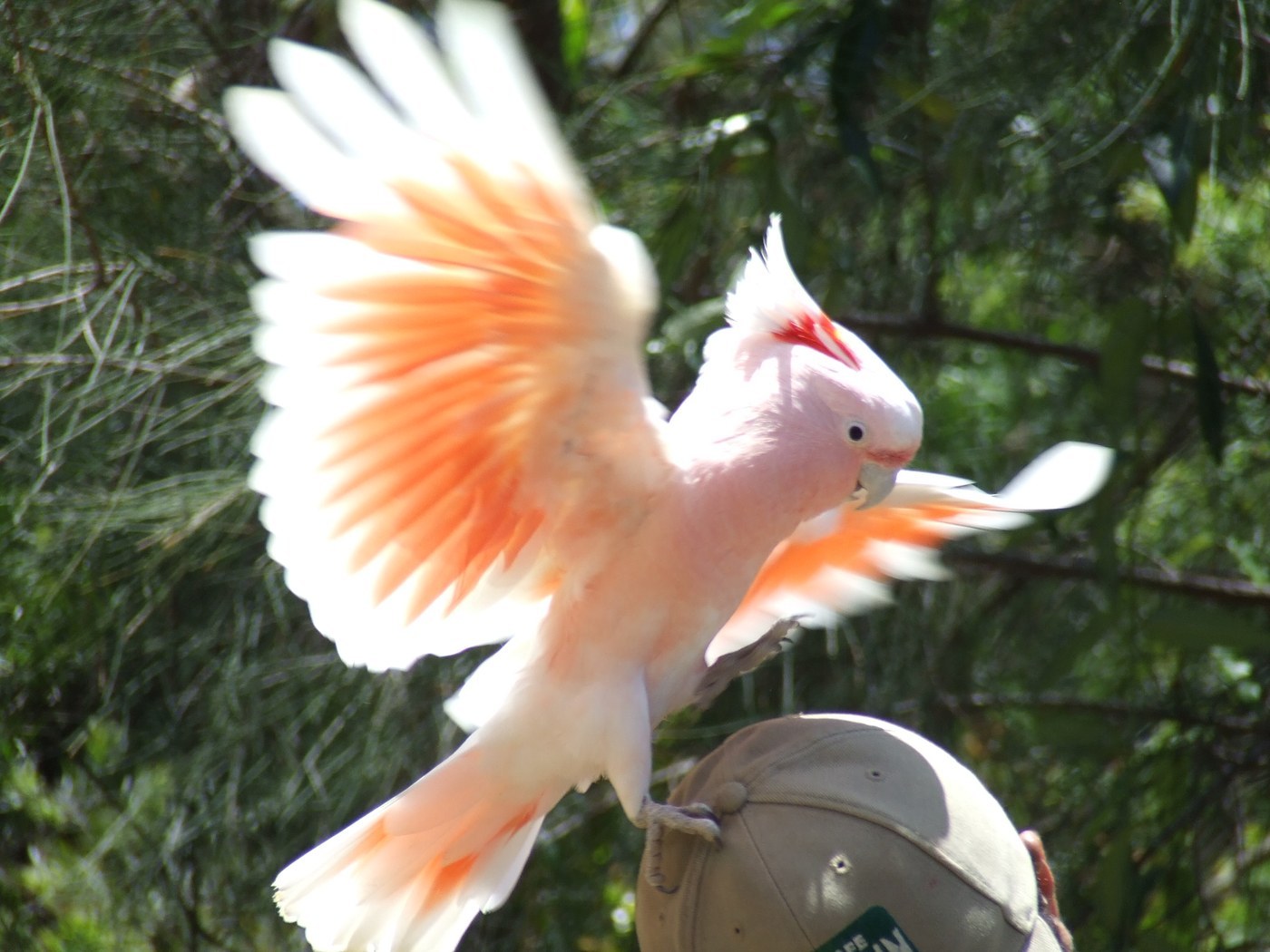
Key Field Marks
- Size & shape: A medium-sized cockatoo, around 35 cm long, with the typical stocky cockatoo build and a rounded, broad-winged flight silhouette.
- Plumage: Overall soft pale pink on the head, neck, and underparts, with white wings and a pink-and-white tail; the underwing shows a salmon-pink wash.
- Crest: The signature field mark — a long, forward-curving crest that, when raised, reveals bold bands of color: deep red at the base, then a broad band of bright yellow, and white tips, fanning out like a rainbow display.
- Bill: Pale horn-colored to grayish-white bill, distinctly paler than the dark bills of black-cockatoos.
- Eye: Dark brown eye with a bare pale eye-ring.
Behavior
Usually seen in pairs or small family groups rather than the large noisy flocks typical of some other cockatoos, feeding quietly on the ground or in low vegetation on seeds, particularly from native pines, acacias, and introduced plants. Often surprisingly unobtrusive until it flies or calls, at which point the crest may be raised in alarm or display, especially during courtship.
Separating It From Similar Species
- Galah: Also pink-and-gray, but has a gray back and wings (not white) and a small, low, backswept pinkish-white crest without the Major Mitchell's dramatic red-and-yellow banding.
- Pink Cockatoo (alternate name): Note that "Pink Cockatoo" is simply another common name for this same species, not a different bird.
- Sulphur-crested Cockatoo: All white body with a yellow (not red-and-yellow banded) crest and dark bill-to-body contrast, entirely different overall color from the pink-bodied Major Mitchell's.
Where & When to See It
Restricted to arid and semi-arid interior Australia, including mallee woodland, mulga scrub, and dry eucalypt woodland across inland New South Wales, Victoria, South Australia, Western Australia, and the southern Northern Territory. A resident species, though it can be nomadic in response to food and water availability, particularly during drought. Best located near reliable water sources such as inland rivers, dams, and waterholes in remote outback regions.
Voice
Gives a distinctive, quavering, rising "cree-ah" or "wee-la" call, softer and more mournful in tone than the harsh screech of many other cockatoo species, often the first indication of a pair's presence before they are seen.
Frequently asked questions
What is the most distinctive feature of Major Mitchell's Cockatoo?
Its spectacular crest, which shows bold bands of deep red, bright yellow, and white when raised — unlike any other cockatoo's crest pattern.
Is 'Pink Cockatoo' a different species from Major Mitchell's Cockatoo?
No, Pink Cockatoo is simply an alternate common name for the same species, Lophochroa leadbeateri.
How do you tell Major Mitchell's Cockatoo from a Galah?
Major Mitchell's has white wings and a dramatic red-and-yellow banded crest, while Galah has gray wings/back and a small, plain pinkish-white crest without banding.
Where does Major Mitchell's Cockatoo live?
Arid and semi-arid interior Australia, in mallee, mulga, and dry eucalypt woodland across the inland regions of several states, often near reliable water sources.
Does Major Mitchell's Cockatoo form large flocks like other cockatoos?
Generally no — it's usually seen in pairs or small family groups rather than the large, noisy flocks typical of species like the Sulphur-crested Cockatoo or Little Corella.