
Magellanic Penguin Identification Guide
A medium-sized South American banded penguin with a distinctive double black band across its white chest and throat.
Read the full Magellanic Penguin encyclopedia entry →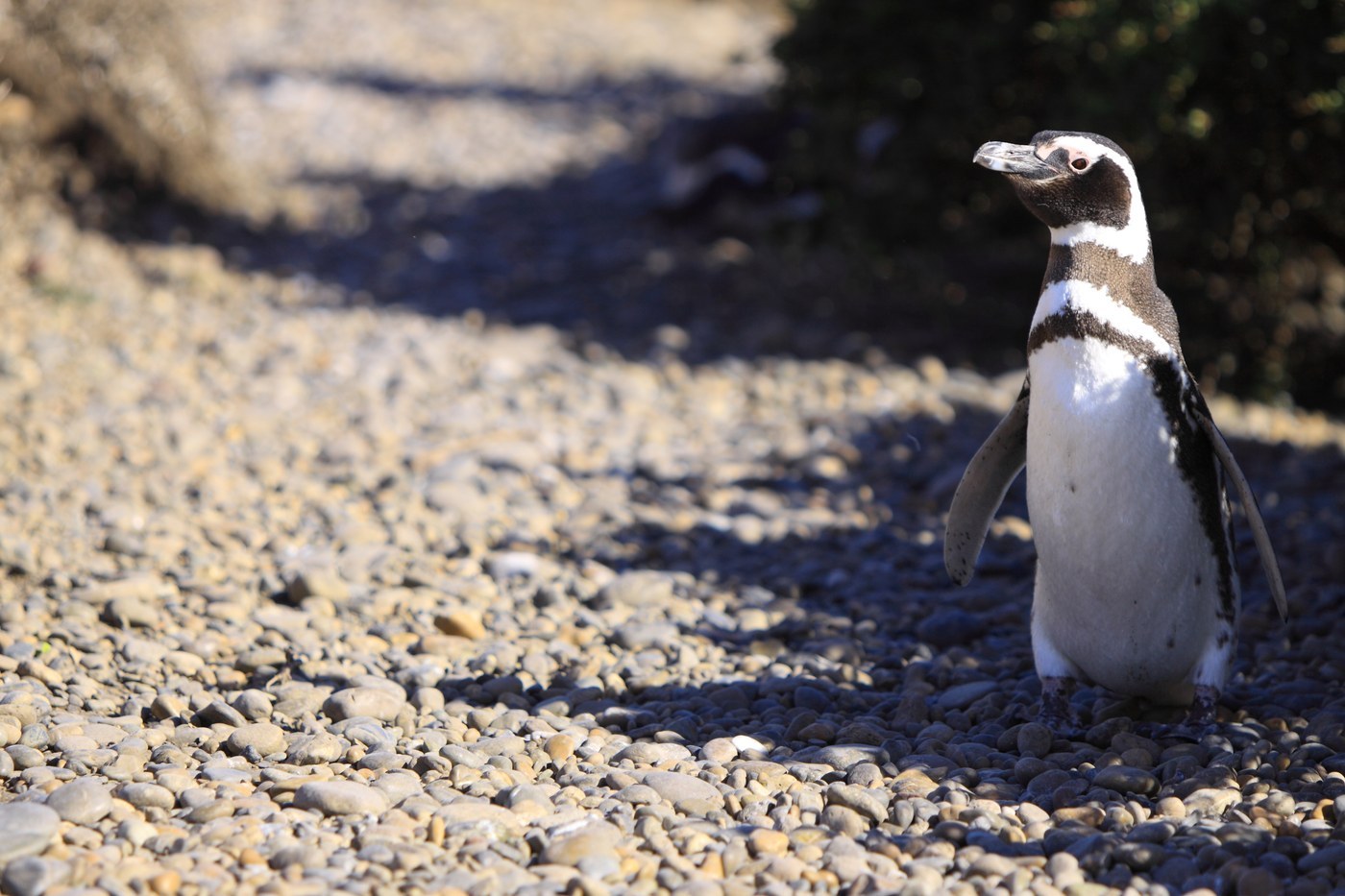
Key Field Marks
- Size & shape: A medium-sized penguin, roughly 60–75 cm tall, with the typical upright, torpedo-shaped penguin build.
- Plumage pattern: Black upperparts and white underparts with two black bands: a narrow band around the throat/upper breast and a broader, curved black band running from the shoulders down the flanks to meet at the belly, forming a horseshoe shape.
- Head: Black head and face with a white band running from above the eye, around the ear coverts, and down the side of the neck.
- Bill & legs: Stout black bill, often with pale markings at the base; pinkish-gray legs and feet with black soles.
Behavior
Highly social and colonial, nesting in burrows dug into sandy or peaty soil, often under bushes or in existing scrapes. Pairs are monogamous and frequently return to the same burrow in successive years. Forages at sea for small schooling fish and squid, sometimes traveling long distances from the colony. Known for loud, braying calls at the colony that have earned it and its relatives the nickname "jackass penguins."
Separating It From Similar Species
- Humboldt Penguin (found farther north along the Pacific coast of Peru and Chile, some range overlap in Chile): Shows only a single black breast band, not the double band of Magellanic, and has more bare pink skin at the base of the bill.
- African Penguin (Africa only, no range overlap): Also single-banded, with a pink gland patch above the eye; ranges do not overlap with Magellanic Penguin in the wild.
- King and Emperor Penguins: Much larger, with orange/yellow ear and neck patches, no black chest bands; found in sub-Antarctic and Antarctic waters, not the banded pattern of Magellanic.
Where & When to See It
Breeds in large colonies along the coasts of Argentina, Chile, and the Falkland Islands, with the largest colonies at sites like Punta Tombo, Argentina. Most of the population migrates north after breeding, with many wintering off the coasts of Brazil and Uruguay; a resident population also lives around the Falklands year-round. The breeding season runs roughly from September to February in the Southern Hemisphere, when colonies are most active and viewable.
Voice
Produces a loud, braying, donkey-like call at breeding colonies, used in courtship and territorial displays, along with various grunts and bill-clattering sounds between mates and neighbors.
Frequently asked questions
How do you tell a Magellanic Penguin from a Humboldt Penguin?
Magellanic Penguin has two black bands crossing its white underparts (throat and body), while Humboldt Penguin shows only a single black breast band.
Where is the best place to see Magellanic Penguins?
Large breeding colonies along the coasts of Argentina and Chile, such as Punta Tombo in Argentina, and around the Falkland Islands, especially during the September–February breeding season.
Do Magellanic Penguins migrate?
Yes, most of the population disperses north after breeding, with many wintering off Brazil and Uruguay, though some remain resident near breeding colonies year-round.
Why are Magellanic Penguins sometimes called 'jackass penguins'?
Because of their loud, braying, donkey-like calls given at breeding colonies, a trait shared with the closely related African and Humboldt Penguins.
Do Magellanic Penguins nest in burrows or on open ground?
They nest in burrows dug into sandy or peaty soil, or in sheltered scrapes under bushes, unlike open-ground nesters such as King and Emperor Penguins.