
Long-tailed Widowbird Identification Guide
An African grassland songbird whose breeding male trails an extraordinary half-meter-long black tail in slow, fluttering display flight.
Read the full Long-tailed Widowbird encyclopedia entry →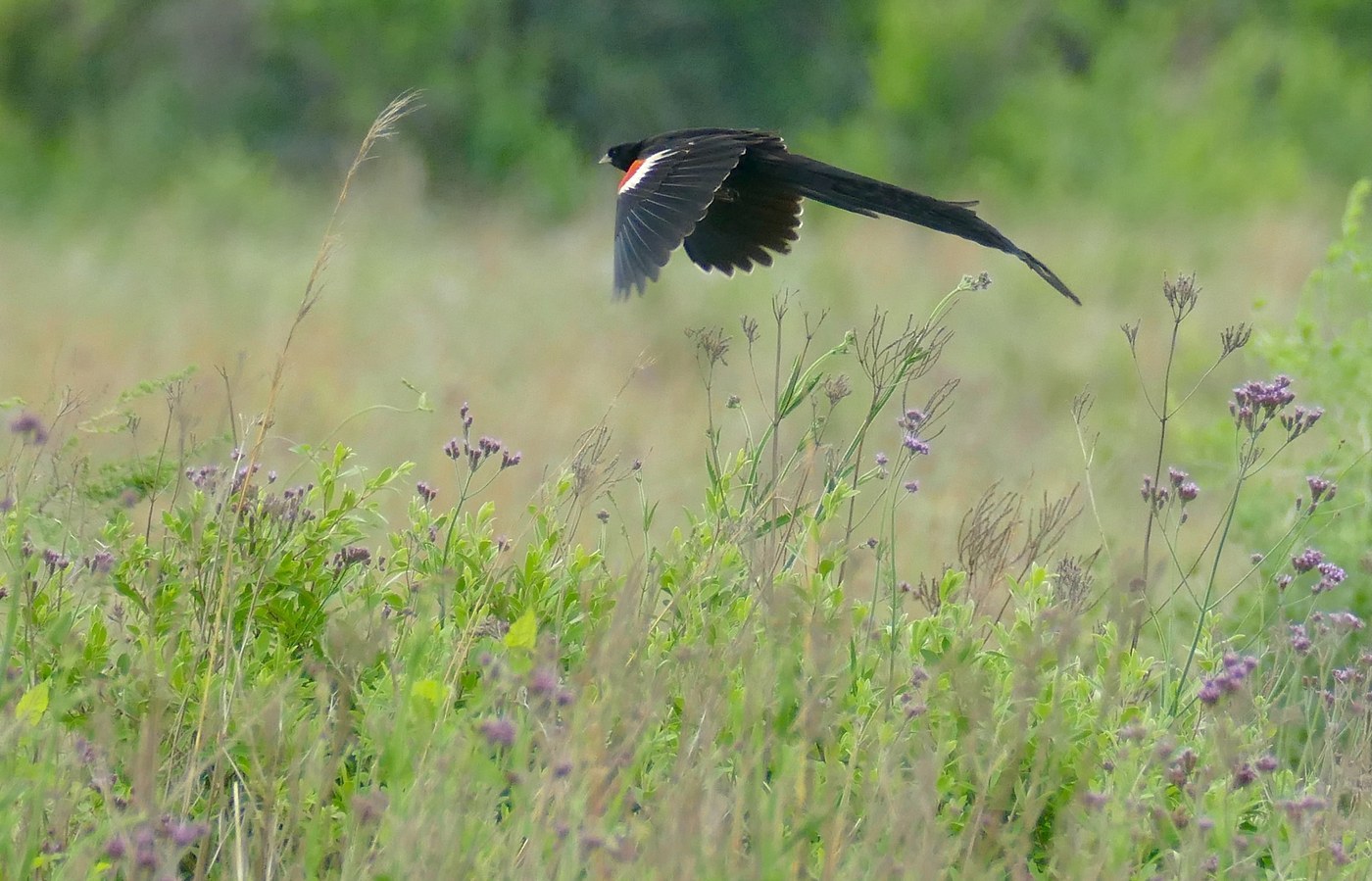
Key Field Marks
- Breeding male: Unmistakable — glossy black body with bright red-and-buff (orange and cream) shoulder patches, and an extraordinarily long, broad black tail that can reach roughly half a meter, nearly four times the bird's body length. The tail is carried in a distinctive drooping curve, especially obvious during slow, labored display flights low over the grass.
- Nonbreeding male & female: Much less conspicuous — sparrow-like streaky brown plumage above, buffy below, with a comparatively short tail, superficially resembling a large weaver or bishop; best located by association with breeding males or by habitat and voice.
- Bill: Conical, seed-eater's bill typical of the weaver family.
Separating from Similar Species
- Other widowbirds (e.g., Jackson's Widowbird, White-winged Widowbird): Differ in the color and pattern of the shoulder patch and the relative length/shape of the tail; Long-tailed Widowbird's tail is exceptionally long and its shoulder patch combines red and buff.
- Bishops (Euplectes species): Shorter-tailed and more compact, lacking the widowbird's dramatic tail extension.
- Female/nonbreeding males across widowbird and bishop species are notoriously similar streaky brown birds and are often best left unidentified to species without very careful study or male company nearby.
Where & When to See It
Found in grasslands, open savanna, and marshy grassy areas across sub-Saharan Africa. Breeding males are territorial and polygynous, performing conspicuous slow-flapping display flights over their territories to advertise to females — this is by far the easiest time to identify and enjoy the species, as males molt into a much plainer, short-tailed plumage outside the breeding season.
Voice
Gives buzzy, insect-like zeee-zeee calls from grass perches, and the exaggerated wingbeats of the display flight produce an audible fluttering/whirring sound as the male struggles to stay aloft with his long tail.
Frequently asked questions
What makes the male Long-tailed Widowbird so easy to identify?
In breeding plumage it has an extremely long black tail — up to about half a meter — combined with glossy black body plumage and red-and-buff shoulder patches, unlike any other widespread African grassland bird.
What does a female or nonbreeding male Long-tailed Widowbird look like?
A streaky brown, sparrow-like bird with a short tail, closely resembling other widowbirds and bishops out of breeding plumage, and best identified by location, habitat, or association with breeding males.
Why does the male's tail make flight look so labored?
The tail is disproportionately long and heavy relative to the body, forcing the male into slow, fluttering flight during display, which is actually part of the mate-attraction display.
Where does the Long-tailed Widowbird live?
Grasslands, open savanna, and marshy grassy habitats across sub-Saharan Africa.