
Long-tailed Tit Identification Guide
A tiny, round-bodied songbird with a tail longer than its body, unmistakable as it moves through trees in tight, chattering flocks.
Read the full Long-tailed Tit encyclopedia entry →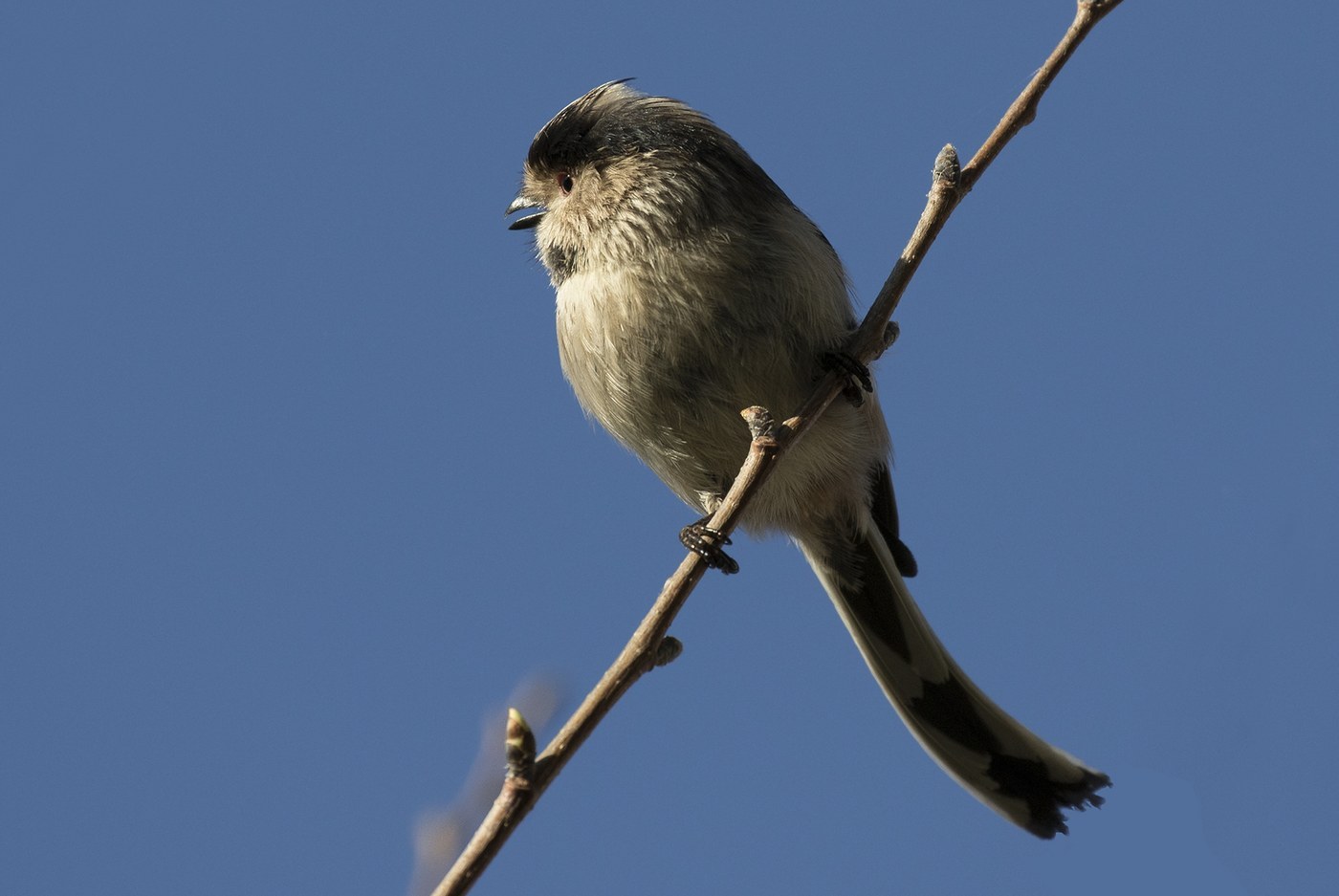
Key Field Marks
- Size & shape: Among the smallest and most distinctively shaped songbirds in its range — a round, fluffy little body attached to a remarkably long, slender tail that often exceeds the length of the body itself.
- Bill: Very short and stubby, adapted for gleaning tiny insects and spiders.
- Plumage: Overall pattern of black, white, and soft pink; pinkish wash on the flanks and shoulders, black eyebrow stripe (in most populations), and a pale head. Some northern/eastern populations have an all-white head lacking the dark eyebrow.
- Behavior: Highly social and almost never seen alone — travels in tight, constantly moving flocks of family groups, keeping in near-continuous vocal contact as they forage through branches, often hanging upside down to reach insects.
Separating from Similar Species
Long-tailed Tit is essentially unmistakable within its range: no other regularly occurring species combines its tiny round body, extremely long tail, and pink-black-white plumage. The main identification nuance is regional/subspecies variation in head pattern (dark eyebrow versus all-white head), which is a matter of geographic form rather than species confusion.
Where & When to See It
A widespread resident across temperate woodlands, hedgerows, scrub, and gardens throughout much of Europe and temperate Asia. It does not migrate long distances and can be found year-round, with flocks becoming especially conspicuous and easy to detect in the non-breeding season when family groups roam together through mixed-species foraging flocks.
Voice
Highly vocal, giving thin, high-pitched contact calls — a repeated si-si-si — that keep flock members together, along with a distinctive dry, trilling tsrrr call. Flocks are often heard well before they are seen.
Frequently asked questions
Why is the Long-tailed Tit so easy to identify?
Its combination of a tiny round body, a tail longer than the body itself, and a black-white-pink color pattern is not matched by any other common species within its range.
Why do all Long-tailed Tits look slightly different?
There is regional variation in head pattern: many populations show a black eyebrow stripe, while some northern and eastern populations have an entirely white head — both are the same species.
Are Long-tailed Tits usually seen alone?
Rarely — they are highly social and almost always encountered in tight, actively moving flocks of family groups keeping in constant vocal contact.
What does a Long-tailed Tit sound like?
A thin, repeated si-si-si contact call and a dry trilling tsrrr, both used to keep flock members together as they move through vegetation.