
Long-tailed Shrike Identification Guide
A widespread Asian shrike with a black facial mask, rufous back, and long graduated black tail, often seen perched conspicuously in open country.
Read the full Long-tailed Shrike encyclopedia entry →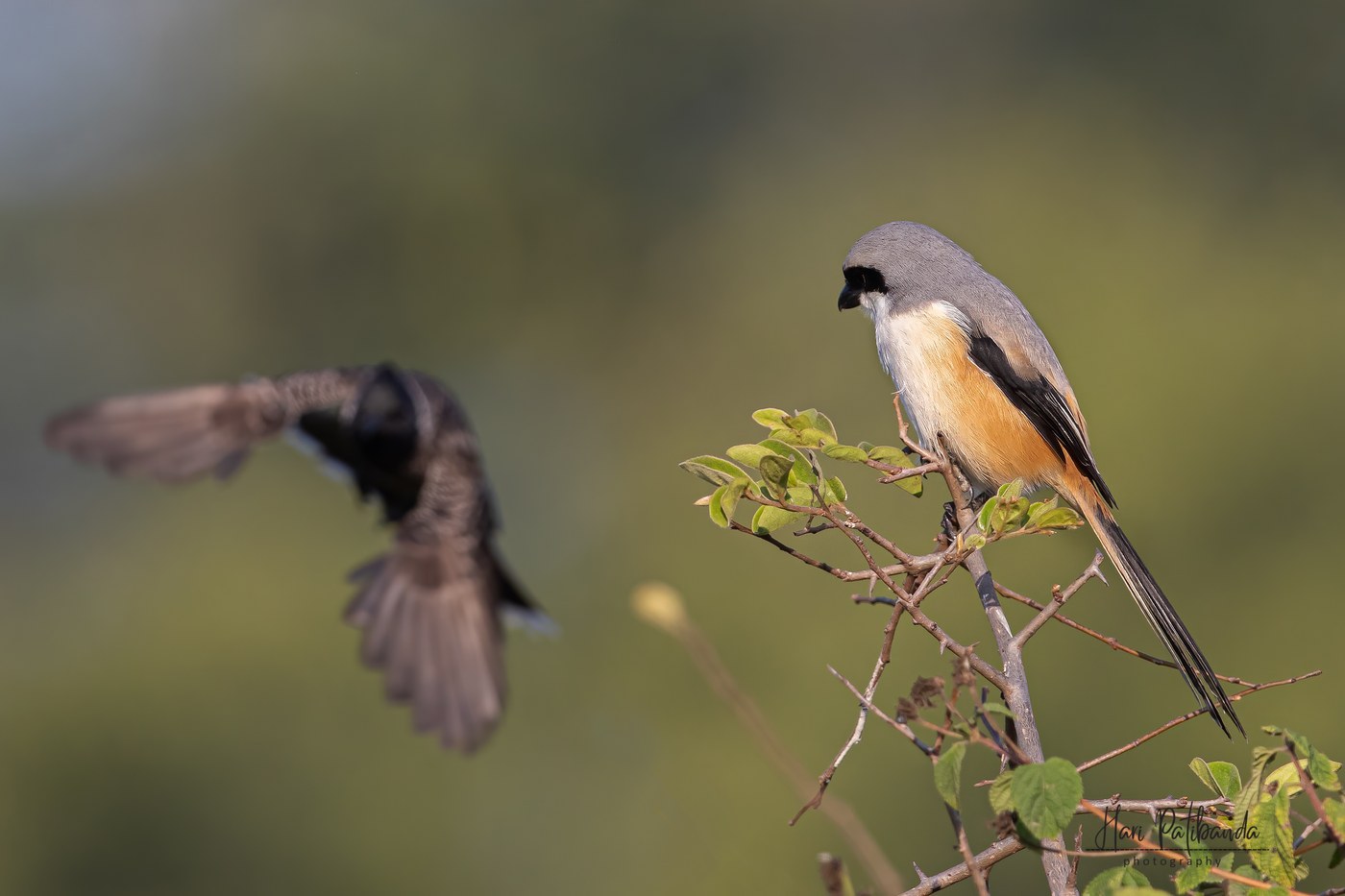
Key Field Marks
- Size & shape: A medium-sized, long-tailed songbird with an upright, alert posture, typically seen perched on wires, fences, or the tops of shrubs scanning for prey.
- Head & mask: A bold black mask runs through the eye; crown and nape color varies by subspecies from gray to rufous.
- Upperparts: Rufous-brown back, contrasting with black wings marked by a small white patch that flashes in flight.
- Tail: Long, graduated, and mostly black — a key feature distinguishing it from shorter-tailed shrikes.
- Underparts: Pale, whitish to buffy, with rufous wash on the flanks.
- Behavior: Perches prominently in open habitat, makes sallying flights to catch insects and small vertebrates, and habitually impales prey items on thorns or barbed wire as a feeding cache — a useful behavioral clue for shrikes in general.
Separating from Similar Shrikes
- Brown Shrike: Smaller, shorter-tailed, with an overall warmer brown (not rufous-and-gray) tone and lacking the strong white wing patch.
- Grey-backed Shrike: Shows a gray back rather than rufous, and different head pattern.
- Great Grey Shrike / Southern Grey Shrike (where ranges approach): Larger, paler gray overall, with a proportionately shorter tail. The combination of long black tail, rufous back, and black mask is diagnostic across most of its range.
Where & When to See It
Resident across a broad swath of South and Southeast Asia, from Pakistan and India east through China and into Southeast Asia, favoring open country: farmland, scrub, grassland, and villages with scattered trees or wires for perching. Generally non-migratory, though northern populations may shift south in winter.
Voice
A harsh, chattering series of scratchy notes, and — like many shrikes — capable of mimicking the calls of other bird species within its chattering song.
Frequently asked questions
What is the most distinctive feature of the Long-tailed Shrike?
Its long, black, graduated tail combined with a rufous back and a bold black mask through the eye.
How is Long-tailed Shrike different from Brown Shrike?
Long-tailed Shrike is larger with a much longer tail, a rufous-and-gray back pattern, and a small white wing patch, while Brown Shrike is smaller, shorter-tailed, and more uniformly brown.
Where does the Long-tailed Shrike live?
It is a widespread resident of open country across South and Southeast Asia, including farmland, scrub, and grassland with scattered perches.
Why is the Long-tailed Shrike often seen with prey stuck on thorns?
Shrikes habitually impale insects and small prey on thorns or barbed wire to cache food, a distinctive behavior shared by shrikes worldwide and useful for confirming identification of the family.