
Little Spotted Kiwi Identification Guide
The smallest and rarest of the kiwi species, a flightless, nocturnal New Zealand bird now surviving only on predator-free islands and sanctuaries.
Read the full Little Spotted Kiwi encyclopedia entry →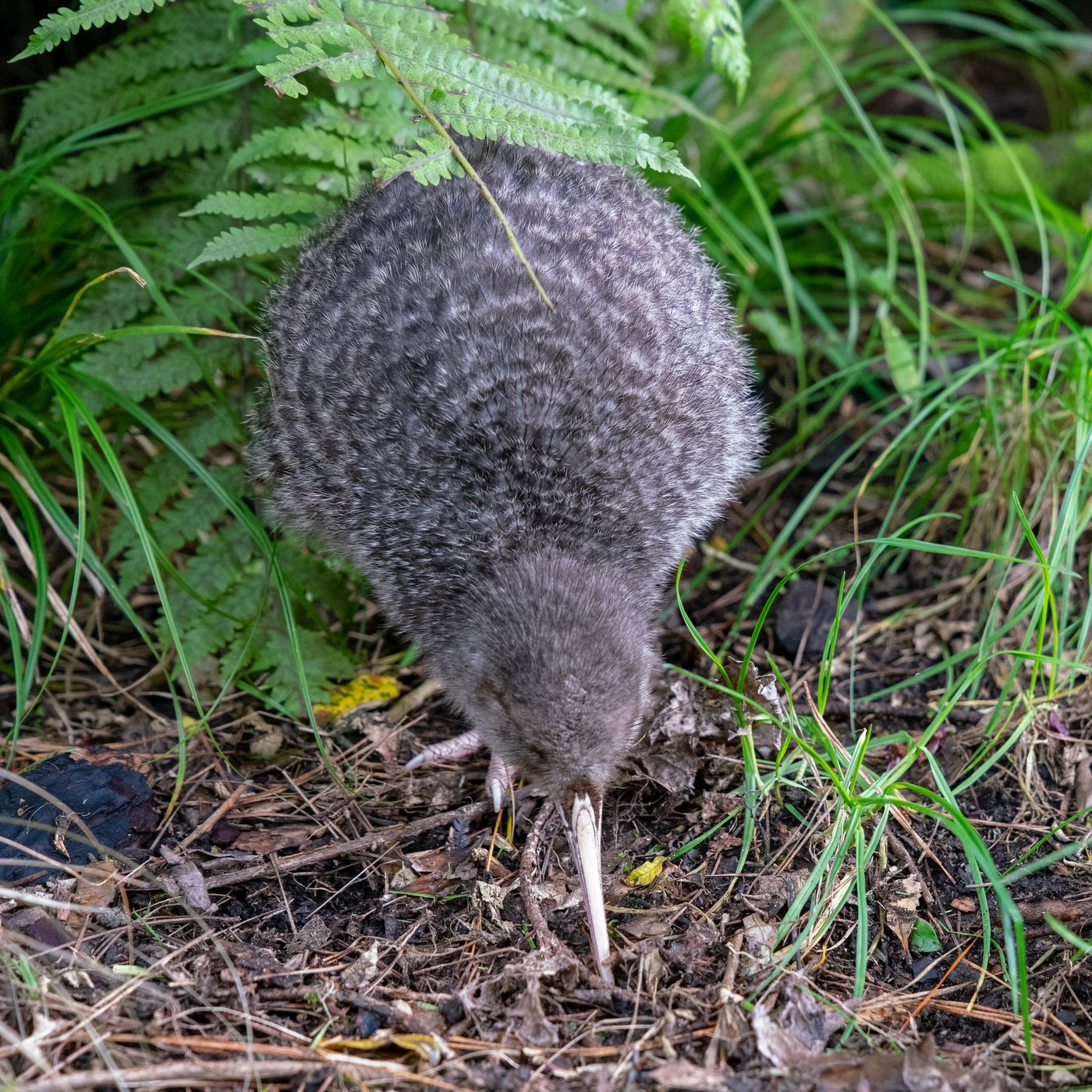
Key Field Marks
- Size & shape: The smallest kiwi species, roughly 20 cm tall (about the size of a domestic chicken) and around 1.1–1.3 kg; round, tailless body and tiny, vestigial wings hidden under the plumage.
- Plumage: Pale grey-brown finely mottled with darker streaking, giving a soft, frosted or "spangled" appearance — distinctly paler and finer-patterned than other kiwi.
- Bill: Long, slender, ivory-colored, and slightly downcurved, used to probe soil for invertebrates; nostrils are located at the tip, unusual among birds.
- Behavior: Entirely flightless and nocturnal, foraging alone at night by scent and touch; shelters by day in burrows or dense vegetation.
Separating It From Similar Species
- Great Spotted Kiwi: Considerably larger and heavier, with bolder, coarser streaking/spotting on the plumage.
- North Island Brown Kiwi / South Island Brown Kiwi (Tokoeka): Larger, with warmer rufous-brown, more uniformly streaky (rather than finely mottled pale) plumage.
- Overall: Because kiwi are almost never seen well in the wild (nocturnal, rarely observed), identification is usually made by location (which predator-free island or sanctuary), relative size, and the notably pale, finely patterned plumage of this species.
Where & When to See It
- Habitat: Native forest, scrub, and grassland with soft soil for probing.
- Range: Extinct on the New Zealand mainland; now restricted to a handful of predator-free offshore islands (such as Kapiti Island) and fenced mainland sanctuaries where it has been reintroduced.
- Season: Present year-round; because it is strictly nocturnal, guided night walks or sanctuary visits are the main ways to encounter one, and even then views are often fleeting.
Voice
- Males give a shrill, ascending whistle; females give a lower, harsher, more guttural cry — calls are most often heard rather than the bird itself being seen.
Frequently asked questions
Why is the Little Spotted Kiwi so hard to see in the wild?
It is strictly nocturnal, flightless, and now confined to predator-free islands and sanctuaries, so encounters are rare and typically only on guided night walks.
How does the Little Spotted Kiwi differ from other kiwi species?
It is the smallest kiwi species and has notably pale, finely mottled grey-brown plumage compared to the warmer, coarser-streaked plumage of larger kiwi species.
Is the Little Spotted Kiwi still found on New Zealand's mainland?
No, it is extinct on the mainland due to introduced predators; surviving populations exist only on offshore islands and in fenced mainland sanctuaries following reintroduction efforts.
How do male and female Little Spotted Kiwi calls differ?
Males give a higher-pitched, shrill whistling call, while females give a lower, harsher, more guttural cry.