
Little Grebe Identification Guide
A tiny, round-bodied waterbird, also called the Dabchick, known for its chestnut breeding throat and constant diving.
Read the full Little Grebe encyclopedia entry →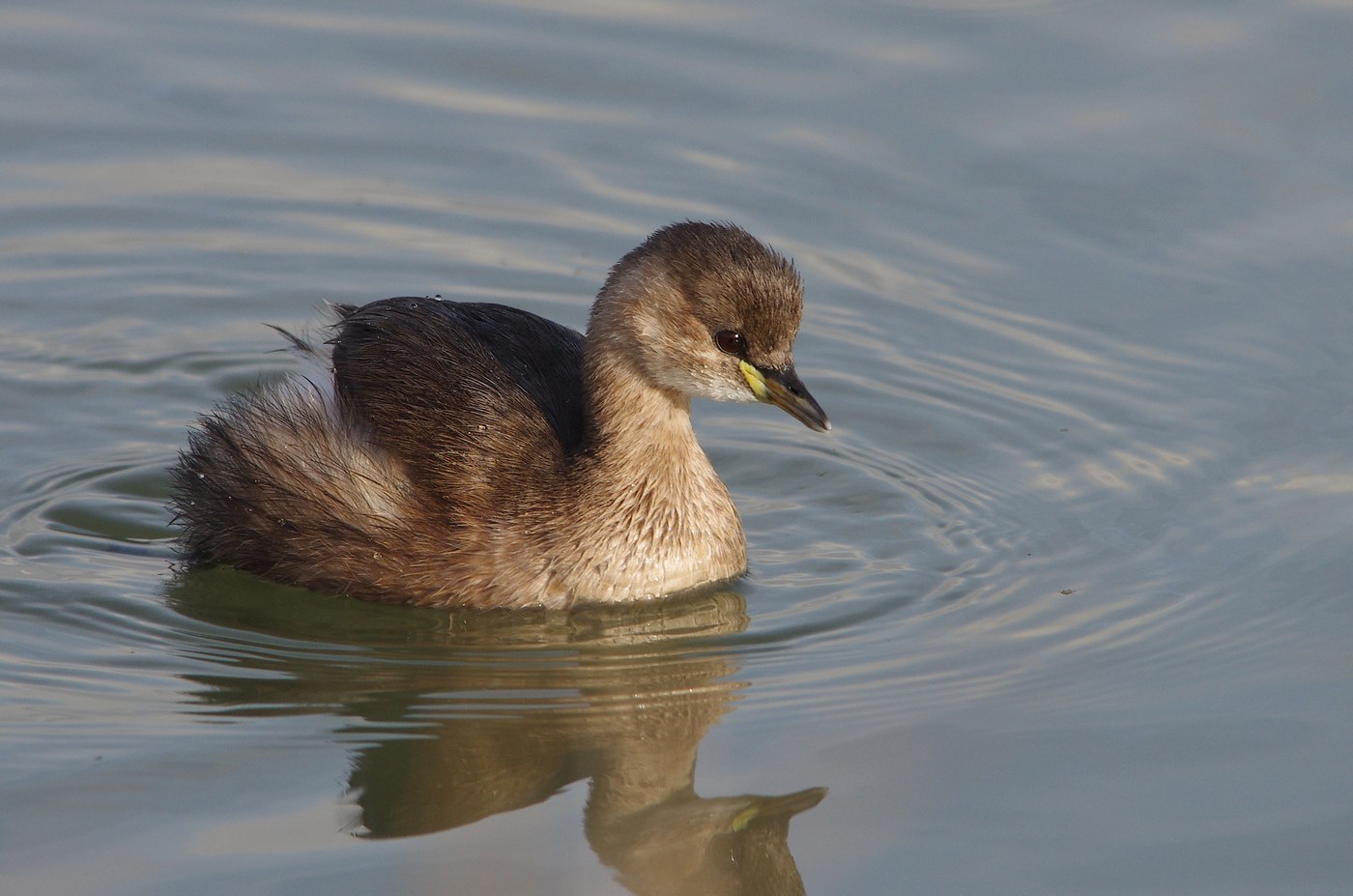
Key Field Marks
- Size & shape: Very small and dumpy, about 25–29 cm, with a short neck, fluffy rear end (no visible tail), and a short, pointed bill.
- Breeding plumage: Rich chestnut-red cheeks, throat, and foreneck, a blackish cap, and a distinctive pale yellowish-green spot at the base of the bill (gape).
- Non-breeding plumage: Duller warm brown above and buffy-white below, with a paler throat; can look nondescript at a distance.
- Behavior: Dives frequently and can stay submerged for a surprising time; rarely flies, preferring to dive or scuttle across the water to escape danger; often looks like a floating powder-puff when the flank feathers are fluffed.
Separating It From Similar Species
- Other grebes (e.g., Black-necked/Eared Grebe): Little Grebe is smaller, rounder, and lacks the golden ear-tufts and red eye of breeding Black-necked Grebe; it also has a stubbier bill.
- Ducklings or coots: Coots are larger, all-black with a white frontal shield; ducklings have flatter bills and different swimming behavior; Little Grebe's constant diving and round shape are distinctive.
- Regional forms: Populations in Australia and New Guinea are sometimes treated as a separate species (Australasian Grebe), differing subtly in facial pattern and eye color.
Where & When to See It
- Habitat: Well-vegetated ponds, small lakes, slow rivers, canals, and marshes with reeds or overhanging cover for nesting.
- Range: Widespread across Europe, Africa, and Asia, with related forms in Australasia; largely sedentary, though northern populations move south or to unfrozen water in winter.
- Season: Present year-round in milder climates; breeding activity (including the distinctive trilling duet) peaks in spring and early summer.
Voice
- A loud, rapid whinnying or trilling series, often given as a duet between paired birds — frequently heard from dense cover before the bird itself is seen.
Frequently asked questions
Why is the Little Grebe also called a Dabchick?
Its old colloquial name 'Dabchick' refers to its small size and habit of quickly 'dabbing' or diving underwater.
How can I tell a Little Grebe is nearby if I can't see it?
Listen for its distinctive fast, whinnying trill coming from reeds or waterside vegetation, often given in duet by a pair.
Does the Little Grebe fly much?
Rarely — it prefers to dive or paddle away from disturbance and is most often seen flying short distances at night during migration.
What does a non-breeding Little Grebe look like?
It loses the chestnut throat and gape spot, becoming a plain warm brown above and paler buffy below, which can make it easy to overlook.