
Lincoln's Sparrow Identification Guide
A shy, finely streaked sparrow with a buffy breast band, gray face, and a habit of skulking low in dense cover, often described as looking crisp and neatly patterned.
Read the full Lincoln's Sparrow encyclopedia entry →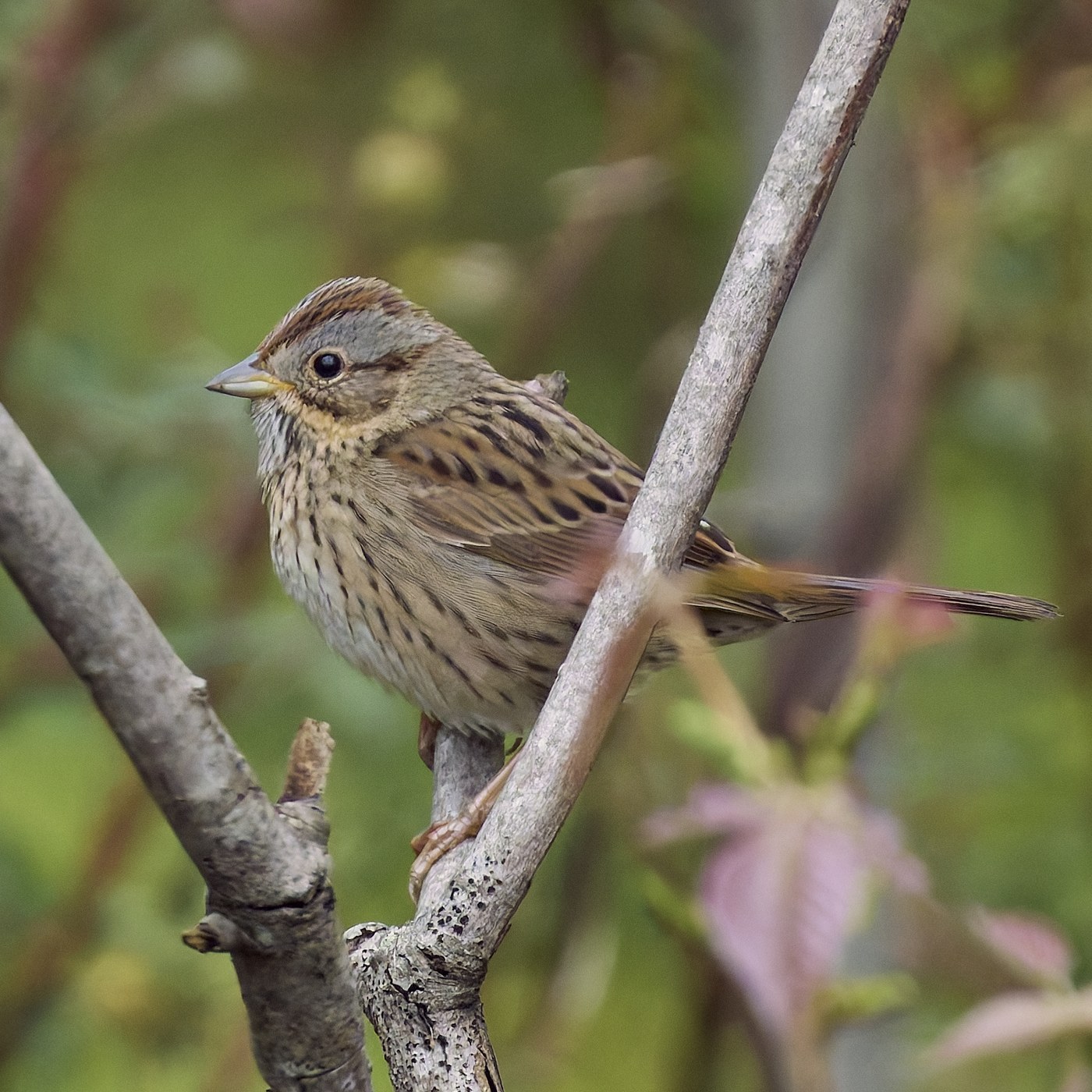
Key Field Marks
- Size and shape: A small, compact sparrow around 5.5–6 inches long, with a fairly short tail and a somewhat flat-crowned head that it often raises into a slight crest when alert.
- Plumage: Gray face and nape contrasting with a warm buffy wash across the breast and finely streaked with thin, crisp black lines — the buffy breast band with fine streaking is the single best field mark. Back is streaked brown, belly whitish.
- Face pattern: Gray eyebrow and cheek patch bordered by a thin buffy-brown eye-line and moustachial stripe, giving a neat, well-defined look often described as "sharp" compared to other streaked sparrows.
- Behavior: Notably shy and secretive, often flicking its tail and crown feathers while foraging low and staying close to dense cover.
Separating from Similar Species
- Song Sparrow: Larger, bulkier, with coarser, blurrier streaking that often converges into a central breast spot, and lacks the clean buffy wash across the breast.
- Savannah Sparrow: Has a yellowish supercilium and pinkish legs, streaked crown, and typically found in more open grassy habitats rather than dense thickets.
- Swamp Sparrow: Shows more rufous in the wings and a grayer, less buffy breast, with a plainer face pattern.
- Lincoln's fine, crisp streaking on a buffy (not white) breast background, combined with its retiring, skulking behavior, is the most reliable combination for identification.
Habitat and Range
Breeds in wet meadows, boggy thickets, and shrubby edges of ponds and streams across boreal Canada, Alaska, and higher-elevation mountain meadows in the western U.S. During migration and winter, favors dense brushy tangles, hedgerows, and overgrown fields, usually near some moisture, from the southern U.S. through Mexico and Central America.
Season
A medium- to long-distance migrant. Spring migration runs mainly April–May; fall migration September–October. Winters across the southern United States, Mexico, and into Central America, generally departing breeding areas earlier than many other sparrows.
Behavior
Forages on or near the ground, often in dense low vegetation, hopping and scratching through leaf litter for seeds and insects. True to its reputation, it tends to stay hidden and dive for cover when disturbed rather than perching in the open, making it one of the trickier sparrows to observe well — patience and pishing often help draw it into view.
Voice
Song is a rich, bubbling, wren-like warble that starts low and rises, often compared to a House Wren or Purple Finch in its burry, musical quality — quite different from the simpler songs of many other sparrows. Call note is a flat, sharp "tsup" or buzzy "zeee."
Frequently asked questions
What is the best field mark for Lincoln's Sparrow?
A buffy wash across the breast finely streaked with crisp black lines, combined with a gray face and shy, skulking behavior in dense low cover.
How do I tell Lincoln's Sparrow from Song Sparrow?
Lincoln's has finer, crisper streaking on a buffy (not white) breast and a smaller, neater build, while Song Sparrow is bulkier with coarser, blurrier streaks that often form a central breast spot.
Where does Lincoln's Sparrow breed?
In wet, shrubby meadows and boggy thickets across boreal Canada and Alaska, as well as high-elevation mountain meadows in the western United States.
What does Lincoln's Sparrow sound like?
Its song is a rich, bubbling, wren-like warble, more musical and complex than many other sparrow songs; the call note is a flat 'tsup.'
Why is Lincoln's Sparrow hard to see?
It is notably shy and tends to stay low in dense brush, diving for cover rather than perching in the open, so it often requires patience or pishing to observe well.