
Limpkin Identification Guide
A large, long-legged brown wading bird with fine white streaking and a long, slightly downcurved bill, best known for its eerie wailing call and specialized diet of apple snails.
Read the full Limpkin encyclopedia entry →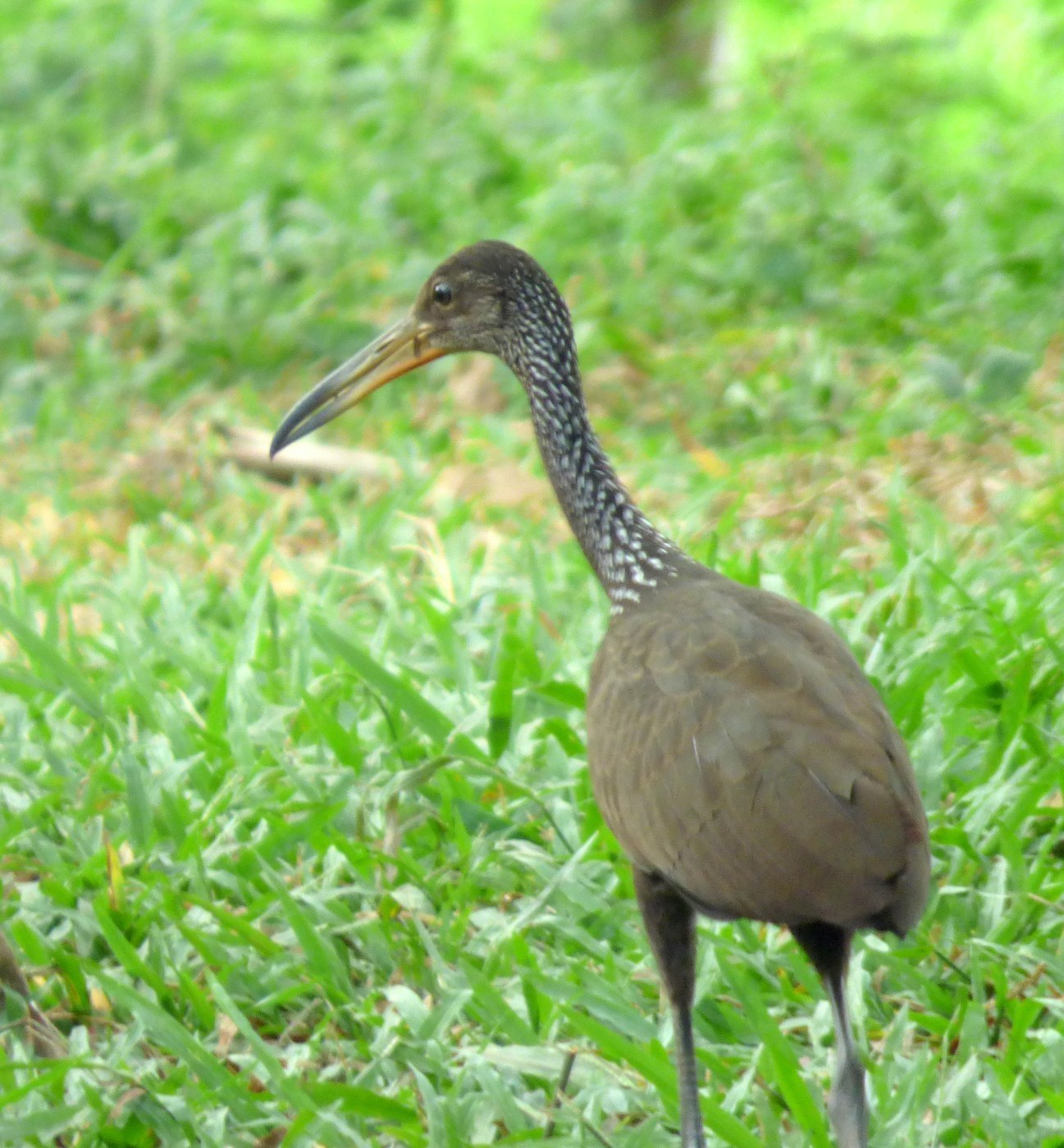
Key Field Marks
- Size and shape: A big, heron-like wading bird about 25–29 inches long, standing tall on long legs with a long neck and a somewhat hunched posture reminiscent of an ibis or immature night-heron.
- Plumage: Rich chocolate-brown overall, heavily marked with bold white streaks and spots on the neck, back, and wing coverts, giving a distinctive dappled appearance.
- Bill: Long, thick at the base, and slightly downcurved with a subtle rightward twist near the tip — an adaptation for extracting apple snails from their shells.
- Legs: Long, dark grayish legs; flies with neck extended and slow, deep, almost labored-looking wingbeats.
Separating from Similar Species
- Immature night-herons: Streaked brown plumage can look superficially similar, but night-herons are shorter-necked, stockier, more crouched in posture, and have straight (not downcurved) bills.
- Glossy Ibis: Shares a downcurved bill but is smaller, uniformly dark glossy chestnut-purple without white streaking, and has a thinner, more evenly curved bill.
- Bitterns: Much shorter-necked and more heavily patterned/camouflaged for concealment in reeds, with a different overall silhouette.
- Limpkin's unique combination of heavy white spotting on rich brown plumage, long slightly twisted bill, and unmistakable wailing call make it easy to confirm once heard or seen well.
Habitat and Range
Inhabits freshwater marshes, swamps, wet prairies, and the edges of slow rivers and lakes, especially where apple snails are abundant. In the United States, found mainly in Florida, with an expanding range into Georgia and parts of the southeastern coastal plain in recent years. More widespread from Mexico and the Caribbean south through much of South America.
Season
Largely non-migratory and resident year-round throughout its range, including Florida populations, though some post-breeding dispersal occurs as young birds and adults explore new wetlands, contributing to the species' recent northward range expansion in the U.S.
Behavior
Walks slowly and deliberately through shallow water and marsh vegetation, probing for apple snails, its primary prey, which it extracts skillfully from the shell using its specialized bill without breaking it, then discards the empty shells in piles. Also eats mussels, insects, and other invertebrates. Often solitary or in loose pairs, most active at dawn, dusk, and even at night.
Voice
One of the most distinctive and haunting sounds of southeastern wetlands: a loud, wild, wailing scream often rendered as "kur-r-eeow" or "krrrow," given both day and night, and famously used as a stock jungle sound effect in films.
Frequently asked questions
What does a Limpkin sound like?
It gives a loud, eerie, wailing scream, often described as a wild 'kur-r-eeow,' heard day or night — one of the most recognizable and haunting sounds of Florida wetlands.
What is the easiest way to identify a Limpkin?
Look for a large brown wading bird heavily spotted and streaked with white, with a long, slightly downcurved bill, walking slowly through marshes or shallow water.
Why does a Limpkin have a curved bill?
Its long, laterally twisted bill tip is a specialized adaptation for extracting apple snails, its primary food, from their shells without breaking them.
Where can I see a Limpkin in the United States?
Florida is the stronghold, especially freshwater marshes and spring-fed rivers, with the species increasingly being found in Georgia and other parts of the southeastern coastal plain.
Is the Limpkin related to herons or ibises?
No — despite superficial resemblance, Limpkin is the sole member of its own family, most closely related to cranes and rails, not herons or ibises.