
Lilac-breasted Roller Identification Guide
One of Africa's most colorful birds, a stocky, jay-sized roller with a lilac throat, turquoise belly, and long tail streamers, famous for its acrobatic rolling display flights.
Read the full Lilac-breasted Roller encyclopedia entry →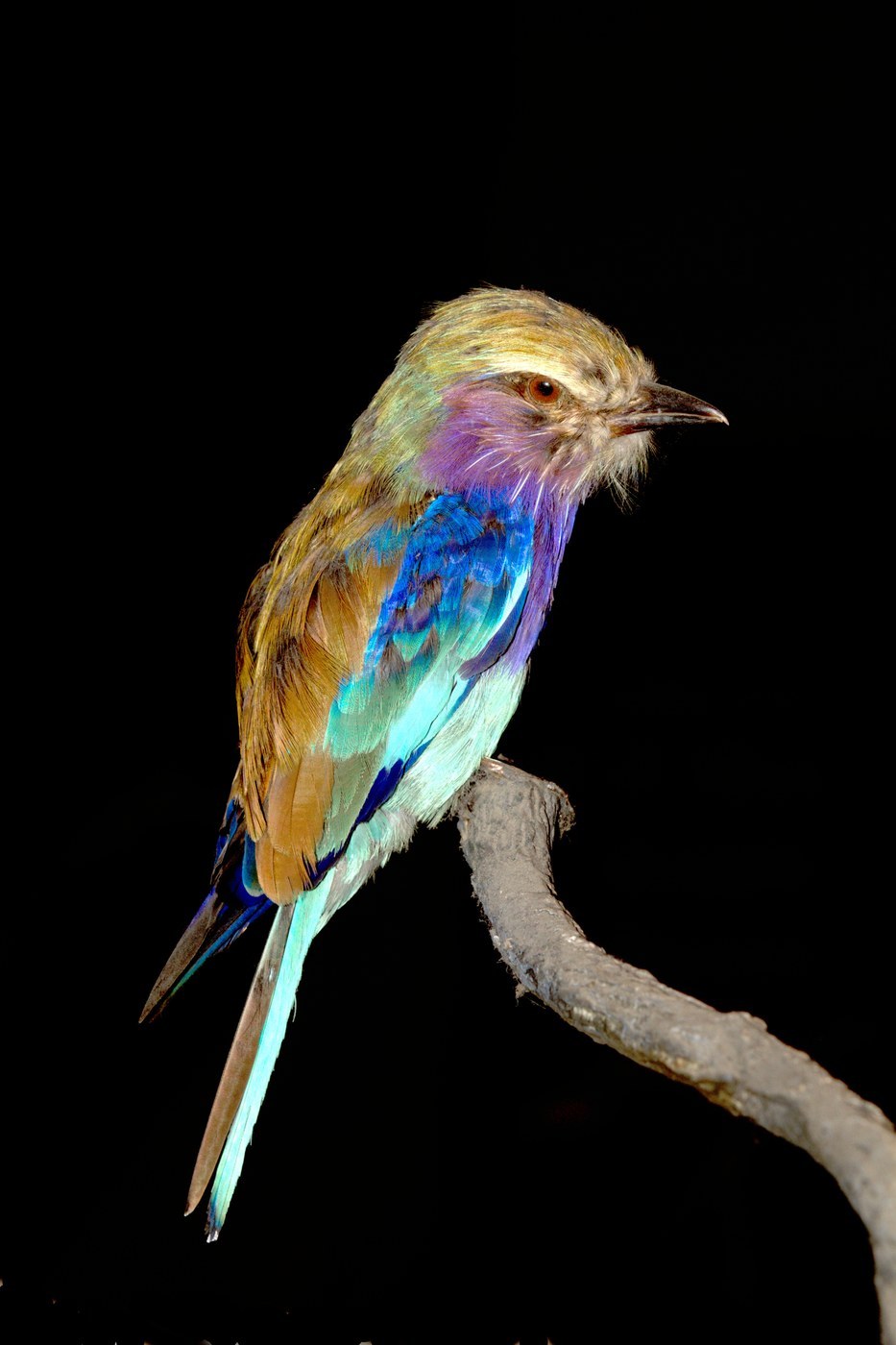
Key Field Marks
- Size and shape: A robust, jay-sized bird about 14–16 inches long including elongated outer tail streamers, with a large head, thick neck, and a strong, slightly hooked bill.
- Plumage: Extraordinarily colorful — a pale lilac-blue throat and breast, deep turquoise-blue belly and wing coverts, olive-brown back and crown, and a bright greenish-blue tail with elongated dark blue outer streamers. Wings show flashes of deep blue and violet in flight.
- Bill and legs: Black, hooked bill typical of rollers; short yellowish-brown legs, since it hunts from perches rather than on the ground.
- Flight: Broad, rounded wings show brilliant blue and lilac patches, especially striking during its tumbling, rolling display flights, which give the family its name.
Separating from Similar Species
- Racket-tailed Roller: Similar coloring but has distinctive spatula-shaped (racket) tips to the tail streamers rather than plain pointed streamers, and lacks the pale lilac throat's clean demarcation.
- European Roller: Overall more uniformly blue with a chestnut/orange back and no elongated tail streamers or lilac throat patch — ranges also mostly don't overlap outside migration.
- Purple Roller: Larger, with a streaked purplish-brown breast rather than the clean pale lilac throat, and lacks tail streamers.
- The clean pale lilac throat contrasting with turquoise underparts and long tail streamers make Lilac-breasted Roller unmistakable within its range.
Habitat and Range
Found across sub-Saharan Africa in open woodland, savanna, and bushveld with scattered trees used as hunting perches — classic safari-circuit habitat in East and Southern Africa, including Kenya, Tanzania, Botswana, and South Africa. Avoids dense forest and treeless open grassland.
Season
Largely resident across most of its range, though some populations undertake local or seasonal movements tied to rainfall and prey availability. It is a familiar year-round sight at many popular safari destinations.
Behavior
A classic sit-and-wait predator: perches conspicuously on an exposed branch, wire, or dead snag, watching for insects, small reptiles, and rodents on the ground below, then drops down to catch prey. Named for its spectacular aerial courtship display in which it climbs, then dives while rolling and rocking side to side, calling loudly throughout — often performed in open sky near a favored perch.
Voice
Harsh, guttural, crow-like squawks and rattles, especially during territorial disputes and the rolling display flight; calls are loud and grating rather than musical.
Frequently asked questions
Why is it called the Lilac-breasted Roller?
It gets its name from the pale lilac patch on its throat and upper breast, and from the family name 'roller,' which refers to its dramatic rolling, tumbling courtship display flights.
Where can I see a Lilac-breasted Roller?
It is common across savanna and open woodland in sub-Saharan Africa, and is a frequent, easily spotted sighting on safaris in East and Southern Africa, often perched on fence posts, dead branches, or wires.
What does a Lilac-breasted Roller eat?
Mainly large insects such as grasshoppers and beetles, along with small lizards, snakes, scorpions, and occasionally small rodents, hunted from an elevated perch.
How is it different from other African rollers?
Its clean pale lilac throat sharply contrasting with a turquoise belly, combined with long pointed tail streamers, distinguishes it from Purple Roller, European Roller, and Racket-tailed Roller.
Does the Lilac-breasted Roller migrate?
Most populations are resident year-round, though local movements can occur in response to seasonal rains and changes in insect abundance.