
Lesser Nighthawk Identification Guide
A desert-loving nightjar relative told from the Common Nighthawk by its lower, more fluttery flight and white wing patches set closer to the wingtip.
Read the full Lesser Nighthawk encyclopedia entry →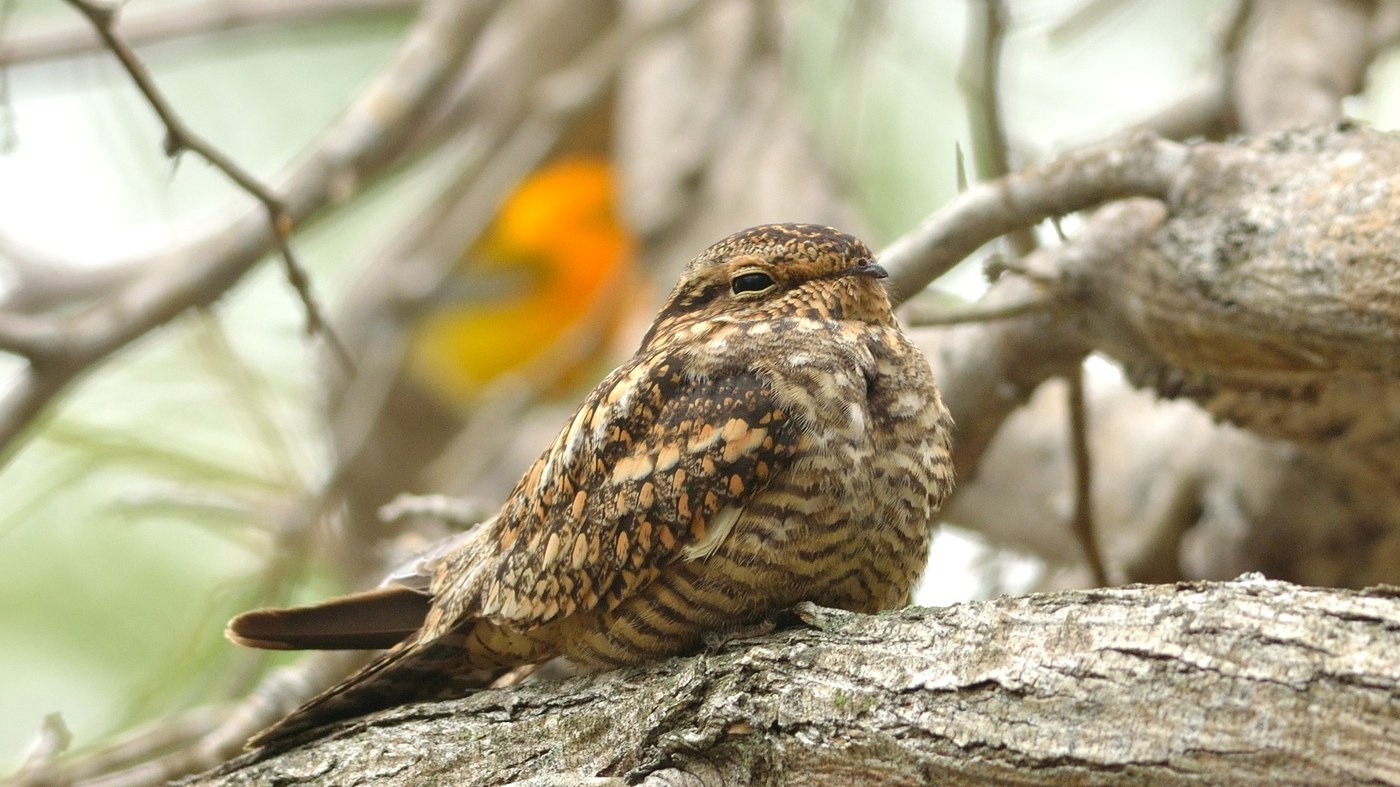
Key Field Marks
- Size & shape: Medium-sized nightjar, about 8.5-9.5 inches, slightly smaller and more compact than Common Nighthawk, with rounder wingtips and a shorter, less deeply notched tail.
- Plumage: Cryptic mottled gray-brown, black, and buff overall -- excellent camouflage against bare ground or gravel.
- Wing patches: White (male) or buffy (female) bar across the primaries, positioned notably closer to the wingtip than in Common Nighthawk (which shows the bar roughly at the midpoint of the wing).
- Throat: White throat patch in males, buffy in females.
- Flight: Low, erratic, batlike, and fluttery, often coursing just above ground level or vegetation -- different from the higher, more angular, buoyant flight of Common Nighthawk.
Separating from Similar Species
- Common Nighthawk: Slightly larger, longer-winged, with the white wing bar positioned closer to the middle of the wing (not near the tip); flies higher and with stiffer, more angular wingbeats; often seen at dusk over cities and open areas, sometimes giving a nasal peent call.
- Common Poorwill: Much smaller and stockier, rounder wings without a prominent white wing bar, and generally seen sitting on roads rather than in flight overhead.
- Habitat and range help too: Lesser Nighthawk favors arid desert lowlands of the southwestern US, while Common Nighthawk is far more widespread across varied habitats continent-wide.
Habitat, Range & Season
- Breeds in arid and semi-arid lowlands: deserts, scrubland, dry washes, and open country of the southwestern US (southern California, Arizona, New Mexico, Texas) south through Mexico and Central America to South America.
- Migratory in the northern part of its range, present roughly March/April through September/October in the US; largely resident in tropical portions of range.
- Roosts on the ground during the day, relying on cryptic plumage for camouflage.
Behavior
- Crepuscular and nocturnal, foraging for flying insects (moths, beetles, flying ants) on the wing at dusk, dawn, and moonlit nights.
- Often forages low over water sources, desert washes, or open ground, in contrast to Common Nighthawk's higher aerial foraging.
- Lays eggs directly on bare ground with no nest structure, relying entirely on camouflage.
Voice
- Male's primary vocalization is a low, trilling, toad-like or whinnying chuck-chuck-chuck purring trill, quite different from Common Nighthawk's nasal peent.
- Also gives soft, low growling or purring notes near roost/nest sites.
Frequently asked questions
How do you tell a Lesser Nighthawk from a Common Nighthawk in flight?
Lesser Nighthawk flies lower with more fluttery, batlike wingbeats and shows its white wing patch closer to the wingtip, while Common Nighthawk flies higher with stiffer, more angular wingbeats and a wing patch nearer the middle of the wing.
What habitat is best for finding Lesser Nighthawks?
Arid desert lowlands, scrubland, and dry washes in the southwestern US, especially around dusk near water sources or open ground.
What sound does a Lesser Nighthawk make?
A low, trilling, toad-like purring or whinnying call, distinct from the nasal peent of the Common Nighthawk.
Do Lesser Nighthawks build nests?
No, they lay their eggs directly on bare ground or gravel with no nest structure, relying on camouflaged plumage and eggs for protection.
When is the best time of day to see a Lesser Nighthawk?
Dusk, dawn, and on moonlit nights, when they actively forage for flying insects low over open desert terrain.