
Lesser Black-backed Gull Identification Guide
A medium-large gull with slate-gray to blackish upperparts, yellow legs, and a yellow bill, increasingly regular along Atlantic coasts and inland waters.
Read the full Lesser Black-backed Gull encyclopedia entry →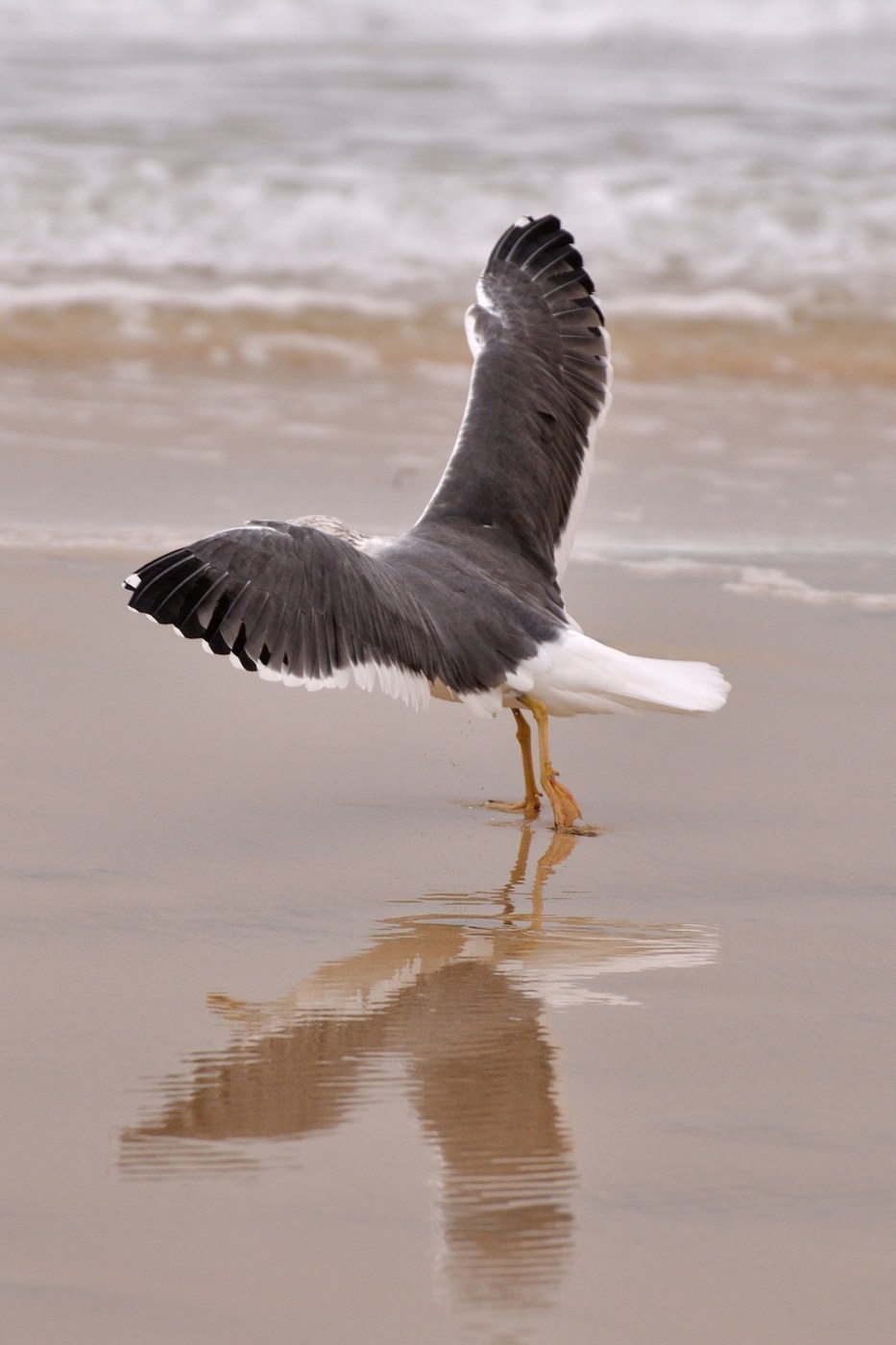
Key Field Marks
- Size & shape: Medium-large gull, distinctly smaller and more slender-winged than Great Black-backed Gull but larger than a Ring-billed Gull; long wings extend well past the tail at rest.
- Upperparts: Slate-gray to dark blackish-gray mantle and wings, depending on subspecies (graellsii is more slate-gray, intermedius/fuscus are darker).
- Legs: Bright yellow -- a key distinguishing feature from the pink-legged Herring Gull.
- Bill: Yellow with a red gonydeal spot in adults.
- Wingtips: Black with limited white tips (mirrors), giving a long, dark-winged look in flight.
- Head: White in breeding adults; fine streaking on head and neck in winter.
Separating from Similar Species
- Herring Gull: Pink legs (vs. yellow), paler gray mantle, and bulkier build.
- Great Black-backed Gull: Much larger and bulkier, with blacker upperparts, a heavier bill, and pink legs.
- California Gull: Yellow legs but paler mantle and different bill pattern with both red and black marks; also range differs.
- Long primary projection and slim proportions are useful even at a distance, especially at loafing gull flocks on beaches or landfills.
Habitat, Range & Season
- Native to Europe; has become an increasingly regular winter visitor to eastern North America, especially along the Atlantic Coast from Newfoundland to Florida, with scattered inland records at reservoirs, landfills, and large lakes.
- Numbers peak in fall through spring (roughly October-April) in North America, often associating with Herring Gull flocks.
- Prefers coastal beaches, harbors, landfills, and large water bodies.
Behavior
- Omnivorous and opportunistic; scavenges at landfills, fishing docks, and beaches, and preys on smaller birds, eggs, and invertebrates.
- Often loafs in mixed gull flocks, making direct comparison with Herring and Ring-billed Gulls useful for size and leg-color checks.
- Strong, direct flight; regularly follows fishing boats.
Voice
- Calls are similar to Herring Gull but slightly higher-pitched and more nasal -- a barking kyow or laughing ha-ha-ha series during long calls.
- Generally quieter in North American wintering range compared to breeding colonies in Europe.
Frequently asked questions
What's the quickest way to pick out a Lesser Black-backed Gull in a mixed flock?
Look for yellow legs combined with dark slate-to-blackish upperparts and a slimmer build with long wingtips -- the yellow legs immediately rule out Herring and Great Black-backed Gulls.
Is the Lesser Black-backed Gull native to North America?
No, it's native to Europe, but it has become a regular and increasing visitor along the Atlantic Coast and inland sites in North America, especially in fall and winter.
How do you tell it apart from a Great Black-backed Gull?
Lesser Black-backed Gull is noticeably smaller and slimmer with yellow (not pink) legs and slightly paler-to-similar upperparts depending on subspecies; Great Black-backed is bulkier with a much heavier bill.
What age classes are hardest to identify?
First- and second-winter immature birds are the most challenging, since their mottled brown plumage overlaps with young Herring Gulls; leg color and overall structure remain the best clues.
When is the best time to look for this species in North America?
Late fall through winter, roughly October to April, at coastal beaches, harbors, and large landfills where gulls congregate.