
Lark Bunting Identification Guide
A prairie songbird and Colorado's state bird, the breeding male Lark Bunting is unmistakable in solid black plumage with bold white wing patches, while females and non-breeding birds show streaky brown sparrow-like plumage.
Read the full Lark Bunting encyclopedia entry →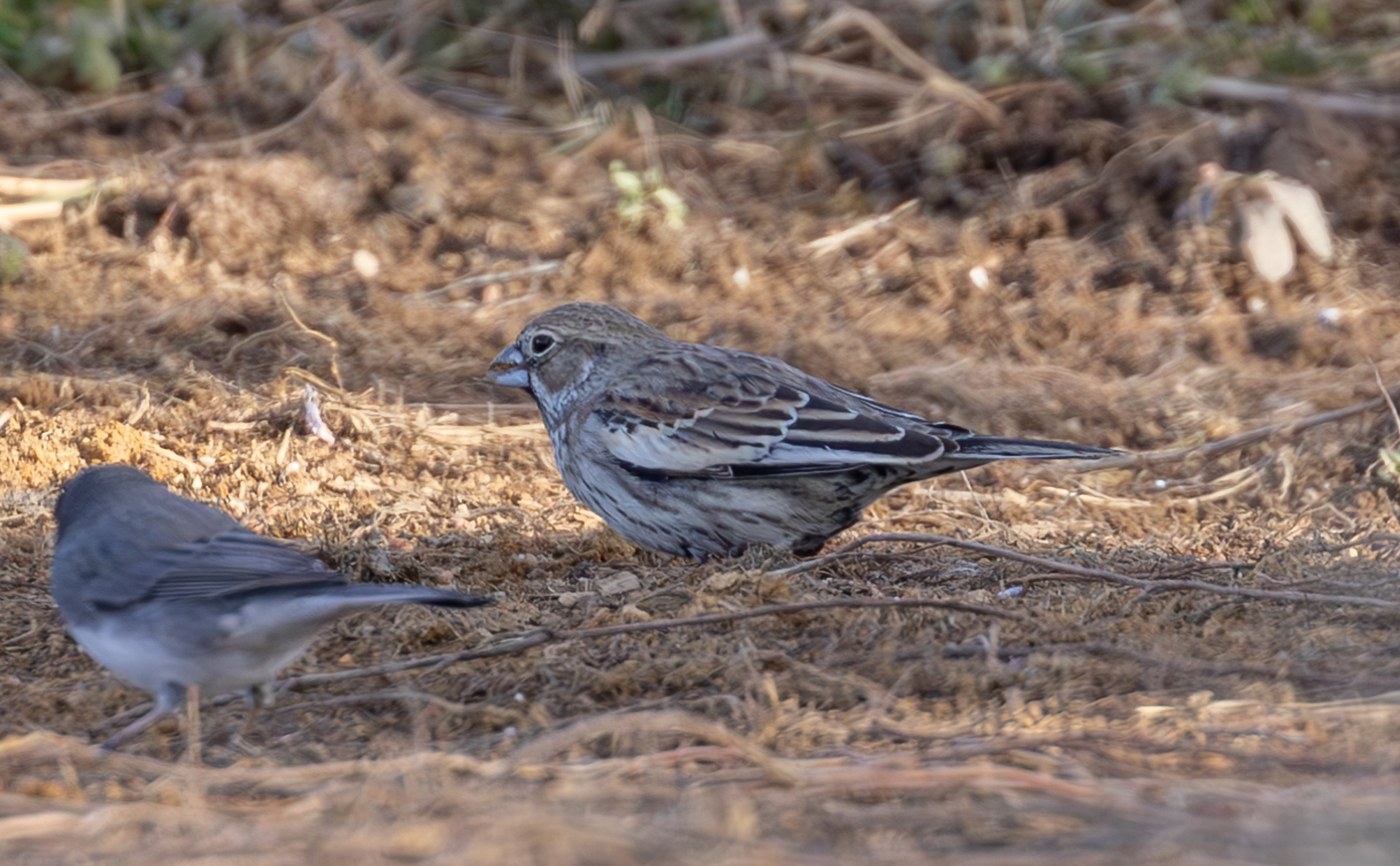
Key Field Marks
- Size & shape: A chunky, sparrow-sized bird, about 14–18 cm long, with a stout, conical, blue-grey bill and a relatively short tail for its build.
- Breeding male: Overall glossy black plumage set off by large, bold white patches on the wings (formed by the greater coverts) — highly distinctive and essentially unmistakable among North American songbirds.
- Female & non-breeding male: Streaky grey-brown overall, sparrow-like, with a buffy eyebrow, streaked underparts, and a smaller, less contrasting whitish or buffy wing patch that is more subdued than the male's bold white marking but still often visible as a useful clue.
- Bill: Notably heavy and pale blue-grey conical bill relative to body size, useful for separating it from many similar sparrows.
- Behavior: Highly social outside the breeding season, forming large flocks on open plains; males perform a distinctive high, fluttering display flight while singing over breeding territory.
Separating Lark Bunting from Similar Species
- Male in breeding plumage: Essentially unmistakable — no other North American songbird combines solid black body plumage with large white wing patches.
- Female/non-breeding vs. sparrows (e.g., Savannah Sparrow, vesper sparrow): The heavier, pale conical bill and the presence of a pale (though reduced) wing patch help separate female/winter Lark Buntings from streaky sparrows, which typically lack a comparable wing patch and have finer bills.
- Bobolink (non-breeding/female): Similar buffy, streaky look in some plumages, but Bobolink has a more pointed tail with spiky tail feathers and a thinner bill, and occurs in different habitat (grassy fields, not shortgrass prairie/desert scrub) during migration overlap periods.
- Habitat and flock behavior on the open plains, combined with bill shape, aid identification when plumage alone is ambiguous.
Where & When to See
- Habitat: Shortgrass and mixed-grass prairie, sagebrush flats, and semi-arid grassland; in winter also found in weedy fields, agricultural land, and desert grassland further south.
- Range: Breeds across the Great Plains of the central United States and southern Canadian Prairies; winters mainly in the southwestern United States and Mexico.
- Season: Breeds roughly May–July; migrates in large flocks and winters (roughly October–March) in warmer, more southerly and southwestern grassland and scrub habitats.
- Best viewing: Look and listen on breeding grounds for males performing their song-flight display over open prairie in late spring; in winter, scan large mixed flocks of sparrow-like birds moving through weedy fields and desert grassland in the Southwest.
Voice & Sound Cues
- The male's breeding song is a rich, varied series of buzzy trills, whistles, and warbled phrases, often delivered during a distinctive high, slow-motion fluttering display flight with wings held in a shallow V.
- Flight and contact calls include a soft, low "hoo-ee" or short chip notes given by flocking birds.
- Song is most useful for confirming presence on the breeding grounds; in winter flocks are largely quiet apart from soft contact calls.
Frequently asked questions
How do I identify a male Lark Bunting in breeding season?
Breeding males are solid glossy black with large, bold white patches on the wings, a combination unique among North American songbirds and essentially unmistakable.
What does a female or winter Lark Bunting look like?
Females and non-breeding birds are streaky grey-brown, sparrow-like, but retain a heavy pale conical bill and a reduced pale wing patch that help distinguish them from true sparrows.
Where is the Lark Bunting the state bird?
The Lark Bunting is the official state bird of Colorado, reflecting its abundance on the shortgrass prairie of the Great Plains during the breeding season.
What kind of habitat should I search for this species?
Open shortgrass and mixed-grass prairie is ideal in the breeding season, while weedy agricultural fields and desert grassland in the Southwest are best in winter.
What is distinctive about the male's courtship display?
Males perform a slow, fluttering song-flight over open prairie, rising and gliding down while singing a varied, buzzy warbled song to attract mates and defend territory.