
Lapland Longspur Identification Guide
A tundra-breeding sparrow-like bird, the Lapland Longspur is best known in non-breeding plumage for its streaky brown back, rufous nape patch, and distinctive dry rattling flight call.
Read the full Lapland Longspur encyclopedia entry →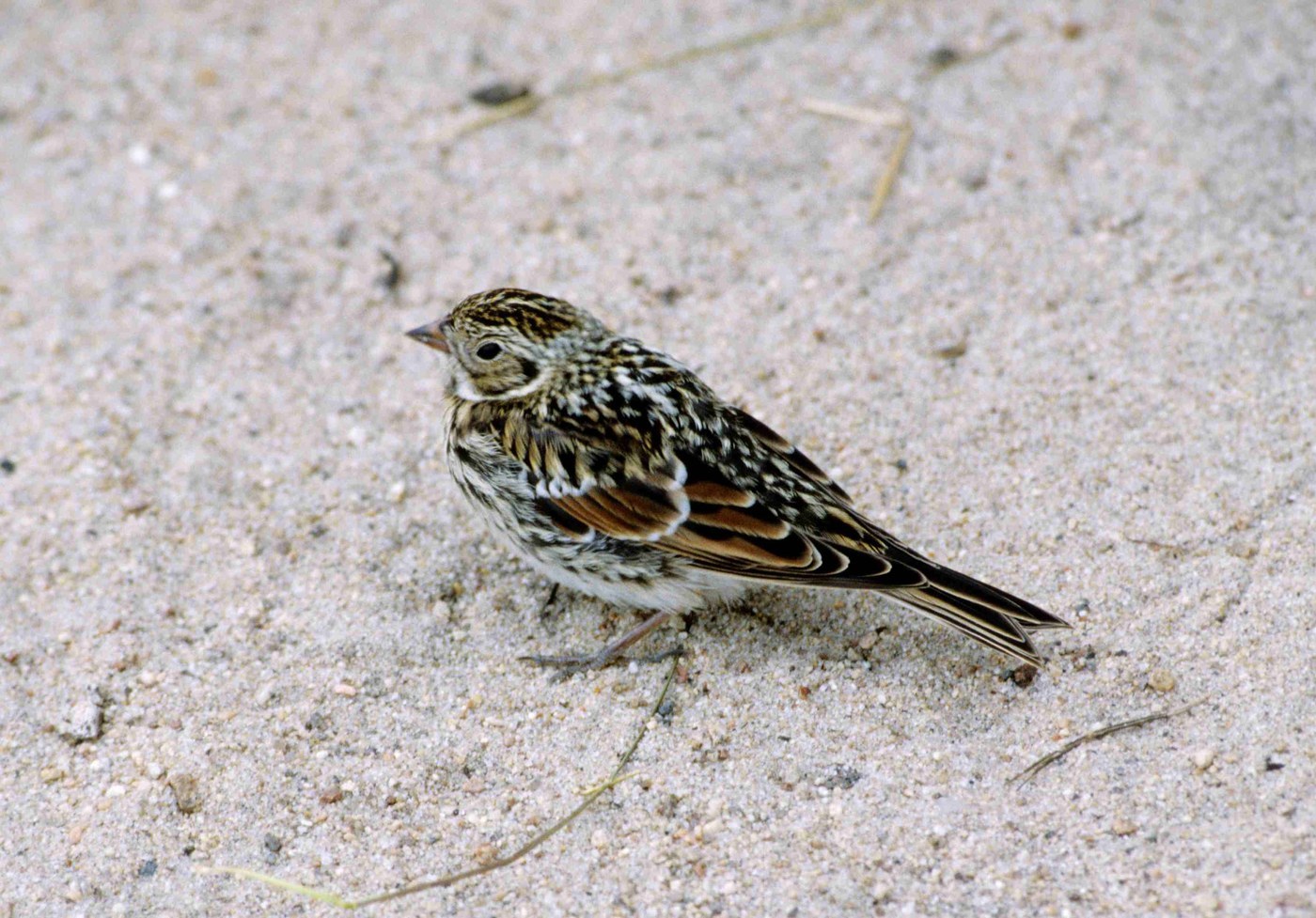
Key Field Marks
- Size & shape: A stocky, sparrow-sized songbird, about 15–16 cm long, with a fairly short, conical bill, a relatively large head, and a longer-than-average hind claw (the source of the "longspur" name, though rarely visible in the field).
- Breeding male: Striking black face, throat, and breast bordered by a bold white/cream stripe from the eye down the neck, with a rich chestnut-rufous nape patch — very distinctive.
- Breeding female / non-breeding birds: Much duller and streakier — brown-streaked crown and back, a warm buffy face, and a hint of the male's rufous nape patch often still visible as a diagnostic patch on the hindneck.
- Underparts: Pale with dark streaking on the flanks and a dark smudge or necklace of streaks across the upper breast in non-breeding plumage.
- Behavior: Forages on the ground in flocks, walking rather than hopping, often in open fields, stubble, or shorelines; flushes in tight flocks with an undulating flight.
Separating Lapland Longspur from Similar Species
- Snow Bunting: Often flocks together with Lapland Longspur in winter; Snow Bunting shows much more white in the wings and tail and a paler overall appearance, versus the browner, more streaked Lapland Longspur.
- Chestnut-collared and Smith's Longspur (where ranges overlap): Both lack the strong rufous nape patch of Lapland Longspur; Smith's Longspur shows a buffier overall tone with less contrasting head pattern, while Chestnut-collared has a different tail pattern (more white in outer tail feathers) and finer bill.
- Sparrows (e.g., American Tree Sparrow, Savannah Sparrow): Superficially similar streaky brown birds, but lack the rufous nape patch and have different flight calls; longspurs also show a more terrestrial, walking gait and often occur in larger, tighter flocks in open habitat.
- The rufous nape patch, even faintly present in winter plumage, combined with the dry rattling flight call, is the most reliable way to confirm Lapland Longspur.
Where & When to See
- Habitat: Breeds on Arctic and subarctic tundra with low vegetation; in winter, found in open agricultural fields, stubble, prairies, coastal dunes, and shortgrass areas, often in large mixed flocks with Horned Lark and Snow Bunting.
- Range: Circumpolar breeder across Arctic North America, Greenland, and northern Eurasia; winters south into the northern-tier and central United States, southern Europe, and parts of Asia.
- Season: Breeds June–August on the tundra; migrates through and winters (roughly October–March) across mid-latitude open country well south of the breeding range.
- Best viewing: In winter, scan open plowed fields, stubble, and shorelines for mixed flocks of small ground birds; listen for the distinctive flight call as flocks flush and wheel overhead.
Voice & Sound Cues
- The classic flight call is a dry, rattling "prrrt" or "ticky-tick-tew," often given as birds take flight in flocks — a key identification cue, especially for silent or distant birds.
- Also gives a musical, whistled "teew" note, sometimes combined with the rattle.
- The breeding song, given on the tundra, is a bright, musical warbling series delivered in short display flights, quite different from the winter flight calls typically heard by most birders.
Frequently asked questions
How can I identify a Lapland Longspur in winter when it looks like a sparrow?
Look for a faint rufous patch on the hindneck/nape and listen for the distinctive dry rattling flight call, both of which separate it from similar streaky sparrows.
What's the difference between breeding and non-breeding male plumage?
Breeding males have a bold black face and breast bordered by white and a rich chestnut nape, while non-breeding males molt into a much duller, streaky brown plumage similar to females.
Do Lapland Longspurs flock with other species in winter?
Yes, they commonly form mixed flocks with Snow Buntings and Horned Larks in open fields and can be picked out by their browner tone and different flight call.
Where does the Lapland Longspur breed?
It breeds on Arctic and subarctic tundra across North America, Greenland, and northern Eurasia, nesting on the ground among low tundra vegetation.
What habitat should I check for wintering birds?
Open agricultural fields, plowed or stubble fields, prairies, and coastal flats are the most productive habitats for finding wintering flocks.