
Kelp Gull Identification Guide
A large black-backed gull of Southern Hemisphere coasts, identified by its blackish upperwings, white head and underparts, and stout yellow bill with a red spot.
Read the full Kelp Gull encyclopedia entry →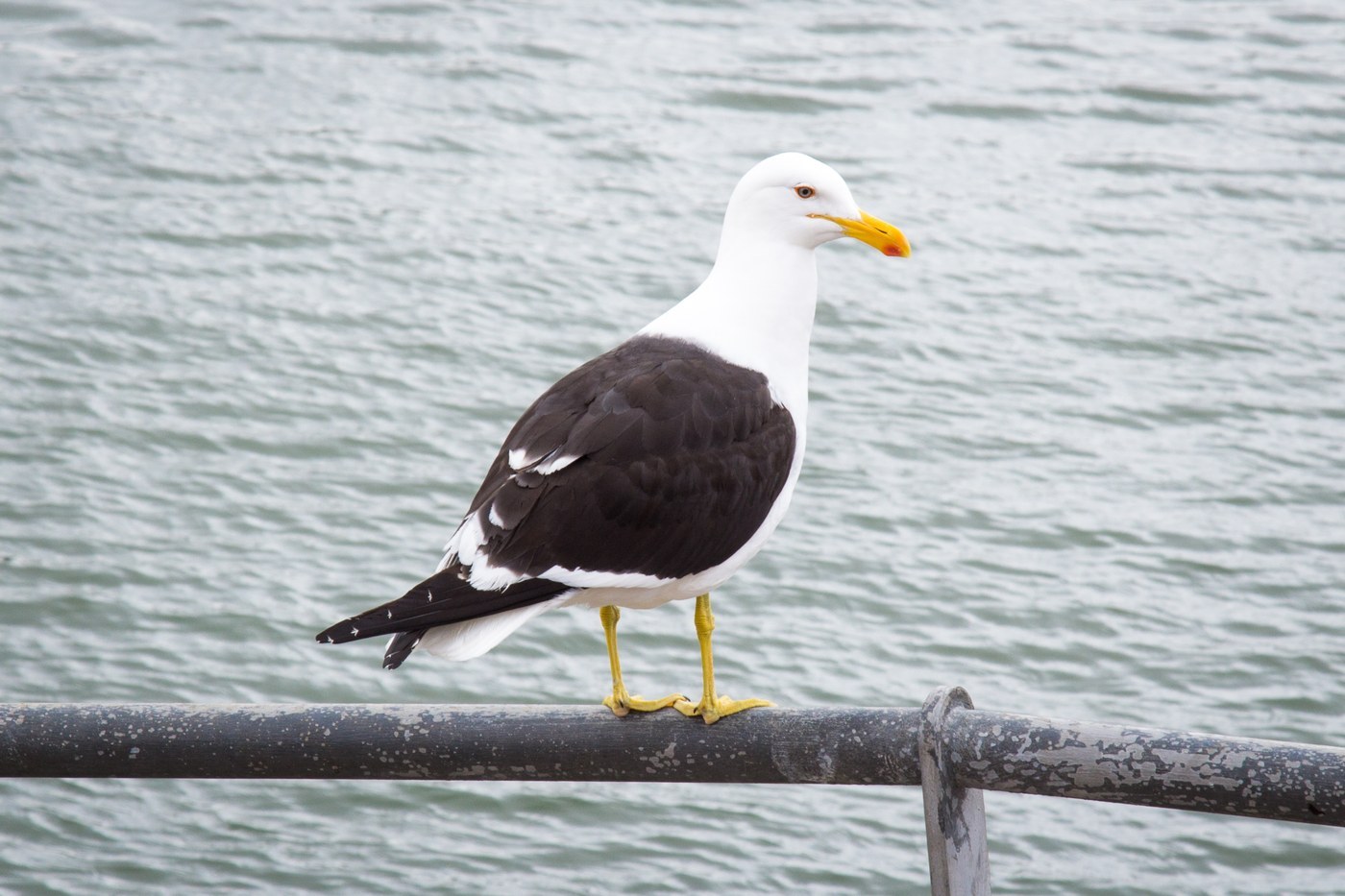
Key Field Marks
- Size & shape: Large, heavy-bodied gull, about 54-65 cm (21-26 in) long, with a bulky chest, thick neck, and stout bill — broadly similar in build to the Great Black-backed Gull of the Northern Hemisphere.
- Plumage (adult): Blackish upperwings and back contrasting sharply with a clean white head, neck, and underparts; white trailing edge and small white "mirror" spots near the wingtips.
- Bill: Thick yellow bill with a bright red spot near the tip of the lower mandible, a classic gull feeding-stimulus mark.
- Legs: Greenish-yellow to dull yellow legs, distinguishing it from black-backed gulls with pink legs.
- Immatures: Take about four years to reach adult plumage, passing through mottled brown-and-white juvenile stages, progressively gaining more black on the back and cleaner white underparts each year, similar in pattern to other large four-year gulls.
- Behavior: Opportunistic and adaptable, foraging along shorelines, harbors, fishing docks, and garbage areas; often loafs in large flocks on beaches and rocky points.
Separating It From Similar Species
Kelp Gull is essentially the Southern Hemisphere counterpart to the Great Black-backed Gull and Lesser Black-backed Gull, which occur mainly in the Northern Hemisphere, so range alone usually resolves identification. Where ranges could approach (such as vagrants), Kelp Gull shows a stockier build and darker, more solidly black upperparts than Lesser Black-backed Gull, and greenish-yellow (not bright yellow) legs help separate it from some Larus relatives. In South America, confusion is most likely with the smaller, slimmer Belcher's Gull or Olrog's Gull, which are more localized and show different bill and head patterns.
Where & When to See One
Widespread and resident along coastlines of the Southern Hemisphere, including southern South America, southern Africa, Australia, New Zealand, and numerous sub-Antarctic islands. It is a coastal species, common around harbors, beaches, estuaries, and offshore islands, and does not typically migrate long distances, though local movements occur. It can be seen year-round throughout its range.
Voice & Sound Cues
Gives a deep, throaty "kyow" or laughing series of calls typical of large gulls, along with a long-call display (head thrown back, wailing series of notes) used in territorial and pair-bonding contexts, structurally similar to calls given by other large black-backed gulls worldwide.
Frequently asked questions
How do I identify an adult Kelp Gull?
Look for a large gull with blackish upperwings and back, a clean white head and underparts, a thick yellow bill with a red spot, and greenish-yellow legs.
Is the Kelp Gull related to the Great Black-backed Gull?
They are closely similar in appearance and ecological role but are separate species occupying different hemispheres — Kelp Gull in the south, Great Black-backed Gull in the north.
How long does it take a Kelp Gull to reach adult plumage?
About four years, progressing through mottled brown juvenile and subadult stages before acquiring the full black-and-white adult pattern.
Where is the Kelp Gull found?
Coastal areas throughout the Southern Hemisphere, including southern South America, southern Africa, Australia, New Zealand, and sub-Antarctic islands.
What color are a Kelp Gull's legs?
Greenish-yellow to dull yellow, which helps distinguish it from some similar large gulls with pink or bright yellow legs.