
Java Sparrow Identification Guide
A stocky gray finch with a bold white cheek patch, black head, and oversized rose-pink bill, native to Java and Bali but widely introduced elsewhere.
Read the full Java Sparrow encyclopedia entry →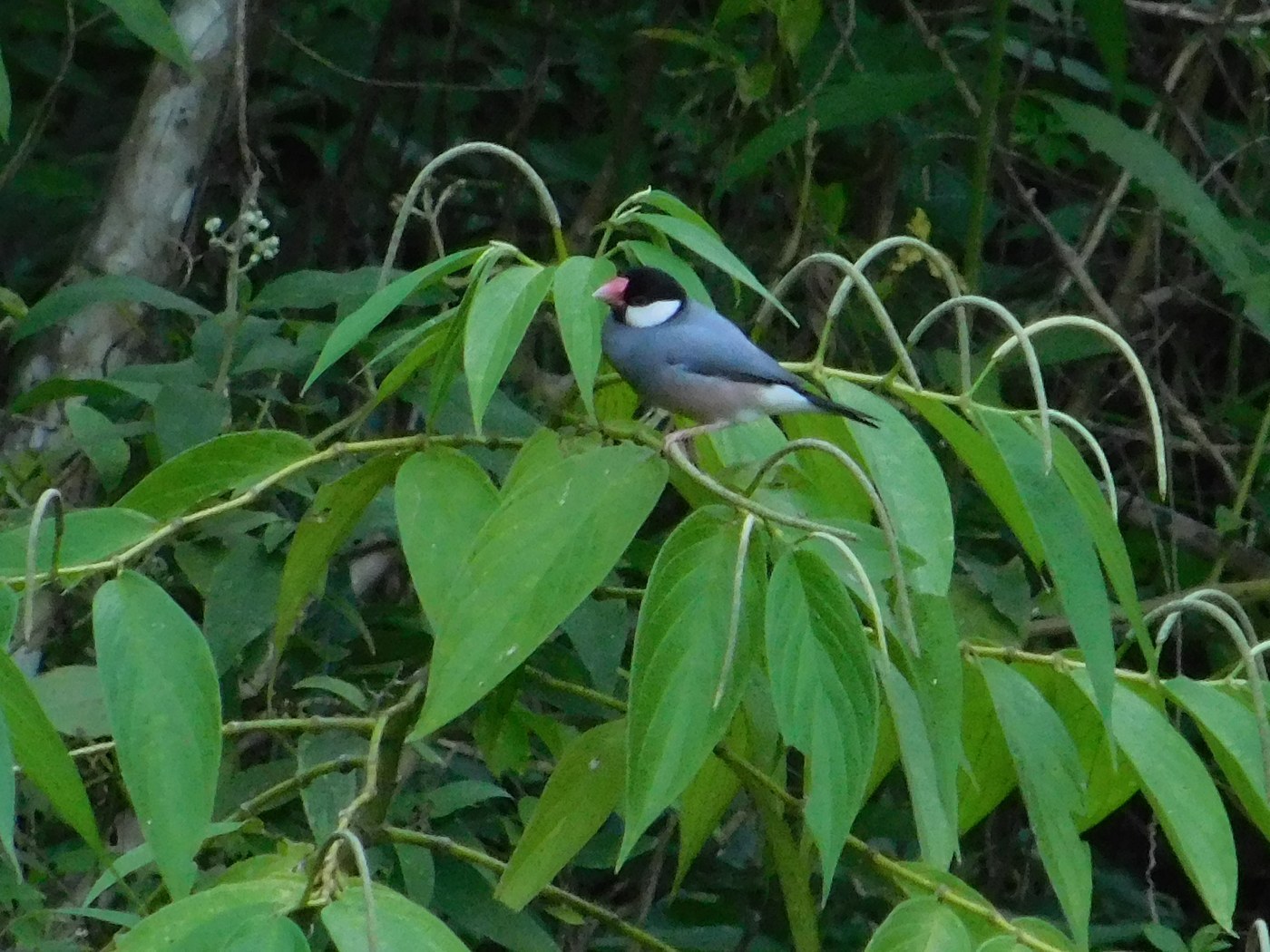
Key Field Marks
- Size & shape: A relatively large, plump munia-relative (in the same family as mannikins) with a big, bulbous, rose-pink to reddish bill that dominates the face.
- Head: Glossy black cap, nape, and chin bordered by a large, clean white patch on each cheek.
- Body: Blue-gray upperparts and breast, with warm pinkish-buff to chestnut wash on the flanks and belly in adults.
- Tail: Black.
- Eyes: Dark, surrounded by a narrow pink to red bare eye-ring that matches the bill.
- Juveniles: Duller overall, with a brownish (not black) head and a duller, less colorful bill.
Separating It From Similar Species
- Much larger and bulkier than typical munias/mannikins, with a proportionately far bigger bill.
- The bold white cheek patch on an otherwise black head, combined with the oversized pink bill, is unique among finch-like birds across its native and introduced range — no confusion species show this exact combination.
Where & When to See One
Native to the Indonesian islands of Java and Bali, where it favors open grassland, rice paddies, and cultivated land. It has been widely introduced (both accidentally via the cage-bird trade and deliberately) to other parts of Asia, East Africa, Hawaii, and the Caribbean, where feral populations now occupy similar open, agricultural, and urban park habitats. It is non-migratory and typically encountered year-round wherever established.
Behavior & Voice
Highly gregarious, feeding in flocks on grass and grain seeds, often around rice fields, parks, and urban green spaces. Gives a distinctive, sharp, metallic "chink" or "chip" call, along with a soft, warbling, somewhat mechanical song used in display.
Frequently asked questions
What is the most distinctive feature of the Java Sparrow?
Its oversized rose-pink bill combined with a black head broken by large white cheek patches — a combination not shared by any confusion species.
Is the Java Sparrow native to where I might see it?
It is native only to Java and Bali in Indonesia; populations found elsewhere, including Hawaii, parts of Asia, and East Africa, are introduced and self-sustaining feral populations.
How can I tell a juvenile Java Sparrow from an adult?
Juveniles have a duller brownish head instead of glossy black, and a less vividly colored bill than adults.
What habitat does the Java Sparrow prefer?
Open grassland, rice paddies, cultivated fields, and increasingly urban parks and gardens where introduced.