
Japanese Tit Identification Guide
An East Asian relative of the Great Tit, sharing its black head, white cheeks, and yellow underparts split by a bold black belly stripe.
Read the full Japanese Tit encyclopedia entry →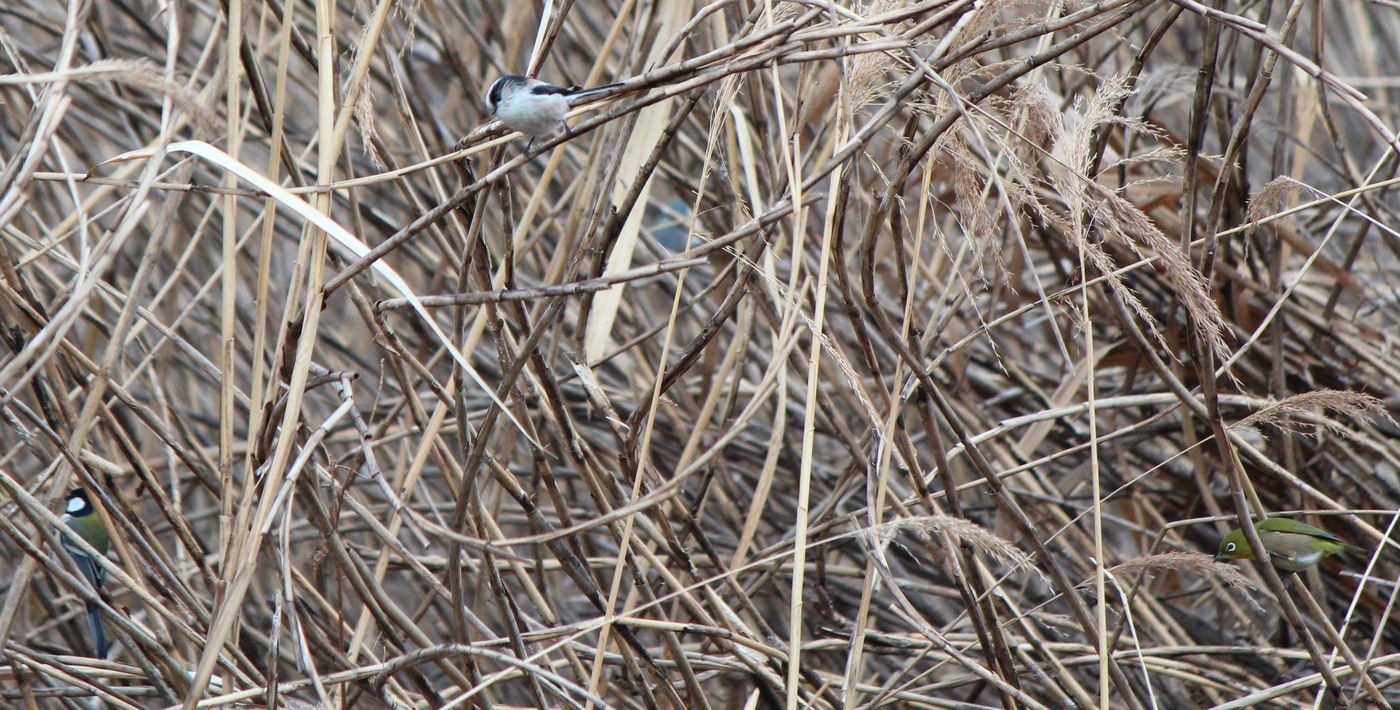
Key Field Marks
- Size & shape: Small, compact, active songbird with a fairly large head and short, stout bill typical of tits.
- Head: Glossy black crown, nape, and throat contrast sharply with large white cheek patches.
- Underparts: Bright yellow, divided down the center by a black stripe that is broader and more prominent in males than in females.
- Upperparts: Olive-gray to olive-green back; wings are blue-gray with a single white wing bar.
- Behavior cues: Constantly active, often hanging upside down while foraging.
Separating It From Similar Species
- The Japanese Tit was formerly considered part of the Great Tit (Parus major) complex and looks extremely similar; the two are now largely separated by range, with Japanese Tit breeding in Japan, Korea, and parts of eastern China and far-eastern Russia, while Great Tit occupies most of the rest of Eurasia. Where ranges approach one another, voice differences are the most reliable field distinction.
- Compared to smaller East Asian tits without a black belly stripe (e.g., Coal Tit or Varied Tit), the bold yellow-and-black underparts and white cheek patch are distinctive.
Where & When to See One
A common resident of deciduous and mixed woodlands, forest edges, parks, and gardens throughout its East Asian range. It does not typically undertake long migrations, though northern or high-elevation populations may move to lower, milder areas in winter.
Behavior & Voice
Highly active and acrobatic, gleaning insects, seeds, and buds from twigs and foliage; readily visits garden feeders. Outside the breeding season it often joins mixed-species foraging flocks with other tits, woodpeckers, and nuthatches. Song is a bright, variable whistled series, and calls include a scolding "tsutsupii" and various chattering notes.
Frequently asked questions
Is the Japanese Tit the same species as the Great Tit?
They were once considered the same species, but are now usually treated as separate species — Japanese Tit occupies Japan, Korea, and adjacent parts of East Asia, while Great Tit ranges across most of the rest of Eurasia.
How can I tell a male from a female Japanese Tit?
Males typically show a broader, bolder black stripe down the center of the yellow underparts than females.
What habitats does the Japanese Tit use?
Deciduous and mixed forests, forest edges, parks, and gardens, and it readily visits bird feeders.
Does the Japanese Tit migrate?
It is largely resident, though birds from colder or higher-elevation areas may move short distances to milder lowlands in winter.