
Intermediate Egret Identification Guide
A medium-sized white egret of Asia, Africa, and Australia whose size and bill length fall neatly between the larger Great Egret and smaller Little Egret, with a gape line that stops at the eye as the key clincher.
Read the full Intermediate Egret encyclopedia entry →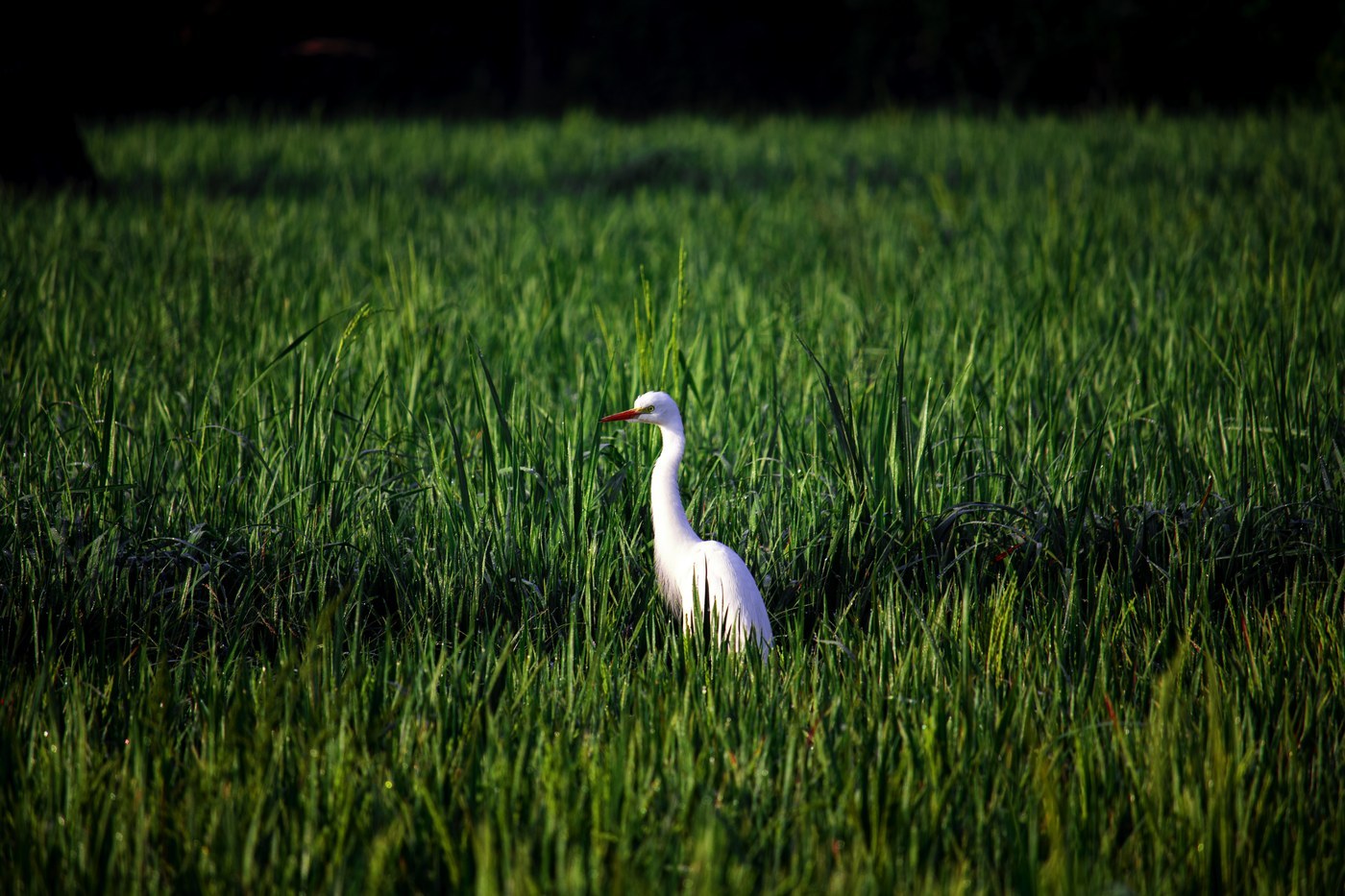
Key Field Marks
- Size & shape: Medium-sized, standing about 25–27 inches (65–70 cm) tall — distinctly smaller than a Great Egret but larger than a Little Egret or Cattle Egret; has a moderately long neck (shorter and thicker relative to body than Great Egret's) and an upright, elegant stance.
- Plumage: All white in all plumages, with long, lacy breeding plumes on the back and lower neck (but notably not on the head) during the breeding season.
- Bill: Yellow year-round (sometimes duskier at the very tip in breeding condition), medium length — shorter and stouter than the long, dagger-like bill of a Great Egret.
- Gape line: The single best field mark — the yellow gape (bare skin at the base of the bill) ends at or just below the eye and does NOT extend behind the eye, unlike Great Egret where the gape line extends conspicuously past the eye.
- Legs & feet: Blackish legs and feet, without the bright yellow feet shown by Little Egret; legs can show some dull yellowish-green above the "knee" (tibiotarsus) in breeding condition.
- Neck: Shows a subtle kink and is proportionally shorter/thicker than Great Egret's snake-like neck, giving a slightly more compact, less attenuated look overall.
Separating It From Similar Species
- Great Egret: Larger, with a notably longer, more S-curved neck, a longer and more slender bill, and a gape line extending well behind the eye — the gape is the most reliable mark when size is hard to judge.
- Little Egret: Smaller and daintier, with an all-black bill (not yellow) and contrasting bright yellow feet ("golden slippers"), often with head plumes in breeding season that Intermediate Egret lacks.
- Cattle Egret: Notably smaller and stockier with a shorter, thicker neck, a shorter yellow-to-orange bill, and buffy-orange breeding plumes on the head, breast, and back (versus lacy white plumes confined to the back/neck in Intermediate Egret); Cattle Egret is also far more terrestrial, often feeding among livestock away from water.
Where & When to See It
- Habitat: Wetlands, rice paddies, marshes, flooded fields, riverbanks, and coastal mudflats; generally favors freshwater and agricultural wetland habitats over open coastline.
- Range: Widely distributed across sub-Saharan Africa, South and Southeast Asia, East Asia, and Australasia; largely resident in warmer parts of its range with some populations showing seasonal dispersal or migration at higher latitudes (e.g., parts of East Asia).
- Season: Visible year-round in most of its range; breeding plumes and colonial nesting activity peak in the local wet or breeding season, often alongside other herons and egrets in mixed colonies.
- Behavior: Forages by walking slowly and deliberately through shallow water or wet fields, stalking fish, frogs, and insects; less active/dashing than Little Egret's often energetic feeding style. Nests colonially in trees, frequently in mixed heronries.
Voice
- Generally silent away from colonies; at breeding colonies gives harsh, guttural croaking and grunting calls typical of herons and egrets.
Frequently asked questions
What is the most reliable way to separate Intermediate Egret from Great Egret?
Check the gape line at the base of the bill: in Intermediate Egret it stops at or just below the eye, while in Great Egret it extends noticeably behind the eye. Size and neck length/shape (shorter, thicker neck in Intermediate Egret) are also useful supporting clues.
How do you tell Intermediate Egret from Little Egret?
Intermediate Egret has a yellow bill and dark legs/feet, whereas Little Egret has an all-black bill with bright yellow feet ('golden slippers') and is noticeably smaller and daintier.
Does the Intermediate Egret have plumes on its head like other egrets?
No, its lacy breeding plumes grow on the back and lower neck but not the head, distinguishing it from species like Cattle Egret and Little Egret, which can show head plumes.
What habitat is best for finding Intermediate Egrets?
Freshwater wetlands, rice paddies, marshes, and flooded agricultural fields across Africa, Asia, and Australia are the most reliable places to look.
Is the Intermediate Egret's bill color the same all year?
Yes, it stays yellow year-round, though it can appear slightly duskier at the tip during peak breeding condition.