
Indigo Bunting Identification Guide
A small North American songbird whose breeding male appears an electric all-over blue, best identified by its conical seed-eating bill and preference for brushy field edges.
Read the full Indigo Bunting encyclopedia entry →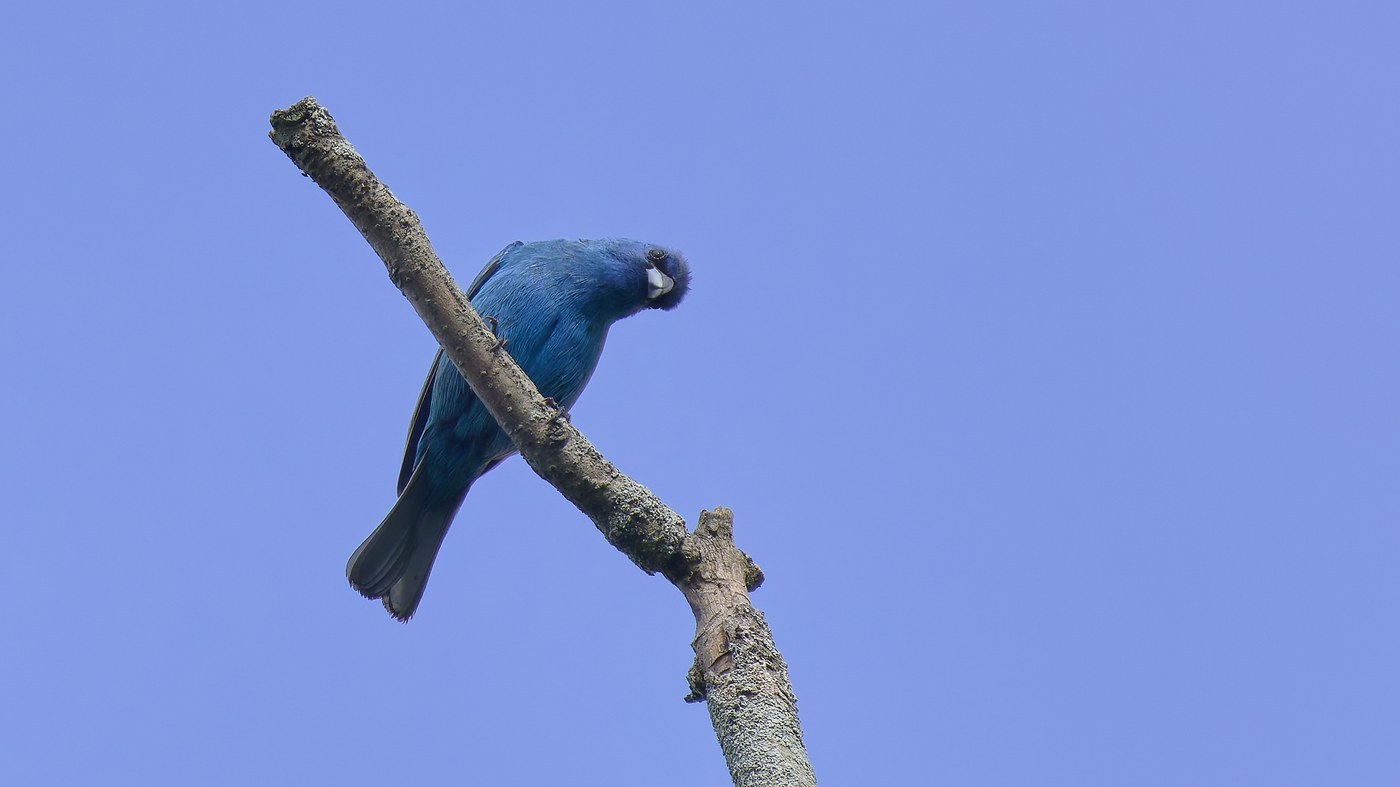
Key Field Marks
- Size & shape: A small finch-like bird about 4.5–5.5 inches (11.5–14 cm) long, with a short, stout, conical bill typical of buntings, a compact body, and a moderately notched tail.
- Breeding male plumage: Appears vivid, almost electric blue overall, with the head often looking slightly darker/richer blue than the body; the blue is structural (not pigment), so it can look shimmering or even blackish in poor light and dazzling turquoise-blue in bright sun.
- Female plumage: Plain warm brown overall, slightly paler below with faint blurry streaking on the breast, and often a hint of blue on the wings, rump, or tail — a useful clue since few other brown sparrow-like birds show any blue at all.
- Non-breeding/winter male: Molts into a mottled brown-and-blue patchwork, showing blotchy blue feathers mixed with brown as it transitions, especially in fall.
- Bill: Silvery-gray, conical, and stubby — typical seed-eating bunting bill shape.
Separating It From Similar Species
- Blue Grosbeak: Larger and bulkier with a much heavier, thicker bill and rufous wing bars, unlike the Indigo Bunting's smaller size, thinner bill, and lack of obvious wing bars.
- Lazuli Bunting (range overlap in the Great Plains): Male Lazuli Bunting has a blue head/back with a contrasting orange-buff breast band and white belly and white wing bars, distinctly different from the all-blue Indigo Bunting male; hybrids occur in the overlap zone and can show intermediate features.
- Blue-gray Gnatcatcher: Much smaller and slimmer with a thin needle-like bill, white eye-ring, and constantly flicked tail — easily ruled out by bill shape and behavior.
- Female sparrows: Female Indigo Buntings can be mistaken for various brown sparrows, but the conical bunting bill, unstreaked or only faintly streaked underparts, and any trace of blue in the wings/tail help confirm identity.
Where & When to See It
- Habitat: Brushy field edges, overgrown pastures, woodland edges, roadsides, and power-line cuts — favors shrubby, weedy, semi-open habitat rather than deep forest or open grassland.
- Range: Breeds across the eastern and central United States and southernmost Canada; winters primarily in Mexico, Central America, and the Caribbean.
- Season: A neotropical migrant, present on breeding grounds roughly May through September; passes through in spring and fall migration, when it can turn up in a wider variety of habitats including yards and gardens.
- Behavior: Males sing persistently from exposed high perches (wires, treetops) through much of the summer; forages for seeds and insects low in shrubby vegetation; migrates at night, using star patterns for orientation, a well-studied behavior in this species.
Voice
- A bright, high, paired-phrase song, often described as "sweet-sweet, chew-chew, sweet-sweet," with each phrase typically repeated twice, delivered from a conspicuous perch.
- Call is a sharp, dry "spit" or "chip" note.
Frequently asked questions
Why does an Indigo Bunting sometimes look black instead of blue?
Its blue color comes from microscopic feather structures that scatter light rather than from blue pigment, so the bird can look dull, blackish, or brownish in low or backlit conditions and brilliant blue in direct sunlight.
How do you tell a female Indigo Bunting from a sparrow?
Look for the short, conical bunting bill, largely unstreaked warm brown underparts, and often a faint blue tinge on the wings, rump, or tail — features most sparrows lack.
How is Indigo Bunting different from Lazuli Bunting?
Male Lazuli Bunting has an orange-buff breast band, white belly, and white wing bars, whereas male Indigo Bunting is essentially all blue without those contrasting markings; the two do hybridize where ranges meet on the Great Plains.
Where do Indigo Buntings prefer to live?
Brushy edges of fields, overgrown pastures, and woodland margins with dense low shrubs — not deep forest interior or wide-open grassland.
When can I see Indigo Buntings?
They are present on breeding grounds in the eastern and central U.S. from about May to September, migrating to Mexico, Central America, and the Caribbean for winter.