
Indian Robin Identification Guide
A small, confiding black-and-chestnut chat of the Indian subcontinent, identified by its glossy plumage, rufous undertail patch, and habit of cocking its tail while perched.
Read the full Indian Robin encyclopedia entry →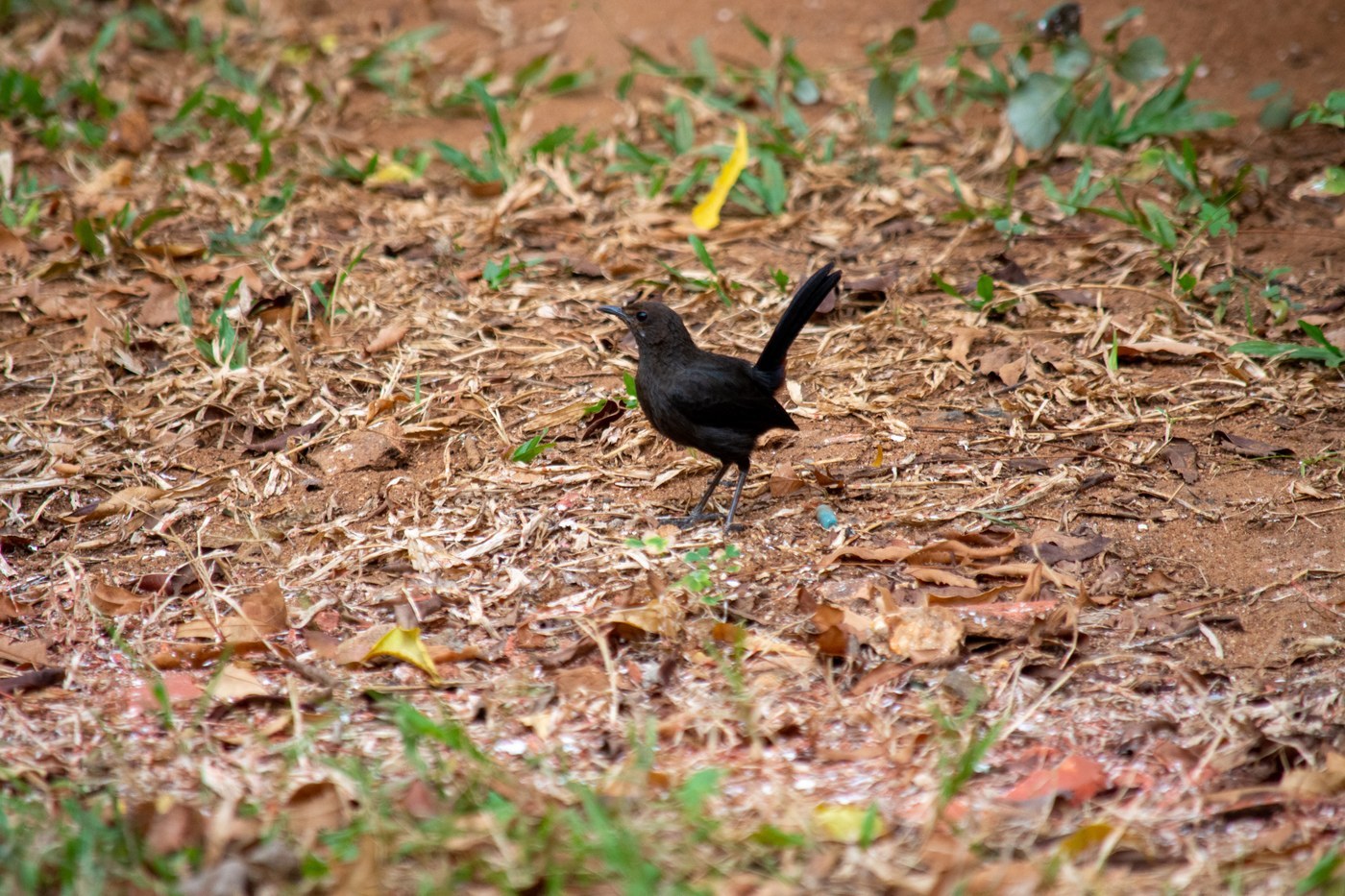
Key Field Marks
- Size & shape: A small passerine about 6.5–7.5 inches (16–19 cm) long, slim-bodied with a fairly long tail often held cocked upward, and a thin, straight bill — built like a typical chat/robin.
- Male plumage: Glossy blue-black overall (in most populations) with a conspicuous chestnut-rufous patch under the tail (undertail coverts) that is flashed prominently; some western/northern populations show a whitish shoulder patch on the wing.
- Female plumage: Plain grayish-brown above, paler brownish-gray below, with the same rufous undertail patch as the male — this rufous vent is present in both sexes and is a key identification feature.
- Tail behavior: Frequently cocks and fans its tail upward while perched, repeatedly flicking it, revealing the rufous undertail patch — a very characteristic habit.
- Legs: Long and dark, suited to its ground-foraging habits.
Separating It From Similar Species
- Oriental Magpie-Robin: Larger, with bold white in the wings and outer tail feathers and a longer white-edged tail; Indian Robin is smaller, lacks white wing patches (aside from the small shoulder patch in some races), and shows rufous (not white) under the tail.
- Black Redstart (female/winter): Female Black Redstart has a rufous-orange tail (not just undertail coverts) that is visible in flight and constantly quivered, whereas Indian Robin's tail is dark with only the coverts rufous.
- Pied Bush Chat (male): Shows white on the wing and rump/neck sides in a different pattern and lacks the rufous undertail patch, plus generally prefers more open grassy habitats.
Where & When to See It
- Habitat: Dry, open, and often stony or scrubby terrain — rocky ground, waste land, roadsides, cultivated fields, gardens, and semi-arid country; notably tolerant of human presence and common around villages and towns.
- Range: Resident across the Indian subcontinent (India, Pakistan, Sri Lanka, Bangladesh, Nepal) and into parts of Iran; non-migratory throughout its range.
- Season: Present year-round; most vocal and territorial during the breeding season (broadly spring through the monsoon, varying by region).
- Behavior: Forages mostly on the ground, running and hopping to snatch insects; frequently perches on low walls, rocks, and bushes; male performs a bobbing, tail-fanning display during courtship.
Voice
- A cheerful, warbling song, often delivered from a low perch, rock, or rooftop.
- Calls include sharp "chik" or "tik" notes, often repeated when alarmed or scolding.
Frequently asked questions
What is the easiest way to identify an Indian Robin?
Look for a small, glossy black (male) or brownish-gray (female) bird with a bright chestnut patch under a frequently cocked tail — the rufous undertail patch and tail-flicking habit are diagnostic in both sexes.
How is Indian Robin different from Oriental Magpie-Robin?
Oriental Magpie-Robin is larger with bold white in the wings and outer tail; Indian Robin is smaller, lacks white wing patches in most populations, and shows rufous rather than white under the tail.
Do female Indian Robins look completely different from males?
Females are duller grayish-brown rather than glossy black, but both sexes share the diagnostic rufous undertail patch.
What habitat is best for finding Indian Robins?
Dry open and scrubby ground, rocky areas, farmland edges, and gardens — they are common and confiding around villages and towns across South Asia.