
Indian Peafowl Identification Guide
The iconic peacock of South Asia, unmistakable for its iridescent blue neck, ornate crest, and in males an enormous fan of eye-spotted train feathers.
Read the full Indian Peafowl encyclopedia entry →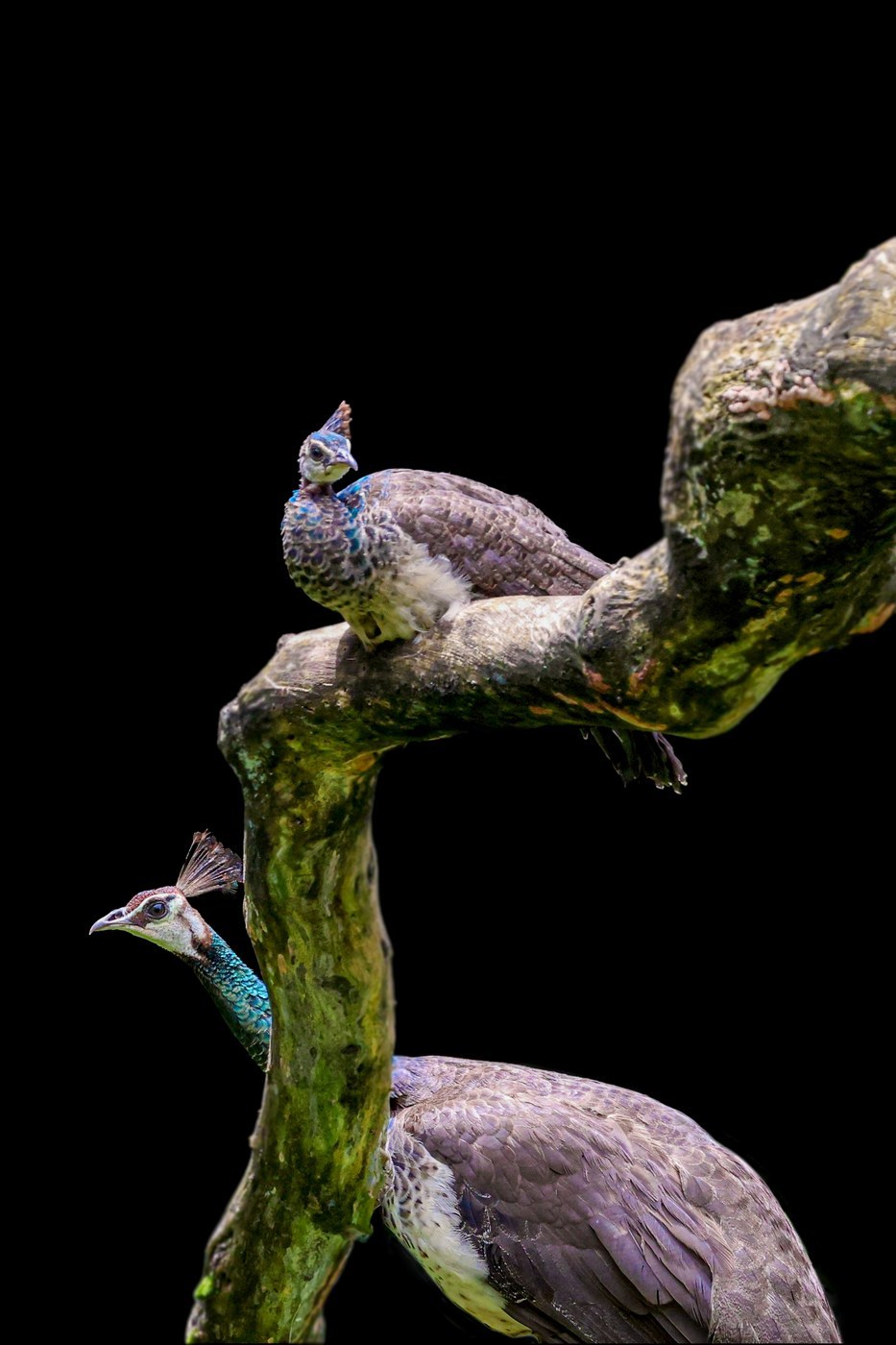
Key Field Marks
- Size & shape: One of the largest game birds in the world; males (peacocks) measure up to 7.5 feet (2.3 m) including the train, with a small head, long slender neck, and a stout body carried on strong legs. Females (peahens) are considerably smaller, lacking the train.
- Male plumage: Brilliant iridescent blue head, neck, and breast; a fan-shaped crest of blue-tipped feathers atop the head; the famous elongated upper tail coverts (the "train") are bronze-green with iridescent eye-shaped ocelli, spread and shaken in courtship display.
- Female plumage: Duller mix of brown, buff, and dull green with a whitish face and throat, a shorter crest, and no train — built for camouflage while nesting.
- Bill & legs: Sturdy, slightly curved gray-brown bill; strong grayish legs, with males bearing sharp spurs used in territorial disputes.
- Juveniles: Resemble females; young males gradually acquire train feathers over several years, not reaching full length until about age 3.
Separating It From Similar Species
- Green Peafowl (regionally overlapping in parts of Southeast Asia): Has an all-green, scaled neck and breast (not solid blue), a more upright crest, and both sexes look more similar to each other; the Indian Peafowl's solid iridescent blue neck is diagnostic.
- Feral/domestic peafowl: Widely kept and sometimes seen with white or pied plumage due to selective breeding — these are the same species (Indian Peafowl) and not a distinct wild form.
- No other native bird approaches its combination of size, blue neck, and ornate crest, making confusion with true wild species unlikely.
Where & When to See It
- Habitat: Open forest edges, scrublands, agricultural fields, and areas near water; frequently found close to villages and temples where it is culturally protected, as well as in parks and estates as an introduced ornamental bird worldwide.
- Range: Native to the Indian subcontinent (India, Sri Lanka, Nepal, Pakistan, Bangladesh); introduced and often feral in many countries including the U.S., where escaped/released birds form local populations.
- Season: Non-migratory resident; visible year-round, though the male's train is fullest and most frequently displayed during the breeding season (typically before and during the monsoon in its native range).
- Behavior: Forages on the ground for seeds, insects, and small reptiles; roosts communally in trees at night; males perform elaborate train-fanning courtship displays accompanied by rattling of feathers.
Voice
- A loud, far-carrying "may-AWE" or "kee-ow" scream, often given at dawn/dusk or before rain, audible over long distances.
- Also produces a variety of clucks, chuckles, and a mechanical-sounding rattle from the shaking train during display.
Frequently asked questions
Is a 'peacock' the same as a peafowl?
Peafowl is the species name; 'peacock' refers specifically to the male, 'peahen' to the female, and 'peachick' to the young.
How can you tell a male from a female Indian Peafowl?
Males have an iridescent blue neck and the long ornate train with eye-spots; females are duller brown and buff overall with a whitish face and no train.
Does the Indian Peafowl's train grow back if damaged?
Yes, males molt their train feathers after the breeding season and regrow a fresh, fuller train each year as they mature.
How do you separate Indian Peafowl from Green Peafowl?
Indian Peafowl has a solid, unscaled iridescent blue neck and breast, while Green Peafowl shows a scaled green neck pattern and a more upright, tufted crest.
Are Indian Peafowl found outside India?
Yes, though native to South Asia, they have been widely introduced as ornamental birds and now have feral populations in parts of the U.S., Australia, and elsewhere.