
Iceland Gull Identification Guide
A medium-sized, gentle-faced white-winged gull best identified by its pale to white wingtips lacking black, rounded head shape, and smaller, more delicate bill compared to the similar Glaucous Gull.
Read the full Iceland Gull encyclopedia entry →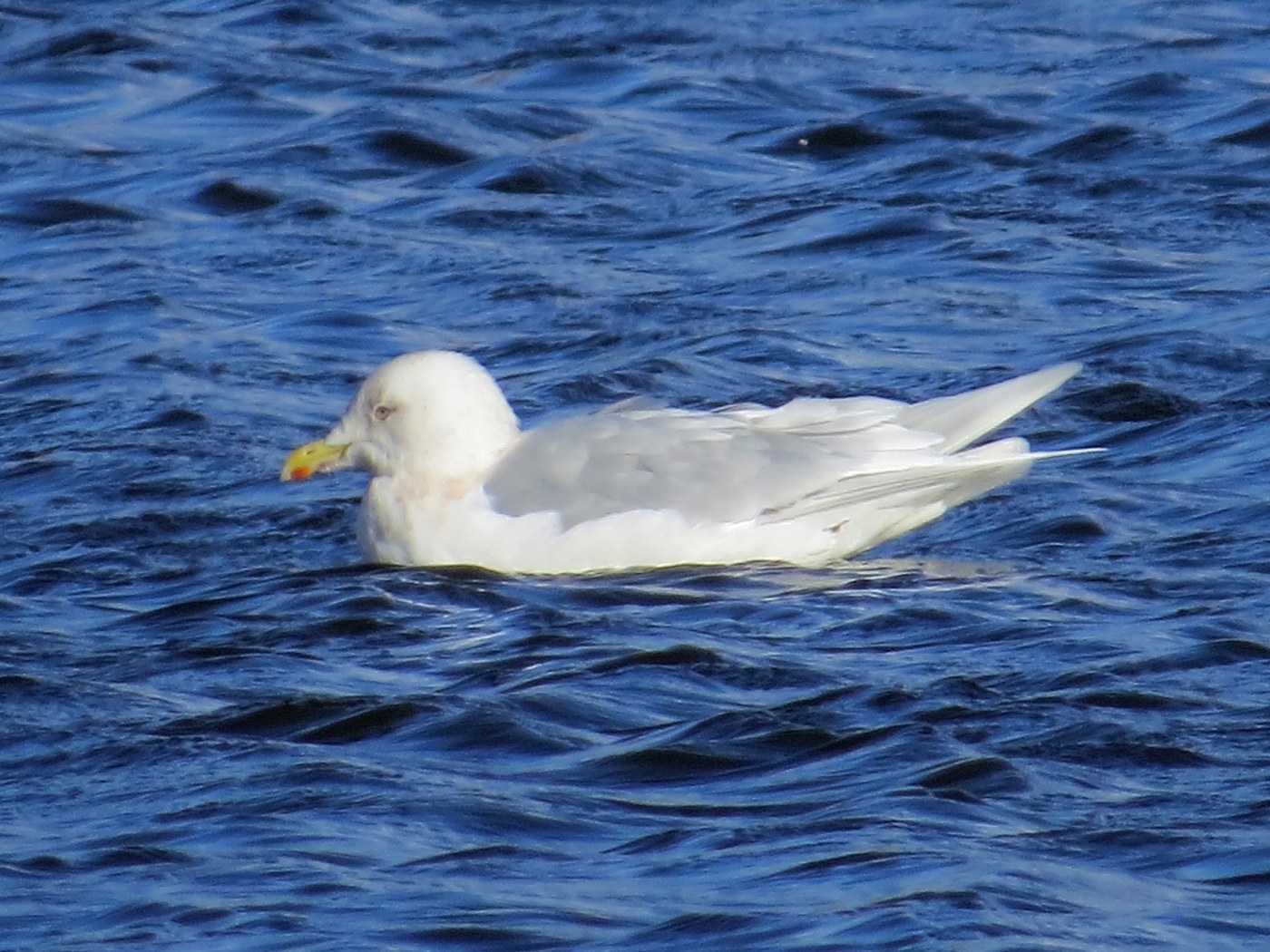
Overview
The Iceland Gull (Larus glaucoides) is a medium-sized "white-winged" gull of the North Atlantic and Arctic, breeding in Greenland and wintering south to the northeastern United States and northern Europe. It is part of a notoriously variable and confusing gull complex, with several recognized subspecies/forms (including the paler "Kumlien's Gull" intergrade population) adding to identification challenges.
Key Field Marks
- Size & shape: Medium-sized gull, about 21-24 inches (53-61 cm), noticeably smaller and more delicate than Glaucous Gull, with a rounded head, gentle "dovelike" facial expression, and relatively short, thin bill.
- Wingtips (adult): Pure white or very pale wingtips lacking black markings in nominate birds; the "Kumlien's" form shows variable pale gray to faint dusky markings on the wingtips, never solid black as in most large gulls.
- Bill: Relatively small, thin, yellow with a red gonydeal spot in breeding adults; proportionally much smaller and less heavy than Glaucous Gull's bill.
- Wing length: Long wings that extend well past the tail tip when the bird is at rest — a useful structural clue.
- Immatures: Pale, faintly patterned buffy-white to pale gray-brown plumage overall, lacking strong contrast, taking about four years to reach full adult plumage like other large gulls.
- Eye color: Adults typically show a dark eye (in nominate Iceland Gull) though Kumlien's forms can show pale eyes.
Separating Iceland Gull from Similar Species
Glaucous Gull
- Glaucous Gull is distinctly larger and bulkier with a much heavier, thicker bill and a flatter, more sloped forehead; overall structure is bulkier and less delicate than Iceland Gull. Wingtip color (white, lacking black) is similar in both species, so structure and size are the primary separators.
Thayer's Gull / Iceland Gull (thayeri form)
- Now often treated as part of the same species complex; "Thayer's-type" birds show more contrast with some dark markings in the wingtip and a darker eye with a thin pink-red orbital ring; extensive individual variation makes this one of the trickiest gull identification problems, often requiring expert review of multiple features.
Glaucous-winged Gull
- Glaucous-winged Gull shows pale gray (not white) wingtips that closely match the gray of the rest of the wing, versus Iceland Gull's contrastingly paler-than-mantle wingtips; ranges mostly do not overlap (Glaucous-winged is a Pacific species).
Habitat and Range
Iceland Gulls breed on Arctic cliffs in Greenland and Nunavut. In winter they move south to open water along the northeastern coast of North America (from Newfoundland and the Canadian Maritimes south to the mid-Atlantic states), the Great Lakes, and parts of northern Europe, frequenting harbors, landfills, lakes, and coastal waters, often mixing with other large gull species.
Seasonal Occurrence
A winter visitor across most of its wintering range, generally present from late fall through early spring (roughly November through March/April), with numbers peaking in midwinter at reliable coastal and Great Lakes locations.
Behavior
Like other large gulls, Iceland Gulls are opportunistic feeders, scavenging at fishing harbors, landfills, and following boats, as well as foraging naturally for fish and invertebrates. They often associate with other large white-headed gulls such as Herring and Glaucous Gulls in winter roosts and feeding flocks, making direct size and structure comparisons valuable for identification.
Voice
Calls are similar to other large white-headed gulls but generally higher-pitched and less harsh than Herring Gull, including a range of long calls, mewing notes, and alarm calls given at roosts and while foraging; vocalizations are rarely a primary identification tool given the overlap with related species.
Frequently asked questions
How do you tell Iceland Gull from Glaucous Gull?
Iceland Gull is noticeably smaller and more delicate with a thinner bill and rounder head, while Glaucous Gull is bulkier with a much heavier bill and flatter forehead; both share white/pale wingtips, so size and structure are key.
What does it mean when an Iceland Gull is called a "Kumlien's Gull"?
Kumlien's Gull refers to a variable intergrade population/form of Iceland Gull with faint gray to dusky markings in the wingtips, intermediate between the pure white-winged nominate form and the darker-winged Thayer's-type birds.
When is the best time to see Iceland Gulls?
They are winter visitors to the northeastern U.S., Canadian Maritimes, and Great Lakes, typically present from November through March, often found at harbors, landfills, and large lakes.
Why is Iceland Gull identification considered difficult?
The species shows extensive individual variation, includes multiple named forms (nominate, Kumlien's, Thayer's-type), takes several years to reach adult plumage, and closely resembles other large white-winged gulls, making confident identification challenging even for experienced birders.