House Finch Identification Guide
A common backyard finch with streaky brown plumage and, in males, a variable red-to-orange wash on the head and breast, easily confused with Purple Finch and Cassin's Finch.
Read the full House Finch encyclopedia entry →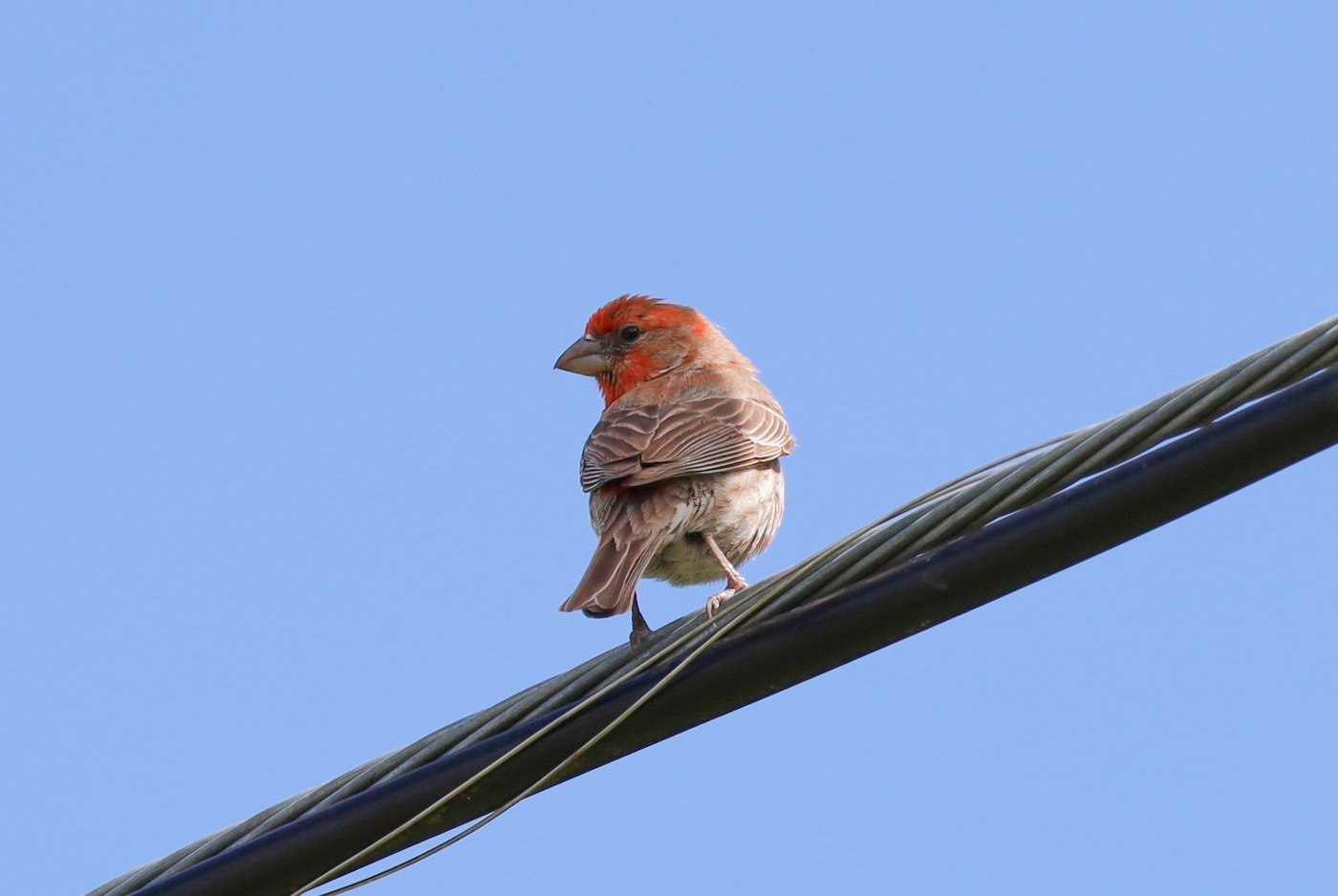
Overview
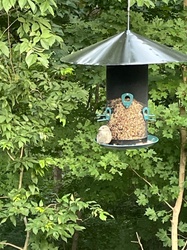
The House Finch (Haemorhous mexicanus) is one of the most widespread and familiar backyard birds in North America, thriving in urban and suburban settings as well as its native arid West. It is a frequent visitor to feeders, especially those offering sunflower or nyjer seed.
Key Field Marks
- Size & shape: Small finch, about 5-5.5 inches (12.5-14 cm), with a fairly long, notched or squared tail and a relatively small, conical bill with a curved (not straight) culmen.
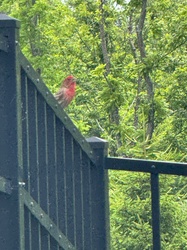
- Male plumage: Brown-streaked back and flanks with a red to orange-red (sometimes yellowish, especially in diet-poor or urban birds) wash across the forehead, eyebrow, throat, and breast; the red is patchy and does not neatly wrap around the face.
- Female plumage: Plain grayish-brown overall with blurry, indistinct streaking below and no strong facial pattern — notably lacking a bold face or bright eyebrow.
- Underparts: Heavily streaked brown flanks and belly in both sexes.
- Bill: Short, conical, with a distinctly curved culmen (top edge), a good structural clue versus other red finches.
Separating House Finch from Similar Species
Purple Finch
- Purple Finch males show a more extensive, richer raspberry-red wash covering the head, back, and breast (less patchy, more "dipped in wine") with a cleaner, less streaky look; females have a bold white eyebrow stripe and strong dark cheek patch, unlike the plain-faced female House Finch.
- Purple Finch has a straighter-edged, less curved bill and a more deeply notched tail.
Cassin's Finch
- Found in higher-elevation western forests; males have a brighter, more concentrated crimson crown that contrasts with a pinker (less red) face and back; bill is straighter and longer than House Finch's.
- Female Cassin's Finch also shows more defined face pattern than the very plain female House Finch.
Common Redpoll / Pine Siskin
- Both are smaller and lack the extensive red coloring and curved bill shape of House Finch; redpolls show a small red cap only, not a red face/breast wash.
Habitat and Range
House Finches are habitat generalists, common in urban and suburban yards, parks, farms, deserts, and scrubby edges across virtually all of the continental United States, southern Canada, and Mexico. They were introduced to the eastern U.S. in the mid-20th century and have since spread to fill in nearly the entire country.
Seasonal Occurrence
Year-round residents throughout almost all of their range; they do not undertake long-distance migration, though some northern and high-elevation populations may shift short distances in winter.
Behavior
Highly social, House Finches are often seen in flocks at feeders, especially favoring sunflower seeds. They have a fondness for nesting in hanging planters, wreaths, and other artificial structures around homes. Conjunctival eye disease (a bacterial infection causing swollen, crusty eyes) is relatively common in this species and something birders may notice at feeders.
Voice
A cheerful, long, warbling song full of varied notes, often ending in an upslurred or downslurred buzzy note; frequently sung from wires, rooftops, and treetops. The call is a bright "cheep" or "queet" often given in flight or at feeders.
Frequently asked questions
How do I tell a male House Finch from a male Purple Finch?
House Finch red is patchy and mostly limited to the head/breast with heavily streaked brown flanks, while Purple Finch shows a richer, more extensive raspberry wash over the head, back, and breast with a cleaner overall look.
Why do some male House Finches look orange or yellow instead of red?
The red coloring comes from carotenoid pigments in the diet, so birds with less access to red-pigment-rich foods during molt can end up orange or yellow instead.
Do female House Finches have any red on them?
No, females are plain grayish-brown with blurry streaking and no red, orange, or strong facial markings.
Are House Finches native to the eastern United States?
No, they are native to the western U.S. and Mexico; eastern populations descend from birds released/escaped in New York in the 1940s and have since spread across the continent.
House Finch identified by the community
Recent House Finch sightings identified with Bird Identifier.