
Hooded Vulture Identification Guide
A small, slender-billed African vulture with a bare pinkish face and a scruffy white-down "hood" on the nape, the Hooded Vulture is a familiar scavenger around African villages and towns, but is now Critically Endangered.
Read the full Hooded Vulture encyclopedia entry →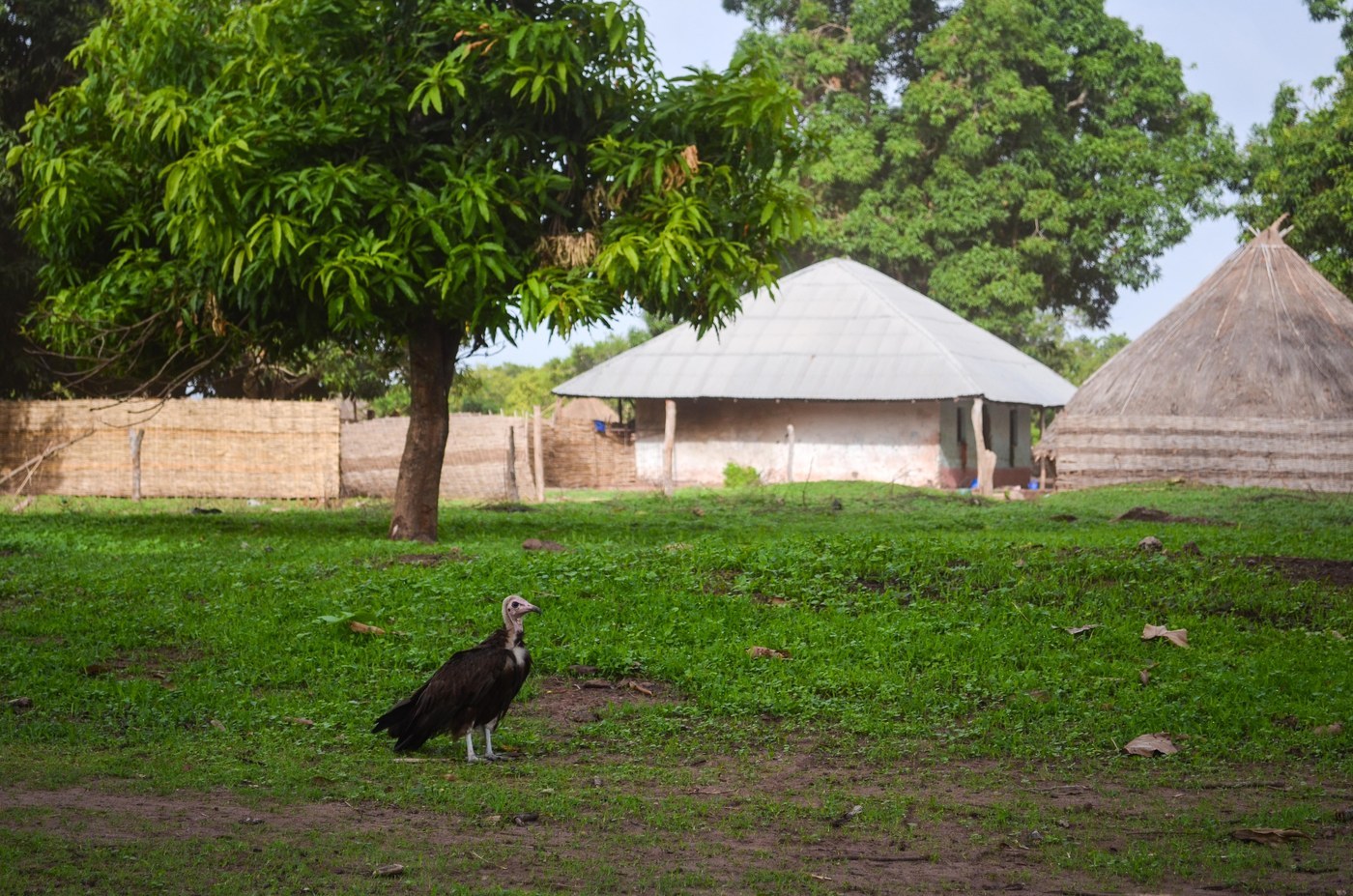
Key Field Marks
- Size & shape: A relatively small vulture, about 62–72 cm (24–28 in) long, with a slim build, a notably thin, weak-looking bill, and a long, thin neck compared to Africa's larger vulture species.
- Plumage: Dark brown overall, appearing almost blackish at a distance, with a somewhat scruffy, unkempt texture to the body feathers.
- Head: Bare, pale pinkish to whitish facial skin (which can flush reddish when the bird is excited) extending down the throat, topped by a patch of fluffy, off-white down feathers on the nape and hindneck — the "hood" that gives the species its name.
- Bill: Notably thin and weak compared to other African vultures, an adaptation that restricts it largely to scraps, small pieces, and softer tissue rather than tearing tough hide.
- In flight: Narrow wings held fairly flat, with a small head projecting on a thin neck; overall silhouette is slighter and less powerful than larger vulture species sharing its range.
Separating It From Similar Species
- White-backed Vulture: Larger and bulkier with a thicker bill, a pale/whitish back patch visible in flight (in adults), and a more powerful build.
- Rüppell's Vulture: Larger still, with pale-edged, scaly-looking body feathers and a heavier bill.
- Lappet-faced Vulture: Much larger and more powerful, with fleshy facial lappets/folds (rather than a smooth bare face) and a massive bill capable of tearing tough hide.
- The Hooded Vulture's small size, thin bill, and pale bare face with a downy hood are usually enough to separate it from all of Africa's other vulture species at a glance.
Where & When to See One
Hooded Vultures are resident across a broad swath of sub-Saharan Africa, from Senegal east to Ethiopia and Somalia and south to South Africa, occupying savanna, open country, and — notably — the vicinity of towns, villages, and rubbish dumps, where they have traditionally served as important scavengers. Unlike some other vultures, they are often tolerant of and closely associated with human settlements. The species has suffered catastrophic population declines in recent decades due to poisoning, habitat loss, and other pressures, and is now classified as globally Critically Endangered, making sightings an increasingly notable and important conservation observation.
Voice
Generally silent, as with most vultures; occasionally gives thin whistles, hisses, or grunting/squealing notes during disputes over carcasses or at nest sites.
Frequently asked questions
What is the easiest way to identify a Hooded Vulture?
Look for a relatively small, dark brown vulture with a thin, weak bill, bare pinkish-white facial skin, and a scruffy patch of pale down on the nape forming a 'hood.'
How does a Hooded Vulture differ from larger African vultures like White-backed or Rüppell's Vulture?
It is noticeably smaller and slimmer with a much thinner bill, lacking the pale back patch of White-backed Vulture or the scaly plumage pattern of Rüppell's Vulture.
Where are Hooded Vultures commonly seen?
They are widespread across sub-Saharan Africa and are notably tolerant of human settlements, often seen scavenging around towns, villages, and rubbish dumps as well as open savanna.
Is the Hooded Vulture endangered?
Yes, it is classified as globally Critically Endangered due to steep population declines from poisoning and other threats, making it one of the most conservation-sensitive vultures in Africa.