
Hooded Merganser Identification Guide
North America's smallest merganser, the male Hooded Merganser is unmistakable with its fan-shaped black-and-white crest, chestnut flanks, and bold white breast patches.
Read the full Hooded Merganser encyclopedia entry →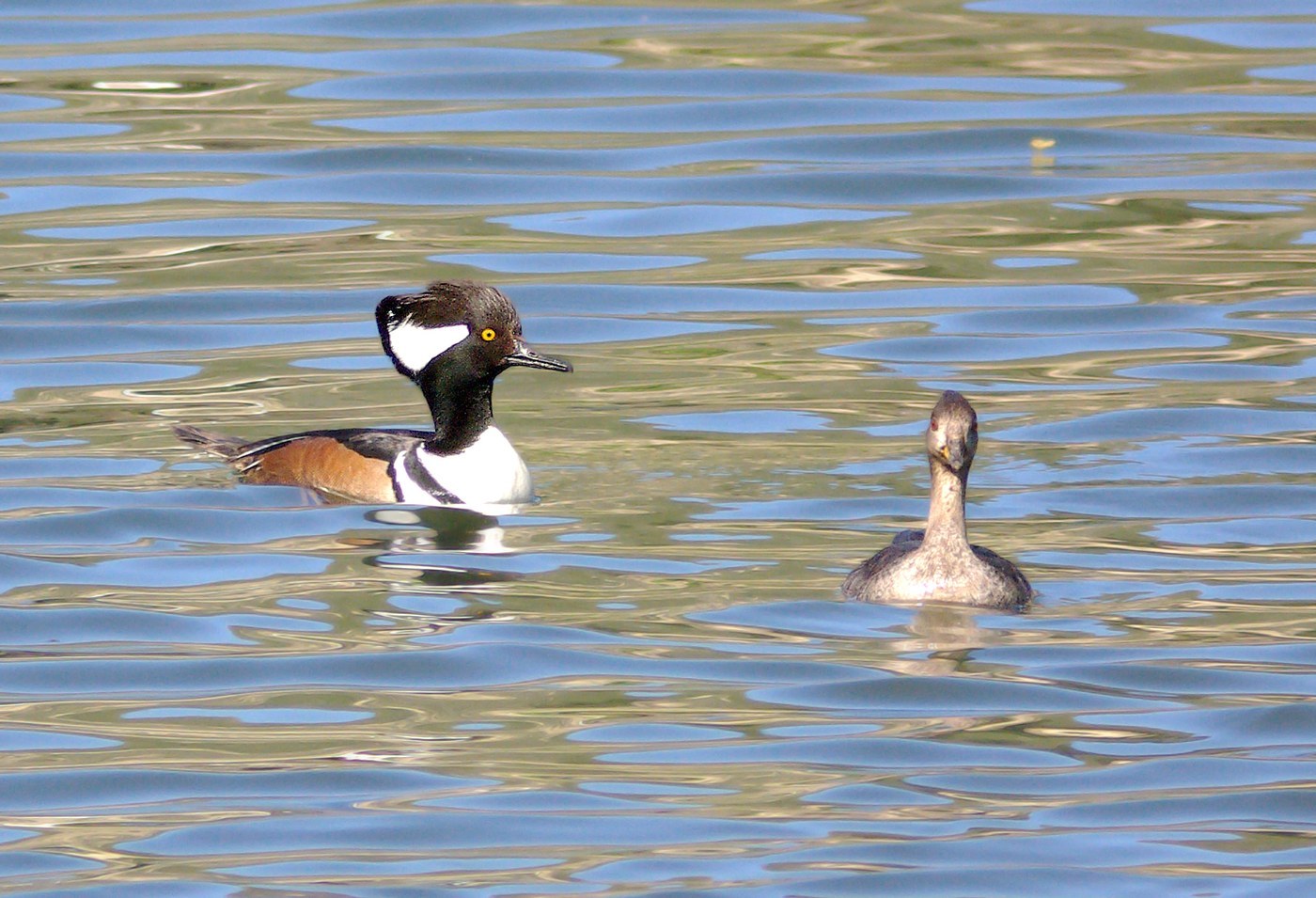
Key Field Marks
- Size & shape: A small, compact diving duck, about 40–49 cm (16–19 in) long, noticeably smaller and more compact than the larger Common and Red-breasted Mergansers, with a thin, serrated bill typical of the merganser group but proportionally slimmer.
- Male plumage: Striking large, fan-shaped crest that is mostly black with a bold white center patch, raised and lowered at will; black back, chestnut-brown flanks, white breast crossed by two black bars, and a slim dark bill.
- Female/immature plumage: Overall grayish-brown with a shaggy, cinnamon-brown crest (less dramatic than the male's), a dark bill, and a subtler, more uniform look overall.
- In flight: Fast, direct flight low over water, with the male's bold black-white-chestnut pattern conspicuous; both sexes show a small white wing patch.
- Behavior: Dives frequently for small fish, crustaceans, and aquatic insects; often seen in small groups on quiet wooded waters, and nests in tree cavities like Wood Ducks.
Separating It From Similar Species
- Common and Red-breasted Merganser: Both are considerably larger with orange-red, more robustly serrated bills; males of those species show simpler head patterns (green head in Common, shaggy double crest in Red-breasted) without the bold black-and-white fan crest of the male Hooded Merganser.
- Bufflehead: Similar small size and habitat, but male Bufflehead shows a large white patch wrapping around the back of an iridescent dark head rather than a fan-shaped crest, and has a stubby bill rather than a thin serrated one.
- Wood Duck: Shares tree-cavity nesting and similar wooded pond habitat, but Wood Duck has an entirely different, ornately patterned plumage and a different bill shape.
Where & When to See One
Hooded Mergansers breed across wooded wetlands, beaver ponds, swamps, and slow rivers in the eastern and northwestern United States and much of Canada, nesting in natural tree cavities or nest boxes near water. In winter they move to ice-free ponds, marshes, and sheltered coastal waters across most of the U.S. and northern Mexico. Look for them on quiet, tree-lined ponds and small lakes rather than open, exposed water.
Voice
Generally quiet away from the breeding season; displaying males give a low, rolling, frog-like croaking call, while females give a hoarse, gravelly "gack" or croaking note, especially when flushed or when leading young.
Frequently asked questions
What is the best mark for identifying a male Hooded Merganser?
Look for the large, fan-shaped crest that is mostly black with a bold white center patch, combined with chestnut flanks and a white breast crossed by two black bars.
How can I tell a Hooded Merganser from other mergansers?
Hooded Merganser is notably smaller with a thinner, darker bill, while Common and Red-breasted Mergansers are larger with orange-red bills and different head patterns.
Where do Hooded Mergansers nest?
They nest in tree cavities or nest boxes near wooded ponds, swamps, and slow-moving rivers, similar to Wood Ducks.
What does a female Hooded Merganser look like?
Females are grayish-brown overall with a shaggy cinnamon-brown crest, much less bold than the male's black-and-white fan crest, and a dark bill.