
Homing Pigeon Identification Guide
A domesticated form of the Rock Pigeon bred for its extraordinary navigational ability, the Homing Pigeon is usually told apart from feral pigeons by leg bands, tame behavior, and strong, direct flight.
Read the full Homing Pigeon encyclopedia entry →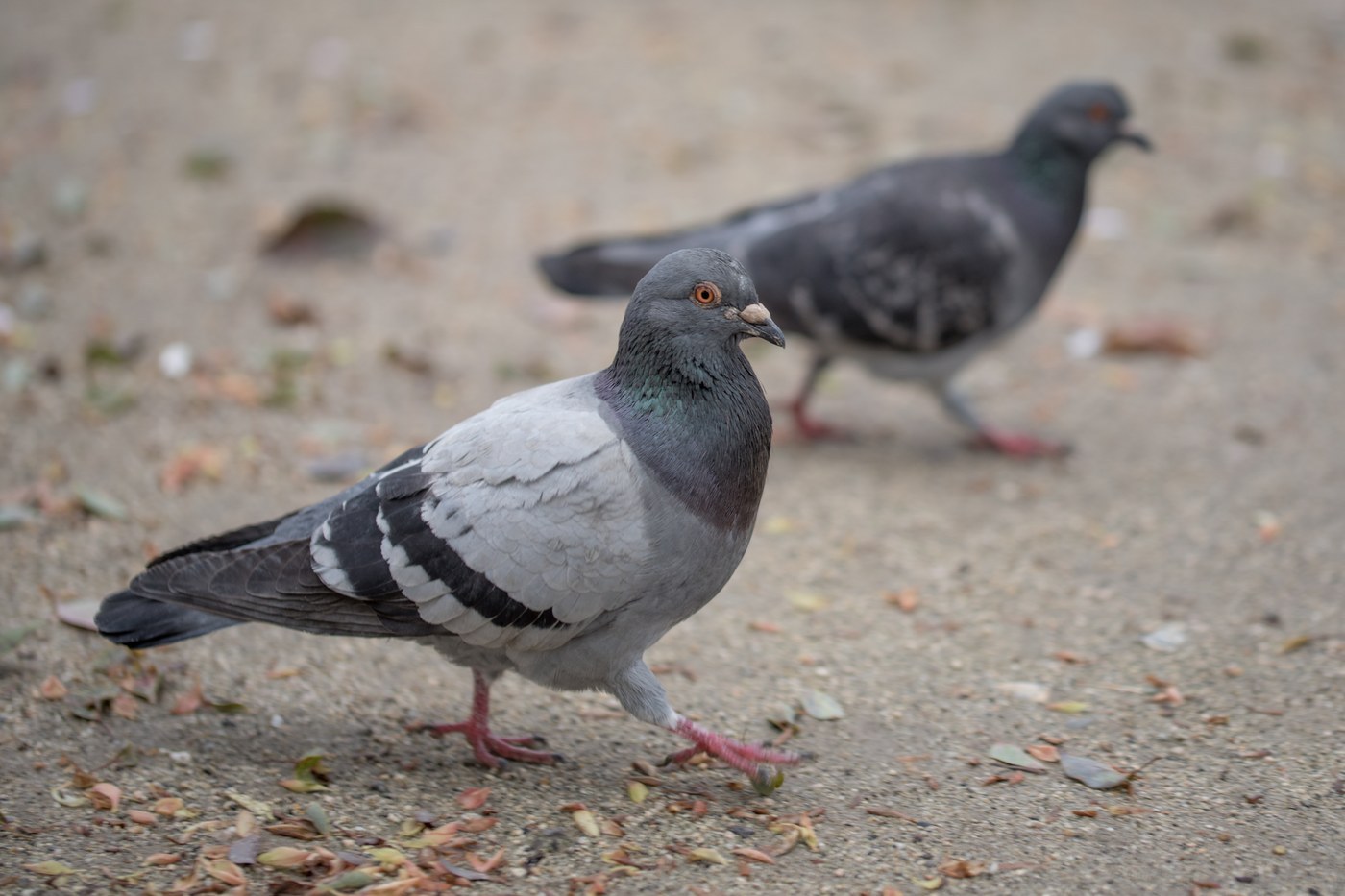
Key Field Marks
- Size & shape: Structurally identical to the wild/feral Rock Pigeon (Columba livia): a plump, medium-sized pigeon roughly 29–37 cm (11–15 in) long, with a small head, short neck, and pointed wings suited to fast, sustained flight.
- Plumage: Highly variable due to selective breeding, but many homing/racing pigeons retain the ancestral "blue bar" pattern — blue-gray body, two black wing bars, a darker head, and iridescent green-purple sheen on the neck. Other individuals show checkered, pied, red, or all-white plumage.
- Bill and cere: Dark, slender bill with a pale, slightly swollen fleshy cere at the base, typical of the Rock Pigeon group.
- Leg bands: The most reliable identification clue — racing and homing pigeons almost always wear one or two numbered plastic or metal bands on the legs, marking them as owned, registered birds rather than feral street pigeons.
- Condition and behavior: Homing pigeons are typically well-fed, sleek, and confident, and may appear disoriented, resting, or approachable in unusual locations (like a suburban yard or ship at sea) far from any loft, since they can become lost or exhausted during long training flights or races.
Separating It From Feral/Wild Rock Pigeons
- Leg bands are the single best clue; feral street pigeons are essentially never banded.
- Homing pigeons are often found singly, resting in an odd location, sometimes noticeably tame or willing to accept food, unlike wary feral flocks.
- Plumage alone is not reliable since feral pigeons show the same wide range of color morphs as domestic breeds.
- If a banded pigeon appears exhausted or injured, the band number can often be used to trace and contact its owner through a national pigeon racing organization.
Where & When to See One
Homing pigeons may turn up almost anywhere, since they are transported to release points for training and races and then fly back toward home lofts, sometimes covering hundreds of miles. They are most often noticed resting on buildings, ships, or in gardens well outside cities with active pigeon-racing clubs, particularly in Europe, North America, and parts of Asia where the hobby remains popular. Look for one banded leg and a general lack of the wariness typical of urban feral pigeons.
Voice
Soft, throaty cooing typical of all pigeons — a rolling "coo-roo-c'coo" — along with wing-clapping sounds during display flight, identical to calls given by wild Rock Pigeons.
Frequently asked questions
How do I tell a Homing Pigeon from an ordinary feral pigeon?
Look for a numbered leg band, the clearest sign of a registered, owned bird; feral street pigeons are almost never banded.
Do Homing Pigeons look different from wild Rock Pigeons?
Not necessarily — they share the same species and the same range of color patterns, from the ancestral blue-bar form to checkered, pied, or white variants.
Why might I find a Homing Pigeon far from any city?
They are released at distant points for training or races and navigate back to their home loft, so exhausted or disoriented birds can turn up in unexpected rural or coastal locations, including resting on ships at sea.
What should I do if I find a banded, exhausted pigeon?
The leg band number can often be used to contact a local pigeon racing organization or the owner, who may want the bird reported or returned; this is a matter for wildlife/domestic-animal resources rather than field identification.