
Hoatzin Identification Guide
One of the most unmistakable birds in the world, the Amazonian Hoatzin sports a spiky rufous crest, bare blue face, and red eyes, and is instantly told from every other bird by its bizarre appearance and habits.
Read the full Hoatzin encyclopedia entry →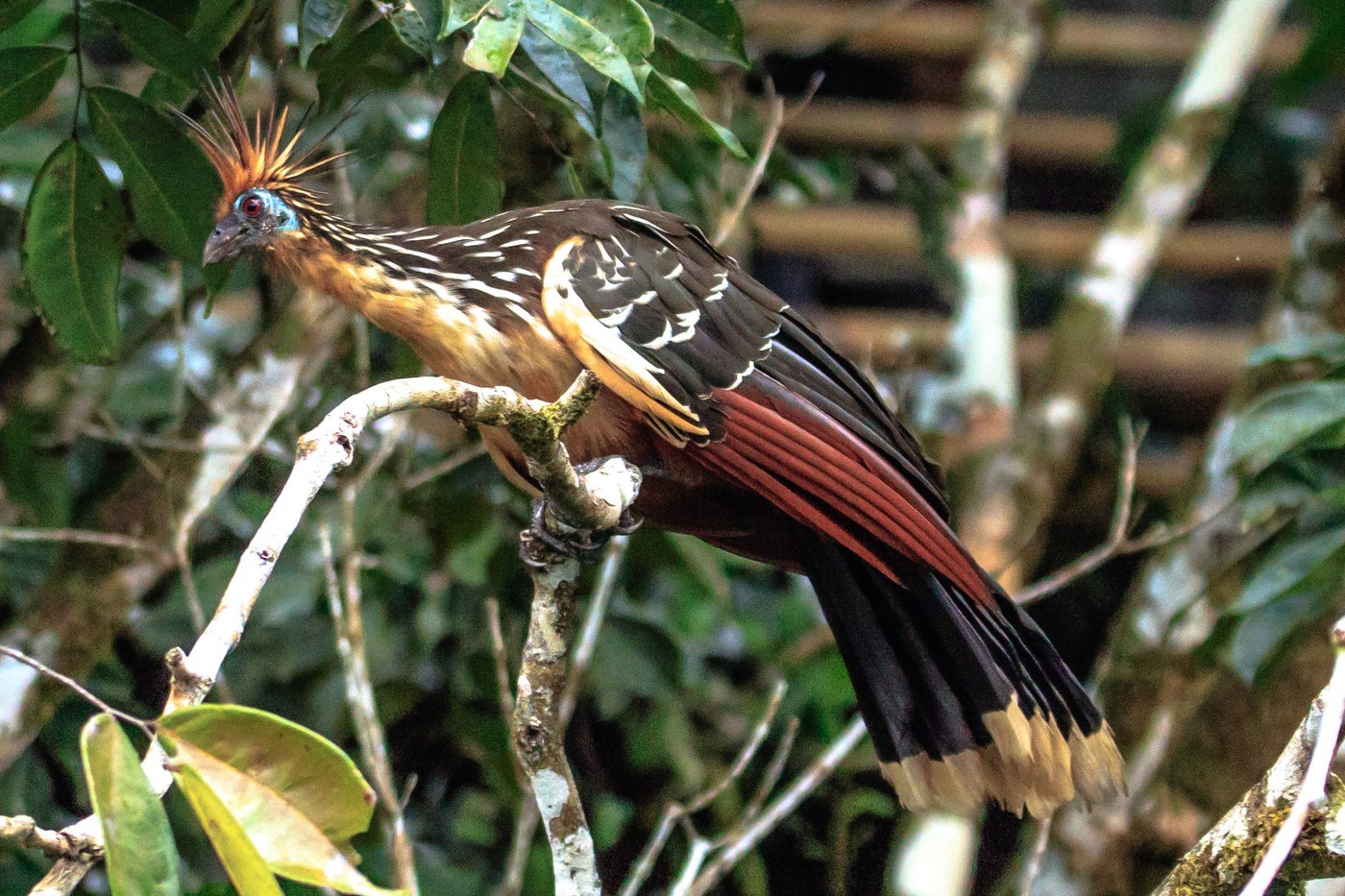
Key Field Marks
- Size & shape: A large, pheasant-sized bird, about 60–70 cm (24–28 in) long including a long tail, with a small head, long neck, and a heavy, awkward-looking body that gives it a clumsy, top-heavy silhouette.
- Head: Bare, vivid blue facial skin surrounding bright red eyes, topped by a long, spiky, loose rufous-brown crest that gives the head a wild, unkempt look.
- Body: Dark olive-brown upperparts streaked with buff/white on the neck and wing coverts, chestnut-rufous underparts and undertail, and a long tail tipped pale buff.
- Behavior: Clumsy, noisy climber that moves through waterside vegetation using its wings and feet almost like a lizard, rather than flying gracefully; often seen perched conspicuously in groups over water.
- Chicks: Hoatzin chicks are famous for having functional claws on the bend of each wing, which they use to clamber through branches before they can fly — a trait unique among living birds and reminiscent of early bird fossils.
Separating It From Similar Species
The Hoatzin's combination of a bare blue face, red eye, spiky rufous crest, and ungainly build is unlike any other bird in its range, making confusion with other species essentially impossible once seen well. At a distance, silhouette and habitat (perched low over water in a noisy group) combined with awkward, heavy flight are already strongly suggestive before facial details are visible.
Where & When to See One
Hoatzins are resident throughout the year in the Amazon and Orinoco river basins of northern and central South America, including Venezuela, the Guianas, Colombia, Ecuador, Peru, Bolivia, and Brazil. They are closely tied to slow-moving rivers, oxbow lakes, swamps, and flooded forest edges, where they perch in low waterside trees and shrubs and feed almost exclusively on leaves — an unusual diet among birds, digested via a specialized fermenting foregut similar to that of a cow, which also gives the species a distinctive musty odor.
Voice
A harsh, rasping chorus of grunts, hisses, croaks, and wheezy groans, often given by several birds at once from a group perched together — a sound closely associated with quiet stretches of Amazonian river habitat.
Frequently asked questions
What makes the Hoatzin so easy to identify?
Its bare blue face, red eyes, spiky rufous crest, and heavy, awkward body shape are unlike any other bird, making it essentially unmistakable once seen.
Why are Hoatzin chicks unusual?
Hoatzin chicks have functional claws on their wings that they use to climb through vegetation before they can fly, a trait not found in the chicks of other living birds.
Where can Hoatzins be found?
They live year-round along slow rivers, oxbow lakes, and flooded forest edges in the Amazon and Orinoco basins of South America.
What does a Hoatzin eat, and why does it smell unusual?
It feeds almost entirely on leaves, digested through fermentation in an enlarged foregut, which gives the bird a distinctive musty odor sometimes noted by observers.