
Hoary Redpoll Identification Guide
A frosty, pale Arctic finch closely related to the Common Redpoll, the Hoary Redpoll is best identified by its whiter overall tone, minimal streaking, and unstreaked white rump.
Read the full Hoary Redpoll encyclopedia entry →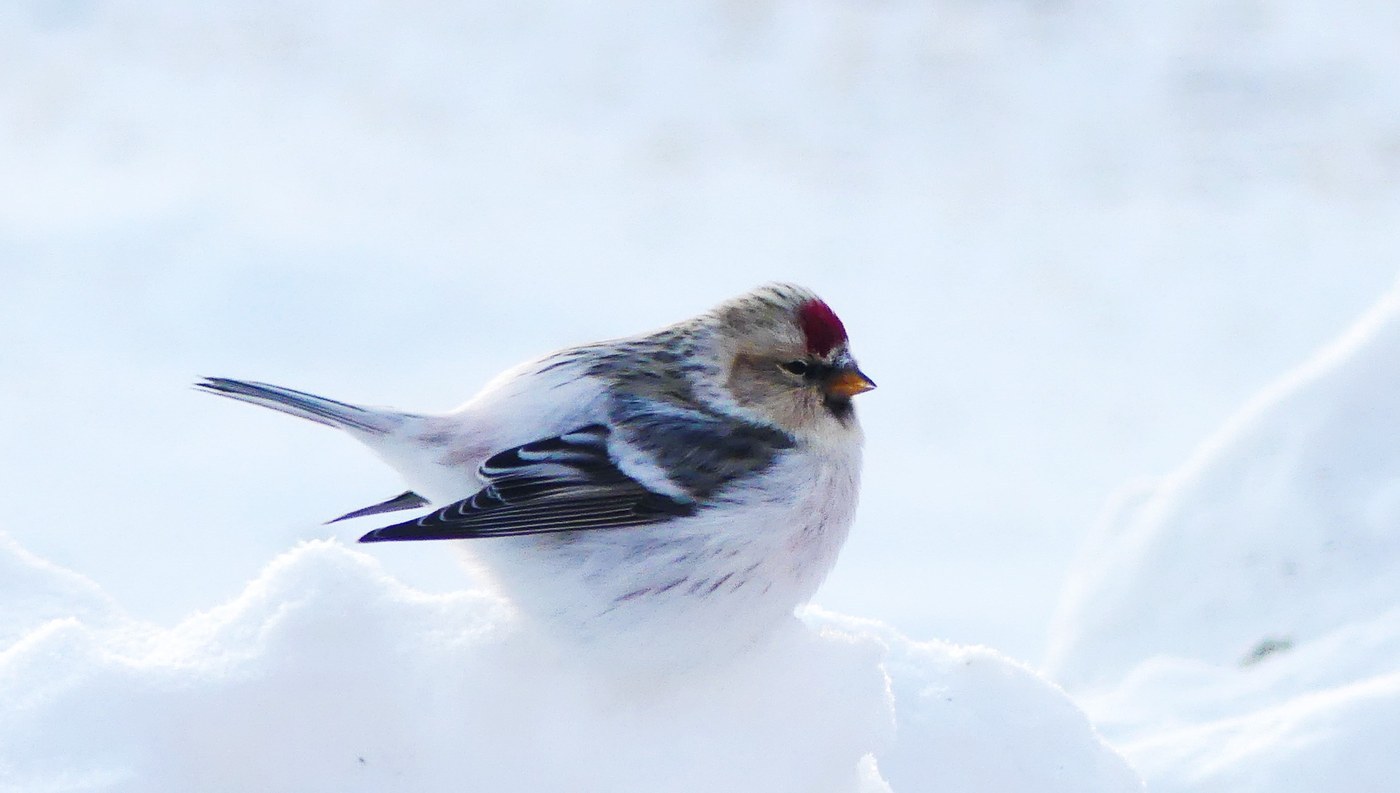
Key Field Marks
- Size & shape: A tiny finch, about 12–14 cm (5 in) long, with a small conical bill, notched tail, and compact, round-headed profile — very similar in structure to the Common Redpoll.
- Plumage: Overall frostier and paler than Common Redpoll, with reduced streaking on the flanks and back. The rump is white or very lightly streaked, contrasting with the darker wings and back.
- Head: A small red cap ("poll") on the forehead and a neat black chin/throat patch, both shared with Common Redpoll.
- Underparts: Whiter belly and flanks with minimal streaking; males may show a faint pink wash on the breast, generally paler and less extensive than in Common Redpoll.
- Bill: Often appears slightly shorter and stubbier than that of Common Redpoll, though this is a subtle mark best used in combination with others.
Separating It From Common Redpoll
This is one of the classic identification challenges in winter finch birding, and taxonomic authorities differ on whether Hoary and Common Redpoll are full species or a single variable species. Useful clues favoring Hoary Redpoll:
- Whiter, "frostier" overall appearance with less brown tone
- Unstreaked or only lightly streaked white rump (Common Redpoll usually shows more obvious streaking on the rump)
- Reduced flank streaking, often just a few thin marks
- Smaller, stubbier bill
- Note that both species are highly variable, and many individuals in the field are best left unidentified to species rather than forced into one category; extensive experience with local Common Redpoll variation helps calibrate expectations.
Where & When to See One
Hoary Redpoll breeds in the high Arctic tundra of North America, Greenland, and Eurasia, generally farther north than Common Redpoll. In winter it moves irruptively and unpredictably southward with flocks of Common Redpolls into southern Canada and the northern United States (and similarly in northern Eurasia), especially in years of poor birch and alder seed crops in the north. Look for it feeding on birch and alder catkins, weedy fields, and at feeders offering nyjer or thistle seed, always scanning carefully within larger redpoll flocks.
Voice
Calls and songs are very similar to Common Redpoll: a dry, buzzy "dzzzt" or rattling trill, and a twittering "chit-chit-chit" flight call. Voice is not considered a reliable way to separate the two forms.
Frequently asked questions
Is the Hoary Redpoll a distinct species from the Common Redpoll?
Their taxonomic status has long been debated; some authorities treat them as separate species while others consider them variable forms of one species. Either way, field identification relies on subtle plumage differences.
What is the most reliable field mark for a Hoary Redpoll?
An unstreaked or very lightly streaked white rump combined with an overall paler, frostier body and reduced flank streaking is the most useful combination of marks.
Where should I look for Hoary Redpolls in winter?
Search flocks of Common Redpolls feeding on birch or alder catkins or at feeders in the northern US and southern Canada during irruption winters, especially in years with poor northern seed crops.
Can voice help separate Hoary from Common Redpoll?
Not reliably; both give very similar dry, buzzy calls and twittering flight notes, so identification relies on plumage rather than voice.