
Himalayan Bulbul Identification Guide
Also called the White-cheeked Bulbul, this cheerful foothill songbird is told by its black crest, bold white cheek patch, and bright yellow undertail.
Read the full Himalayan Bulbul encyclopedia entry →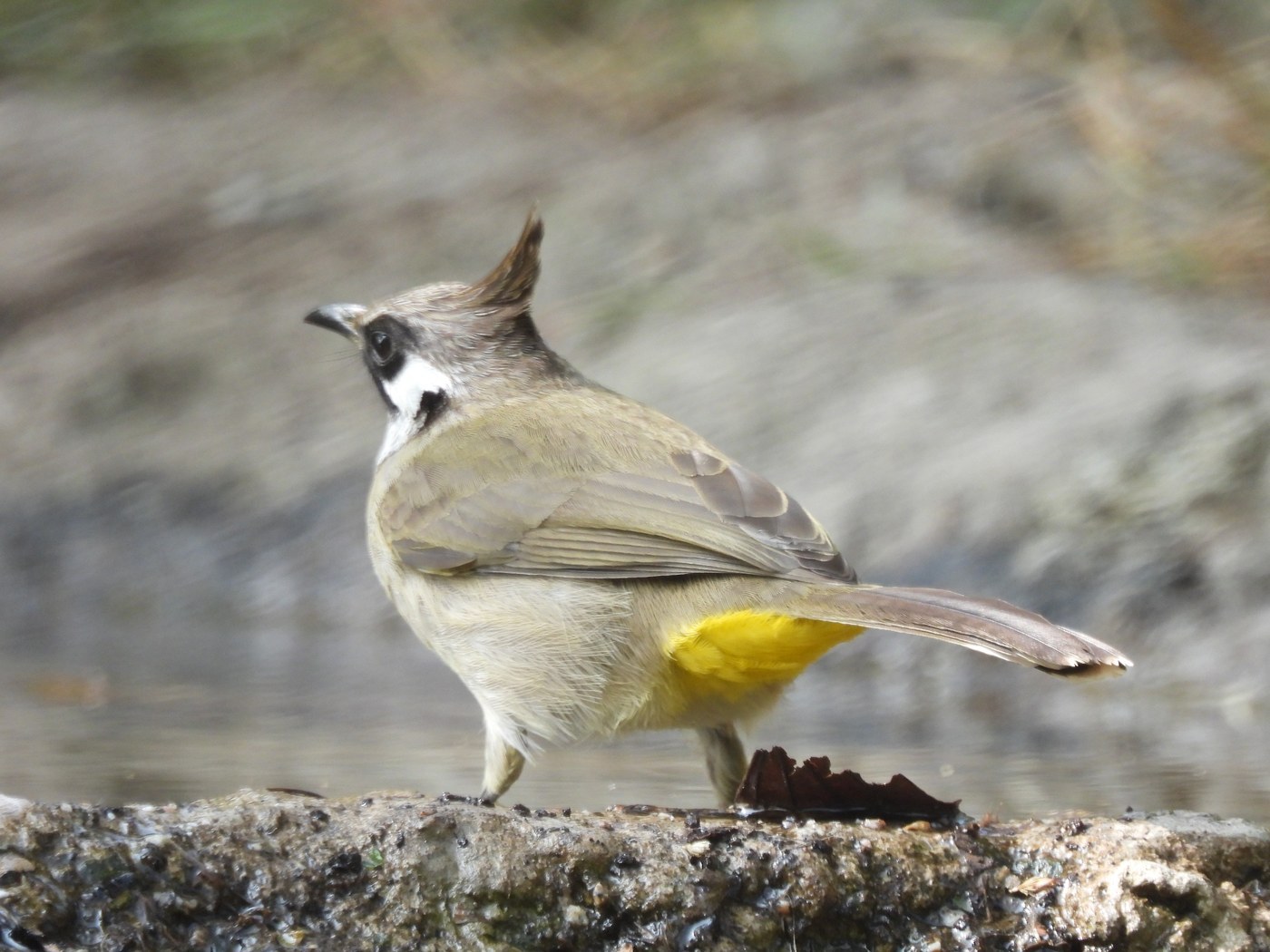
Key Field Marks
- Size & shape: A medium-sized bulbul, around 18–20 cm (7–8 in) long, with a slim body, longish tail, and a pointed, upstanding crest on the crown.
- Head pattern: Black crown and crest with a clean, bold white patch covering the ear-coverts (cheek), giving the species its alternate name, White-cheeked Bulbul.
- Body: Brownish-grey upperparts and pale brownish-white underparts, with a black or dark bib at the throat/upper breast in some populations.
- Vent: Bright yellow undertail coverts, a useful mark visible when the bird flicks or cocks its tail.
- Behavior: Active, sociable, and noisy, usually seen in pairs or small groups foraging in shrubs, gardens, and trees for fruit and insects, often flicking the tail and crest.
Separating It From Similar Species
- Red-vented Bulbul: Also has a black crest but shows a red (not yellow) vent and lacks the bold white cheek patch, instead having a scaly-looking body pattern.
- Himalayan (White-eared) Bulbul overlap zones: Where ranges meet other white-cheeked bulbul relatives, check vent color and the extent/shape of the white cheek patch and dark bib carefully.
- White-eared Bulbul (drier western ranges): Similar in pattern but occurs in a more arid, westerly range with subtle plumage tone differences; range is often the best clue.
Where & When to See One
The Himalayan Bulbul is a common resident across the lower and middle elevations of the Himalayas, from Pakistan and northern India east through Nepal, found from foothill scrub up to around 2,000–2,500 m in summer. It thrives in gardens, orchards, forest edge, scrub, and cultivated land, and is one of the most familiar garden birds throughout its hill-station range. It does not migrate but may shift to lower elevations in the coldest winter months.
Voice
A cheerful, chattering series of bubbly whistled notes, often rendered as a lively "pettigrew" or similar bright phrase, plus scolding chatters when alarmed. Frequently detected by voice before being seen in dense garden shrubbery.
Frequently asked questions
What is the single best mark for identifying a Himalayan Bulbul?
The combination of a black crest, a bold white cheek patch, and bright yellow (not red) undertail coverts is diagnostic.
How do I tell it apart from a Red-vented Bulbul?
Check the vent color: Himalayan Bulbul has a yellow vent and a prominent white cheek patch, while Red-vented Bulbul has a red vent and lacks the white cheek.
Where in the world is this species found?
It is a Himalayan foothill species, resident from Pakistan and northern India through Nepal, typically below about 2,500 meters elevation.
What habitats does the Himalayan Bulbul prefer?
Gardens, orchards, scrub, and forest edges at low to mid elevations; it is a very common and confiding bird around hill-station towns.