
Hepatic Tanager Identification Guide
A liver-red mountain tanager of the southwestern U.S. and Latin America, with males showing a dark cheek patch and a gray, unslotted bill.
Read the full Hepatic Tanager encyclopedia entry →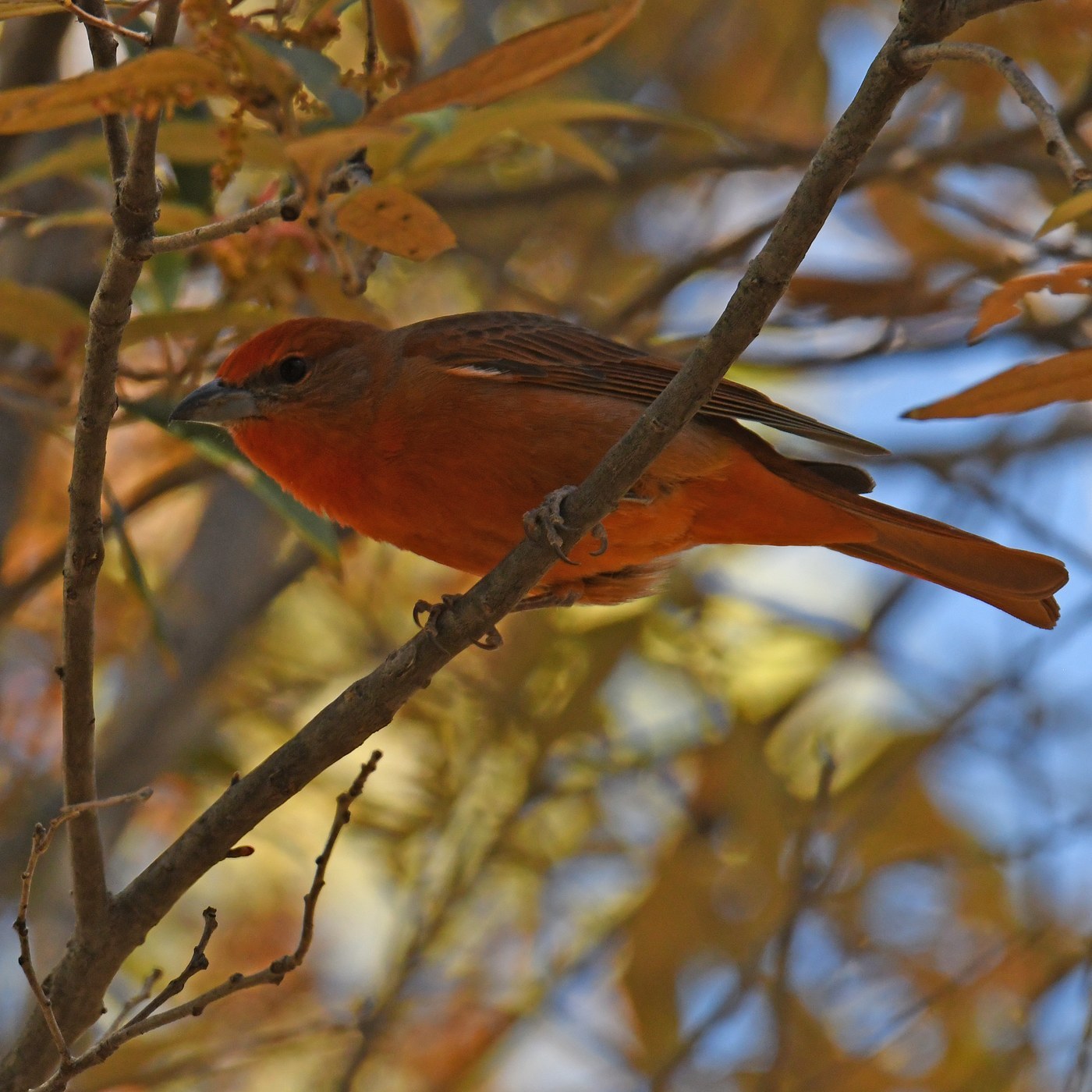
Key Field Marks
- Size & shape: A medium-sized, chunky tanager with a fairly stout, slightly curved bill and a moderately long tail.
- Male plumage: Brick- to liver-red overall (the "hepatic" name refers to this dull, brownish-red, liver color), with a distinctive dusky-gray cheek/auricular patch that contrasts with the red face — a key mark separating it from Summer Tanager.
- Female/immature plumage: Mustard-yellow to olive-yellow overall, brighter yellow on the head and underparts, with grayish tones on the back; also shows a hint of the dusky cheek patch.
- Bill: Grayish, fairly heavy bill, less orange/pale than Summer Tanager's bill.
- Behavior: Forages fairly deliberately and often high in pine-oak canopy for insects, sometimes hawking flying insects; less conspicuous than Western Tanager, often located first by voice.
Similar Species
- Summer Tanager: Male is a more even, rosy-red all over without a dusky cheek patch, and has a paler, more orange-toned bill; female is more uniform yellow-green, without gray on the back.
- Western Tanager (male): Has a black back, wings, and tail with yellow body and (breeding) a red-orange head — very different pattern, not easily confused once seen well.
- Scarlet Tanager (male): Bright red body with jet-black wings and tail — pattern differs sharply from the uniformly red Hepatic Tanager.
Range, Habitat & Season
Breeds in mountain pine-oak and pine woodlands of the southwestern United States (Arizona, New Mexico, west Texas) south through Mexico, Central America, and into South America along the Andes, generally at middle to higher elevations. U.S. populations are migratory, arriving in spring and departing by early fall for Mexico and points south, while many Latin American populations are resident.
Voice
A rich, burry, robin-like warbling song similar to other tanagers but often described as slower and more deliberate than Western or Summer Tanager; call is a distinctive low, dry "chuck" or "chup," different from the sharper calls of Summer Tanager.
Frequently asked questions
How do I tell a male Hepatic Tanager from a male Summer Tanager?
Hepatic Tanager shows a dusky-gray cheek patch and a duller, more brick/liver-red tone with a grayish bill, while Summer Tanager is a more uniform rosy-red without a dark cheek patch and has a paler bill.
What habitat does the Hepatic Tanager prefer?
Mountain pine-oak and pine woodlands at middle to higher elevations, especially in the southwestern U.S. and through the highlands of Mexico and Central/South America.
Are Hepatic Tanagers migratory?
U.S. and northern Mexican breeding populations are migratory, wintering further south, while many populations in Central and South America are year-round residents.
What does 'hepatic' mean in this bird's name?
It refers to the male's dull, brownish-red plumage color reminiscent of liver tissue, distinguishing it from the brighter, more rosy red of Summer Tanager.