
Helmeted Guineafowl Identification Guide
A boldly white-spotted, gray-black African gamebird with a bare blue-and-red head and a distinctive bony head casque.
Read the full Helmeted Guineafowl encyclopedia entry →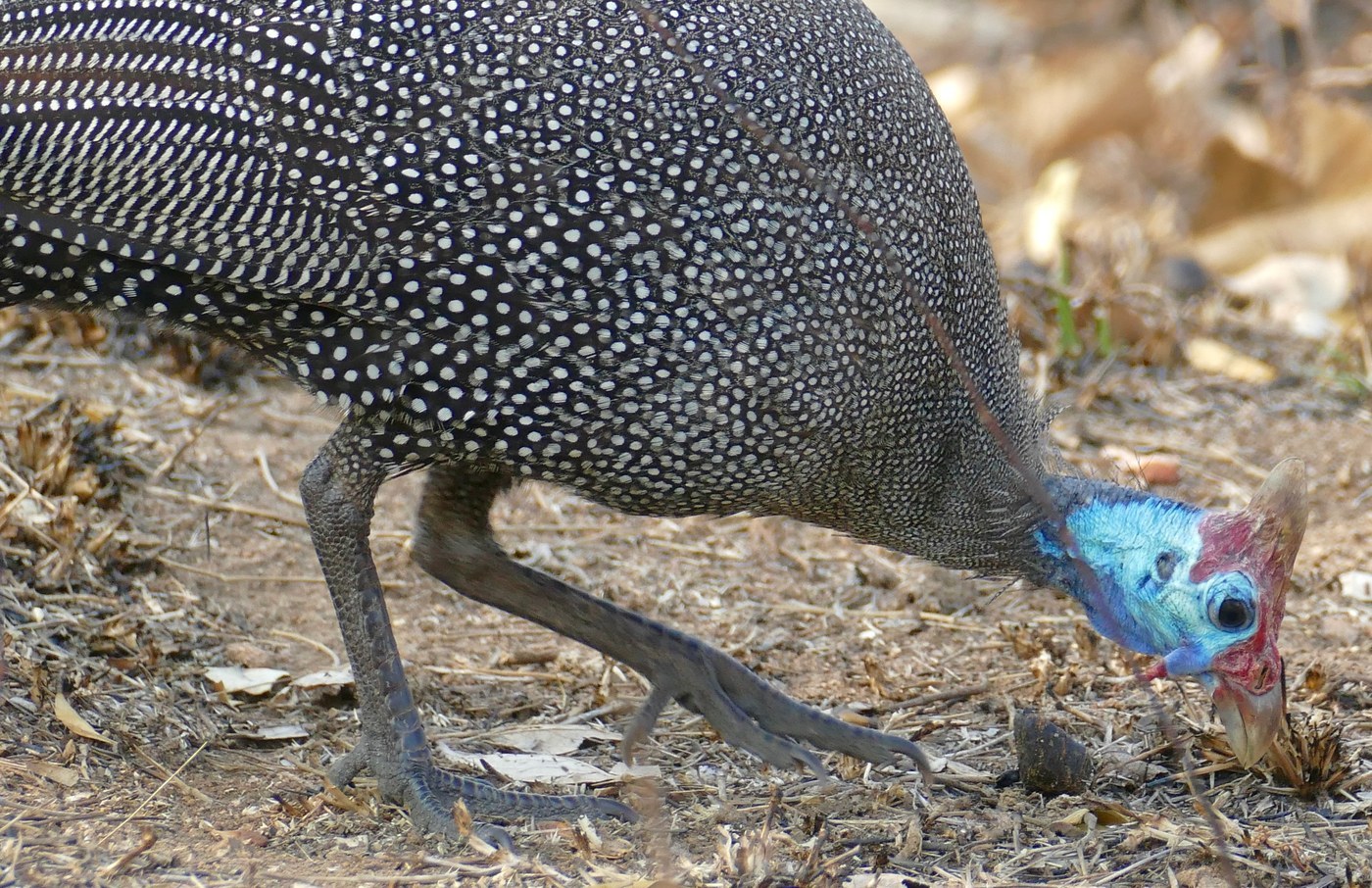
Key Field Marks
- Size & shape: A plump, round-bodied, chicken-like gamebird with a small head, short neck, and a short down-curved tail often held low, giving a hunched profile.
- Plumage: Dark slate-gray to blackish body densely covered in small, round white spots, giving a distinctive polka-dot pattern at all ages past downy chick stage.
- Head: Bare skin on the head and neck is blue and red, topped with a hard, bony, pale horn-colored casque ("helmet") on the crown — the source of the species' name; small red wattles hang below the bill.
- Behavior: Highly gregarious, moving in noisy flocks across open ground, walking and running rather than flying readily; when flushed, flies on short whirring wings before dropping back down. Roosts communally in trees at night.
Similar Species
- Other guineafowl species (e.g., Vulturine Guineafowl) lack the bony helmet and have very different head/neck plumage (Vulturine has a long blue-and-black striped neck hackle and no white spots covering as densely); within its range, the combination of the bony casque and dense white-spotted gray body is diagnostic and essentially unmistakable.
Range, Habitat & Season
Native and widespread resident across sub-Saharan Africa, in savanna, grassland, scrub, and cultivated land near water and cover, generally avoiding dense forest. Non-migratory, present year-round; also long domesticated and introduced/feral in many parts of the world, including parts of the Caribbean and elsewhere, where free-ranging or semi-domestic populations may be encountered.
Voice
A loud, harsh, repetitive "krek-krek-krek" or grating "chink-chink-chink" alarm/contact call, often given in a chattering chorus by the flock; also a range of clucking and chuckling notes while foraging.
Frequently asked questions
What is the bony structure on top of a Helmeted Guineafowl's head?
It is a hard, keratinized casque or 'helmet' that grows from the skull, giving the species its common name and distinguishing it from other guineafowl.
Are Helmeted Guineafowl found outside Africa?
Yes, they are native to sub-Saharan Africa but have been widely domesticated and introduced elsewhere, so free-ranging or feral flocks can be found in various regions worldwide.
How do Helmeted Guineafowl avoid predators?
They rely mainly on running in tight flocks and freezing or scattering on foot, using short bursts of low whirring flight only when necessary, and roost together in trees at night for safety.
What habitat do Helmeted Guineafowl prefer?
Open savanna, grassland, and scrub with nearby water and cover, generally avoiding dense unbroken forest.