
Hadada Ibis Identification Guide
A large, gray-brown African ibis best known for its loud, raucous 'ha-ha-ha-de-dah' call given especially at dawn, dusk, and in flight.
Read the full Hadada Ibis encyclopedia entry →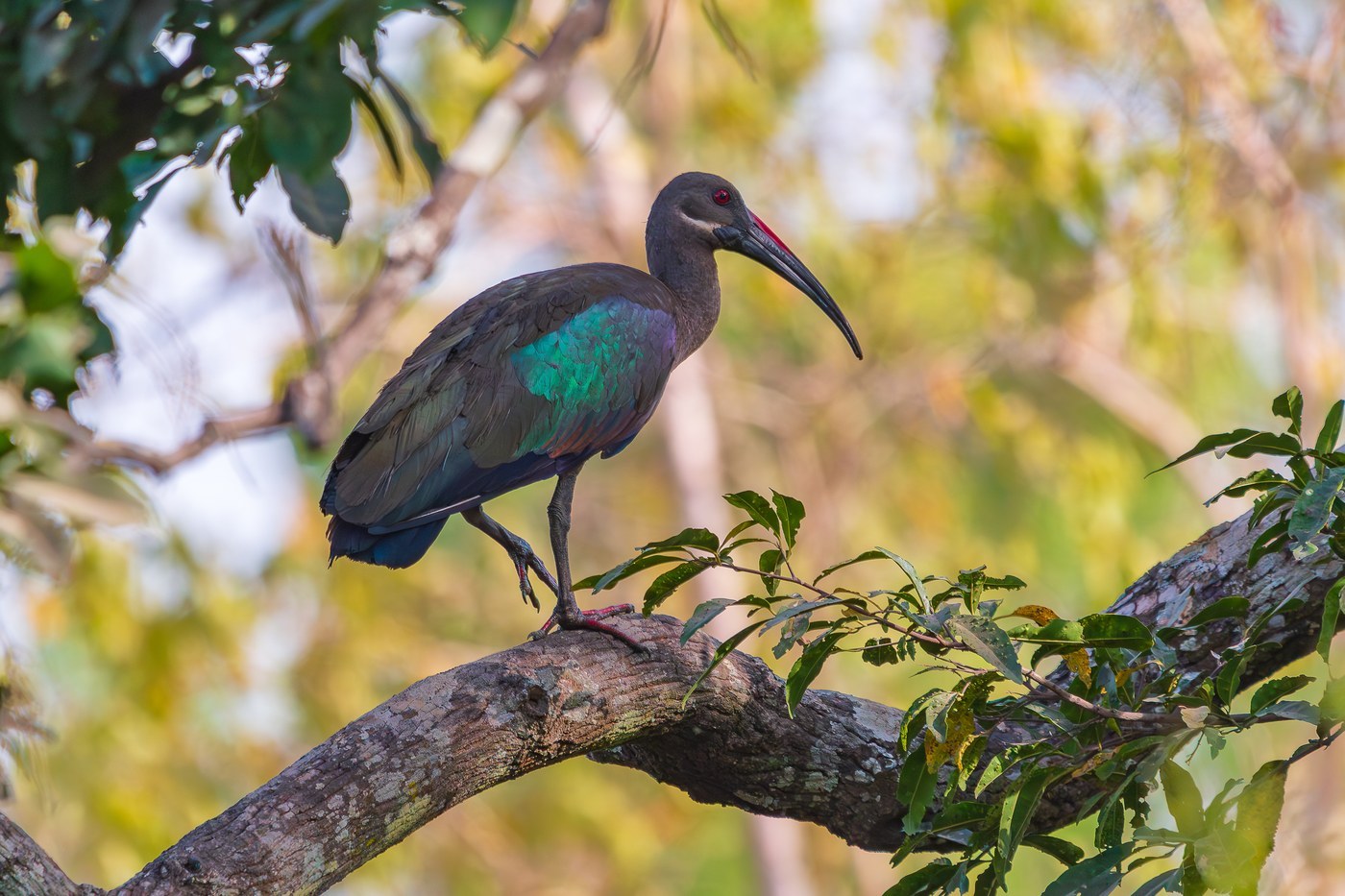
Overview
The Hadada Ibis (Bostrychia hagedash) is a common, conspicuous ibis found across much of sub-Saharan Africa, equally at home in wild wetlands and suburban lawns and parks. It is named onomatopoeically for its unmistakable, far-carrying call.
Key Field Marks
- Size and shape: A large, heavy-bodied ibis about 65-76 cm (26-30 in) long with a long, downcurved bill, thick neck, and relatively short legs compared to many other ibises.
- Plumage: Overall dull gray-brown with a slightly darker, glossy greenish-purple iridescent patch on the wing coverts that flashes in good light; a thin whitish stripe runs across the cheek.
- Bill: Long, heavy, and downcurved, dark grayish with a contrasting reddish culmen (ridge) stripe near the base, visible at close range.
- Behavior: Forages by probing soil and lawns for invertebrates, often in small groups; frequently seen walking on open grass, golf courses, and gardens in urban and suburban settings across its range.
Separating It from Similar Species
- Glossy Ibis: Smaller, more slender, with much more extensive glossy purplish-green sheen over the whole body rather than a limited wing patch, and a thinner bill; ranges overlap only in parts of Africa.
- African Sacred Ibis: White-bodied with a bare black head and neck, entirely different in overall coloration and easily separated at a glance.
- Other Bostrychia ibises (e.g., Olive Ibis, Spot-breasted Ibis): More forest-dependent, generally darker and more secretive, and lack the Hadada's tolerance of open, human-modified habitats.
Habitat, Range, and Season
Widespread and resident across sub-Saharan Africa, from savanna and wetland edges to farmland, parks, and suburban gardens, having expanded considerably into urban areas in recent decades, especially in southern and eastern Africa. Non-migratory; present year-round wherever found, with local movements tied to rainfall and food availability.
Voice
Extremely vocal, giving a loud, raucous, cackling "ha-ha-ha-de-dah" call, especially in flight at dawn and dusk — one of the most recognizable and frequently heard bird sounds across much of Africa, often used as the species' primary identification clue even before it is seen.
Frequently asked questions
Why is the Hadada Ibis called that?
Its name is onomatopoeic, imitating its loud, distinctive 'ha-ha-ha-de-dah' call, which is heard especially at dawn, dusk, and when the bird takes flight.
How do I tell a Hadada Ibis from a Glossy Ibis?
Hadada Ibis is bulkier and mostly dull gray-brown with iridescence limited to a wing patch, while Glossy Ibis is smaller, slimmer, and shows rich purplish-green iridescence over its entire body.
Is the Hadada Ibis common in cities?
Yes, it has become one of the most familiar birds in many African towns and suburbs, frequently foraging on lawns, golf courses, and gardens.
What does a Hadada Ibis eat?
Mainly soil invertebrates such as earthworms and insect larvae, located by probing its long bill into moist soil and lawns.