
Grey Partridge Identification Guide
A plump, ground-dwelling game bird of European and Asian farmland, identified by its grey breast, orange face, and the dark chestnut horseshoe mark on the belly of most adults.
Read the full Grey Partridge encyclopedia entry →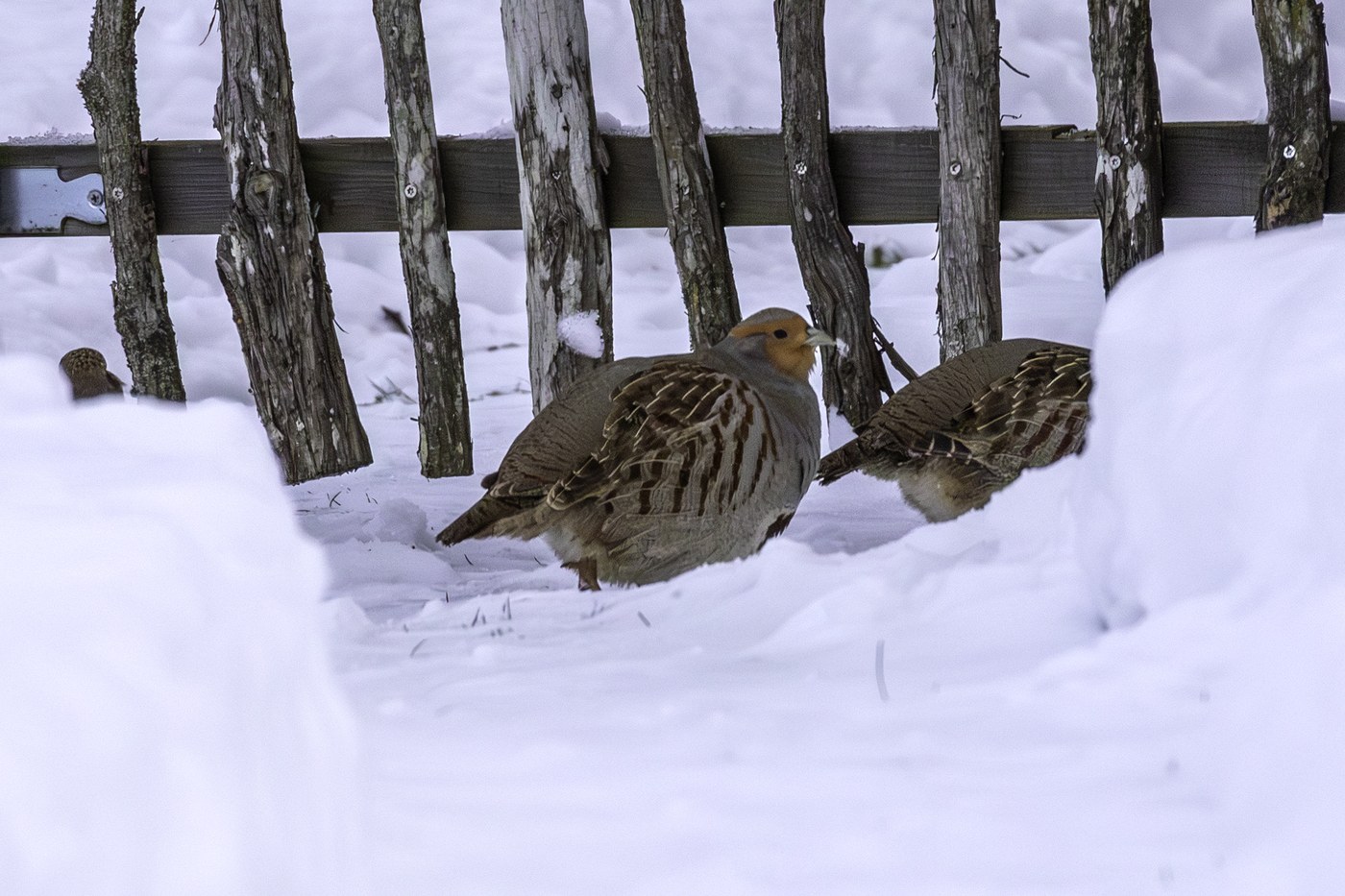
Key Field Marks
- Size & shape: A small, rotund, chicken-like bird about 29-31 cm (11.5-12 in) long, with a short neck, small head, and short rounded wings; noticeably plumper and rounder than pheasants.
- Plumage: Grey breast and flanks finely marked with fine barring, warm orange-buff face and throat, and mottled brown-and-buff upperparts and back streaked with chestnut.
- Diagnostic mark: Most adults, especially males, show a dark chestnut-brown horseshoe- or U-shaped patch on the lower breast/belly, a key field mark when visible.
- Legs: Short, greyish legs, often hidden in vegetation as the bird walks low through crop stubble and grassland.
- Behavior: Highly terrestrial, preferring to run and crouch rather than fly; when flushed, explodes into a fast, low, whirring flight on bowed wings followed by a glide, usually in coveys (family groups).
Similar Species
- Red-legged Partridge: Has bold black-and-white striped flanks, a black gorget/necklace around a white throat, and red legs and bill, quite different from the plainer, greyer Grey Partridge.
- Common Quail: Much smaller and more streaked overall, lacking the grey breast and chestnut belly patch, and far more secretive, rarely seen in the open.
- Female pheasants: Much larger with a long pointed tail, versus the Grey Partridge's short, stubby tail.
Where & When to See It
- Range: Native across temperate Europe and western/central Asia; introduced and locally established in parts of North America (northern US Midwest/Great Plains and southern Canada).
- Habitat: Open farmland, arable fields, hedgerows, grassland, and steppe; strongly associated with traditional mixed agricultural landscapes with hedges and field margins for cover.
- Season: Resident year-round; coveys of family groups are most visible in autumn and winter after breeding, feeding along field edges and stubble.
Voice
- A harsh, grating, rusty-hinge-like call, often rendered "kier-ric" or "kirrr-ic," given especially at dawn and dusk, particularly by males in spring.
Quick Tips for Confident ID
- Look for the plain grey breast and orange face as the base plumage tone.
- Check for the dark chestnut belly horseshoe mark, strongest in males.
- Note low, explosive covey flushes from farmland cover as a strong behavioral cue distinguishing it from pheasants and quail.
Frequently asked questions
How do you tell a Grey Partridge from a Red-legged Partridge?
Grey Partridge lacks the bold black-and-white flank barring, black neck gorget, and red bill/legs that clearly mark Red-legged Partridge; Grey Partridge instead shows a plainer grey breast and chestnut belly patch.
Do both male and female Grey Partridges have the belly patch?
The dark chestnut horseshoe mark is usually larger and more prominent in males, while females often show a smaller or fainter patch, though some individuals of either sex can vary.
Where is the Grey Partridge found in North America?
It was introduced from Europe in the early 20th century and is now established in parts of the northern US, including the Dakotas, Minnesota, and the Great Plains, as well as southern Canada.
What habitat should I search for Grey Partridge?
Open arable farmland with hedgerows, field margins, stubble fields, and grassy cover, particularly in traditionally managed mixed-farming landscapes.