
Grey Heron Identification Guide
A large, tall wading bird of Eurasian and African wetlands, with pale grey plumage, a white head and neck marked by a black eye-stripe, and a dagger-like yellow bill.
Read the full Grey Heron encyclopedia entry →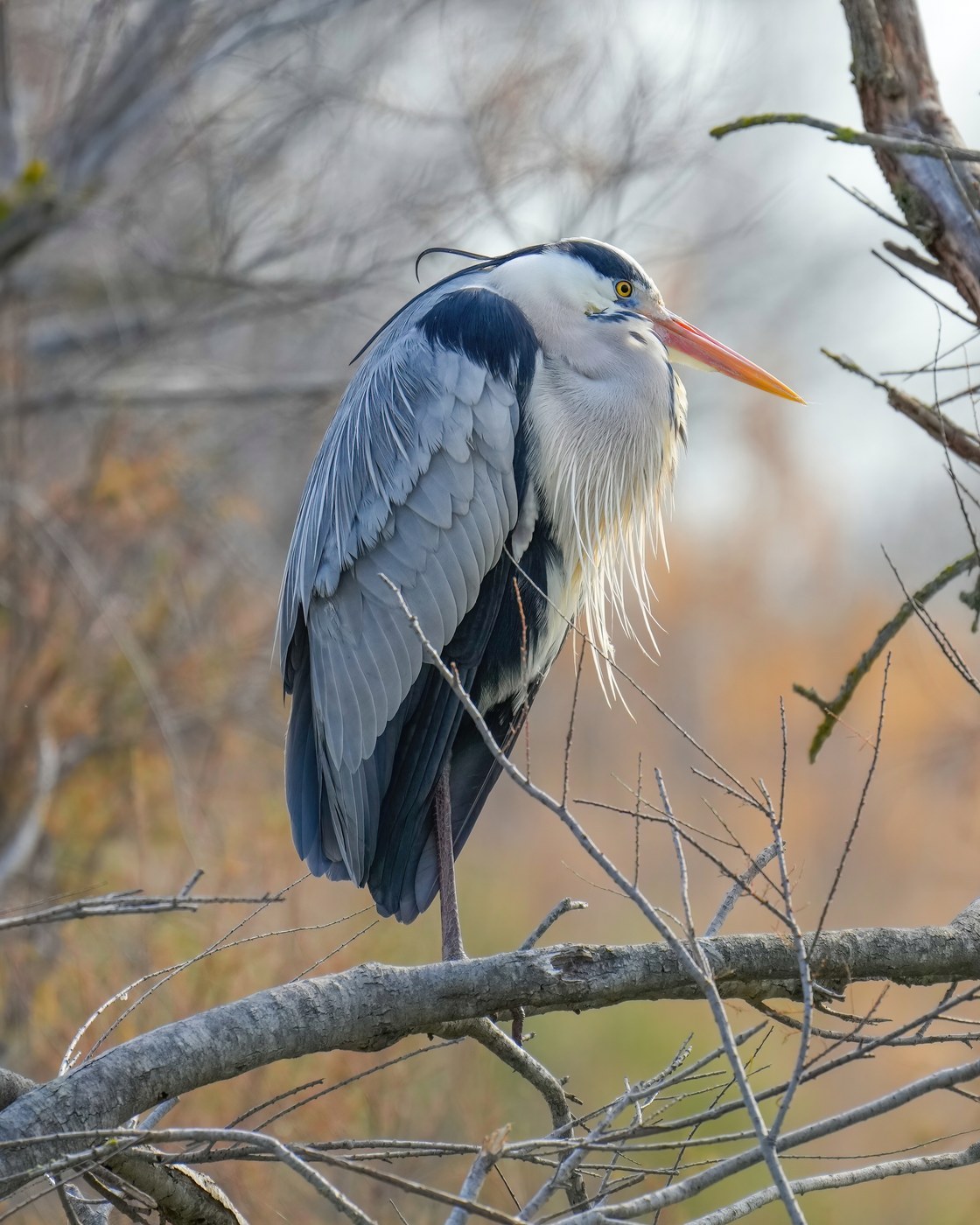
Key Field Marks
- Size & shape: Very large heron, standing 84-102 cm (33-40 in) tall with a wingspan up to 1.75-1.95 m (5.7-6.4 ft); long legs, long S-curved neck, and a long, dagger-shaped bill.
- Plumage: Pale grey back and wings, whitish head, neck, and underparts, with a bold black stripe running from above the eye back over the head to form thin plumes at the nape.
- Bill & legs: Long, straight, yellowish-orange bill (brighter in breeding adults); long yellowish-brown to greyish legs.
- Flight: Flies with slow, deep wingbeats, neck tucked back in an S-shape (not extended like a stork or crane), and legs trailing behind — this silhouette is diagnostic among large waders.
- Behavior: Stands motionless or stalks slowly in shallow water waiting to spear fish, amphibians, and small mammals with a rapid strike of the bill; often solitary while feeding but nests colonially in heronries.
Similar Species
- Great Blue Heron (North America, not overlapping range but relevant for comparison): Very similar in shape and habits but larger and with more rufous/chestnut tones on the thighs; the two are closely related "sister" species occupying different continents.
- Purple Heron: Smaller, darker, more rufous-chestnut on the neck, with a thinner neck and more hunched, secretive posture, favoring denser reedbeds than the more open-water Grey Heron.
- Black-headed Heron (Africa): Has a solid black crown/nape and darker grey body, versus the white head with a black stripe of Grey Heron.
Where & When to See It
- Range: Widespread across Europe, Asia, and Africa; a familiar bird from Britain and Scandinavia through the Mediterranean, Middle East, and much of Africa and temperate Asia.
- Habitat: Almost any wetland — rivers, lakes, ponds, marshes, estuaries, and coastal shallows; increasingly common in urban parks with ornamental ponds.
- Season: Largely resident in milder regions; northern and continental populations move south in winter to avoid frozen waters, so numbers can be higher locally in winter in some areas.
Voice
- A harsh, loud "fraaank" or "kraak" croak, usually given in flight or when disturbed; also various guttural and clattering sounds at breeding colonies.
Quick Tips for Confident ID
- Look for the S-curved neck tucked in flight, not outstretched like a stork.
- Check the black eye-stripe extending into nape plumes against an otherwise whitish head.
- Note the slow, statuesque stalking behavior in shallow water as a strong behavioral cue.
Frequently asked questions
How can I tell a Grey Heron from a Great Blue Heron?
The two do not naturally overlap in range (Grey Heron is Old World, Great Blue Heron is New World), but Great Blue Heron is larger and shows more rufous tones on the thighs and neck than the paler, cooler-toned Grey Heron.
Why does a heron fly with its neck tucked in?
Herons habitually retract their long neck into an S-shape in flight to balance the head's weight and reduce strain, unlike storks and cranes, which fly with necks extended.
Does the Grey Heron migrate?
Southern and coastal populations are largely resident, but birds breeding in colder northern and continental areas migrate south in autumn to avoid ice-covered waters.
What does a Grey Heron eat?
Primarily fish, but also amphibians, small mammals, birds, and large insects, caught by standing still or slowly stalking before a rapid stabbing strike with the bill.